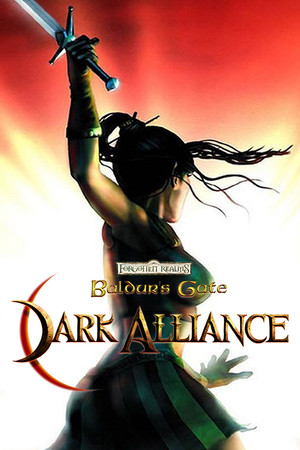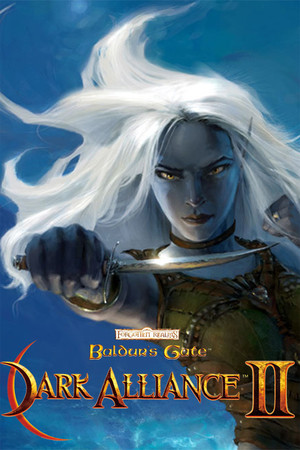
Baldur's Gate: Dark Alliance II
Nostalgia is doing a lot of heavy lifting here. If you spent couch co-op nights in 2004 hacking through goblin lairs with a dwarven rogue and a necromancer, this PC port will feel like slipping on a worn-in glove. Everyone else should temper expectations hard.
GamerScout Verdict
Best for PS2-era nostalgia seekers and couch co-op fans willing to forgive dated combat; newcomers should wait for a deep discount.
Compare Prices(3 stores)
Every store in this table quotes us in euros, so the EUR figure is the price the seller actually set, not our arithmetic — which is why EUR is also the currency we rank in. We only list an offer here when the store gives us its price in euros, so nothing in this table is a number we invented.
Pick USD, PLN, GBP, CAD or AUD in the header and we convert from EUR at the European Central Bank reference rate — converted amounts are prefixed with ~. Your bank or the store may apply a different rate at checkout. We never hide offers based on where you are: everyone sees this whole table.
We may earn a commission when you buy games through links on this page — at no extra cost to you. It never affects our rankings or verdicts.
Price History
Screenshots & Media
About Baldur's Gate: Dark Alliance II
I'll be straight with you: I went into Dark Alliance II hoping for a forgotten gem and came out with something more complicated than that. This is a 2004 PS2 hack-and-slash that has been ported to PC with a resolution bump to native 4K and not a great deal else. The remaster label gets thrown around loosely here, and the gap between what's been done and what needed doing is wide enough to swallow a troll. The five playable characters are genuinely the best argument for spending time with this one. You have Dorn Redbear, a barbarian built for blunt-force tanking in heavy armor; Vhaidra Uoswiir, a Drow monk whose unarmed kit rewards mobile, kiting-focused play; Ysuran Auondril, a moon elf necromancer who can throw AoE spells, summon undead allies, or bend enemies to his will depending on how you build him; Allessia Faithhammer, a cleric whose Cure Wounds support and protection spells shine hardest in co-op; and Borador Goldhand, a dwarven rogue whose crossbow range and lock-picking give him a different pace from the melee crowd. Two unlockable characters - Drizzt Do'Urden with his twin scimitars and the assassin Artemis Entreri - round out the roster for second-run players. Each class carries around 30 abilities to learn, upgrade, and mix, and the spread is different enough that a Necromancer and a Barbarian playthrough barely feel like the same game. That variety is the real replay hook, especially paired with Extreme Mode and the class-specific quests that open up in Act III. The crafting and enchantment system also holds up reasonably well. Baldur's Gate city acts as a hub where you spend gold on gear between expeditions, and the custom weapon and armor creation - using gem types to socket and stack effects - adds a layer of min-maxing that kept me at the vendor screen longer than I expected. It is not Path of Exile depth, not by a long stretch, but for a 2004 action RPG it was ahead of its time, and it still scratches a particular itch. The semi-linear structure, with multiple quests available simultaneously and some non-linear sequencing within each act, means the pacing is less repetitive than a pure corridor crawler. Here is where honesty bites. The melee combat is clunky in ways that modern ARPGs have quietly made us forget were ever a problem. Your character can swing at air while an enemy shuffles half a step sideways, and there is no lock-on system to stop you from looking foolish against a pack of Red Fang goblins. Spellcasting fares better - AoE spells feel genuinely satisfying - but melee-primary classes like Dorn can start to feel monotonous well before the credits. The story is functional at best: a vampire lord named Mordoc threatens Baldur's Gate through the power of the Onyx Tower, and the writing has all the depth of a first-level homebrew campaign. Do not come here for Forgotten Realms lore revelations. The co-op, which is clearly where this game lives, is local-only on consoles; PC players can use Steam Remote Play with a friend, though latency can be a factor. Online co-op was never properly implemented, which in 2022 is a genuine omission. The verdict on who this is for comes down to one question: were you there in 2004? If yes, this port will scratch a specific itch with minimal friction. If you are coming in fresh from Diablo IV or Last Epoch, the gap in combat polish and build depth will be hard to ignore. A single playthrough runs roughly 10 to 15 hours; going back through Extreme Mode with an unlockable character can push that past 50, but only if the core loop has already grabbed you. Couch co-op with the right person remains one of the most comfortable ways to spend an evening with a dungeon crawler, and on that specific criterion Dark Alliance II still delivers. Just do not expect the port itself to have done much of the work for you.

RPGs
Tags
System Requirements
Minimum
- OS
- Windows 7 / 8 / 10
- Memory
- 1 GB RAM
- Storage
- 6 GB available space
- Graphics
- GeForce FX5700 or better / ATI Radeon 9600 or better
- Processor
- Pentium 4 2Ghz / AMD AthlonXP 2400
Recommended
Requires a 64-bit processor and operating system
Keep exploring
Community Discussion
Be the first to comment on Baldur's Gate: Dark Alliance II.
Reviews & Ratings
No ratings available
Game Info
- Developer
- Square One Games Inc.
- Publisher
- Interplay Entertainment Corp.
- Release Date
- Jul 20, 2022