Bad Dream: Coma
Punching a crow in the first thirty seconds can lock you out of the good ending forever. That is the kind of game Bad Dream: Coma is, and it is exactly why it works.
GamerScout Verdict
Best for point-and-click fans who enjoy surreal horror, can tolerate cryptic puzzles, and want a short game with meaningful replay value.
Compare Prices(7 stores)
Every store in this table quotes us in euros, so the EUR figure is the price the seller actually set, not our arithmetic — which is why EUR is also the currency we rank in. We only list an offer here when the store gives us its price in euros, so nothing in this table is a number we invented.
Pick USD, PLN, GBP, CAD or AUD in the header and we convert from EUR at the European Central Bank reference rate — converted amounts are prefixed with ~. Your bank or the store may apply a different rate at checkout. We never hide offers based on where you are: everyone sees this whole table.
We may earn a commission when you buy games through links on this page — at no extra cost to you. It never affects our rankings or verdicts.
Price History
Screenshots & Media
About Bad Dream: Coma
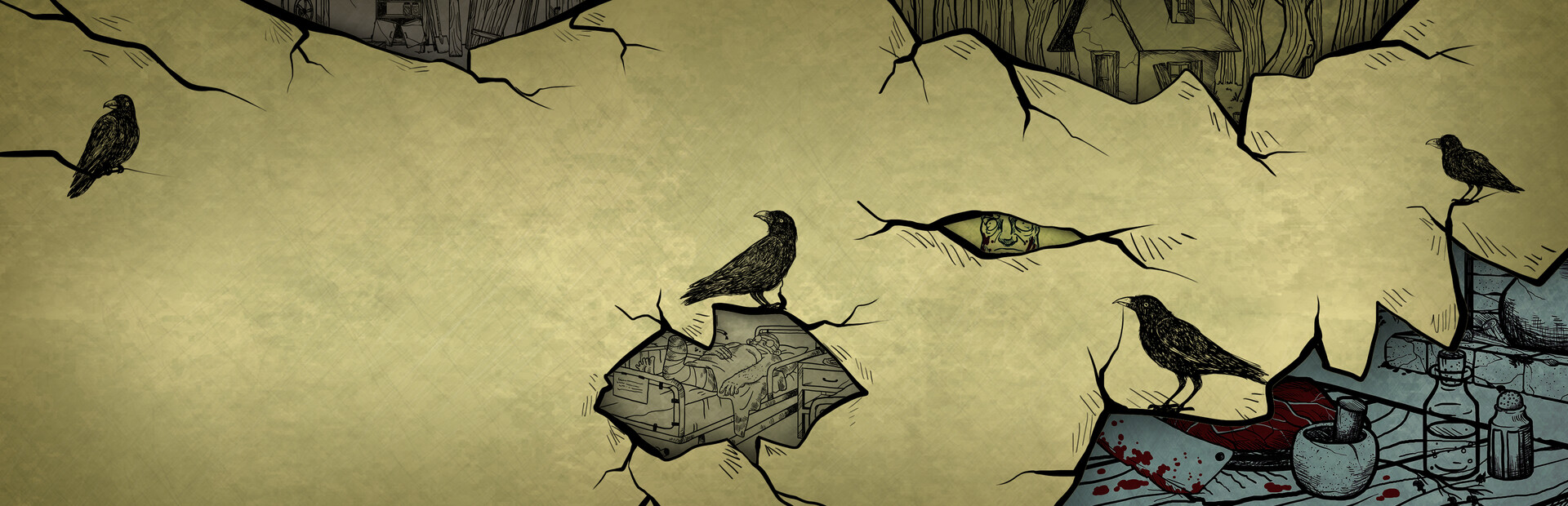
I sat with Bad Dream: Coma for a full evening and found myself replaying it twice before bed, which tells you something about how it sticks. Desert Fox built this entirely alone, and that solitude shows in the best possible way: every screen feels deliberate, every grotesque detail chosen with care rather than committee. The world is rendered in hand-drawn black-and-white line art on a parchment-like background, with only the occasional faint glow of a bulb or the vermilion smear of fresh blood interrupting the monochrome. It is one of the more quietly beautiful horror art styles I have encountered in a small-budget point-and-click. The structure is classic point-and-click: you pick up items, combine them, use them on the environment, and work through chapter-sized locations including a crumbling city bridge, an eviscerated hospital, a graveyard, and stranger places beyond. What sets it apart is the morality layer threaded through every interaction. Harming a bird, squashing a spider, or acting carelessly toward the broken, suffering people you meet all register on a running achievement board accessible from the pause menu. That board is also a quiet dread machine, because it lets you watch your chance at a good ending dissolve in real time. There are three broad endings, good, neutral, and bad, with the bad route branching further depending on whether you've triggered the crow monster, the butcher, or other nightmare-specific outcomes. Crucially, the divergence is not cosmetic: whole sections of the environment, character behaviours, and puzzle configurations shift depending on which path you are on. A second playthrough genuinely feels like a different game in places. The puzzles sit in a frustrating but honest middle ground. Desert Fox leans hard into surreal dream logic, so some solutions are lateral to the point of obscurity. Interactive objects are not highlighted, which means you will occasionally drag your cursor across a dense, blood-dripping, bug-crawling screen just hunting for the one clickable prop hiding in the artwork. Experienced point-and-click players will find this familiar friction; newcomers may want a walkthrough nearby for the hospital chapter. The spot-the-difference sections and paint-by-numbers sequences that appear occasionally feel like pacing breaks rather than puzzles, but they are minor diversions in a game that otherwise earns every beat. A few spelling errors in the English text are a small but real sign that the developer worked without editorial support, and controller play on console is workable but clearly not the native format. Where the game earns its 79 Metacritic and its 91 percent positive Steam rating is in atmosphere. The sound design is chosen with the same care as the art: ambient drones, distant animal sounds, and a horror-adjacent score that shifts register as the dreamland darkens around you. It is the kind of soundtrack you absorb without noticing until it is gone. At roughly three to four hours per playthrough, the game knows its length and ends before it overstays its welcome. Three playthroughs for all endings and achievement hunting can stretch the total comfortably past ten hours for completionists. This is a solo passion project that understood exactly what it wanted to be, and that kind of focused intentionality is rarer than any budget could buy.

Indie & narrative
Tags
System Requirements
Minimum
- OS
- Windows XP, Vista, 7/8/10
- Memory
- 1 GB RAM
- DirectX
- Version 9.0
- Storage
- 500 MB available space
- Graphics
- Default
- Processor
- 2 GHz
Keep exploring
Community Discussion
Be the first to comment on Bad Dream: Coma.
Reviews & Ratings
Game Info
- Developer
- Desert Fox
- Publisher
- Desert Fox
- Release Date
- Mar 9, 2017