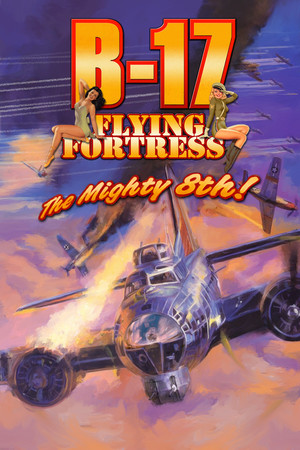
B-17 Flying Fortress: The Mighty 8th
Crew management depth that puts most modern sims to shame, wrapped in a classic that still carries real emotional weight at 15,000 feet over occupied Europe.
GamerScout Verdict
Best for sim fans willing to treat it as a crew management RPG first and a flight sim a distant second.
Compare Prices(4 stores)
Every store in this table quotes us in euros, so the EUR figure is the price the seller actually set, not our arithmetic — which is why EUR is also the currency we rank in. We only list an offer here when the store gives us its price in euros, so nothing in this table is a number we invented.
Pick USD, PLN, GBP, CAD or AUD in the header and we convert from EUR at the European Central Bank reference rate — converted amounts are prefixed with ~. Your bank or the store may apply a different rate at checkout. We never hide offers based on where you are: everyone sees this whole table.
We may earn a commission when you buy games through links on this page — at no extra cost to you. It never affects our rankings or verdicts.
Price History
Screenshots & Media
About B-17 Flying Fortress: The Mighty 8th
I've spent more hours than I'd care to admit with crew management sims, and very few of them punch you in the gut the way this one does when a tail gunner starts screaming about fire in his compartment. B-17 Flying Fortress: The Mighty 8th is not a conventional flight simulator, and the sooner you accept that, the sooner you'll understand why it earned an 82 on Metacritic when it originally released. This is a crew management and mission planning sim wearing a flight sim's jacket. The core loop starts on a war map where you select targets, request reconnaissance photography, plot waypoints, and pick the ten men who will board with you. Once airborne, you are free to jump between any of the ten crew positions: pilot, copilot, navigator, bombardier, engineer, radio operator, ball gunner, tail gunner, and both waist gunners. The AI handles whatever station you are not occupying, but the quality of that AI is directly tied to the experience your crew has accumulated across missions. Green crews make costly mistakes. Veterans start carrying their weight with minimal babysitting, which means early missions frontload the workload and experienced campaigns feel earned. The strategic pre-mission planning layer is where the sim's decision-making depth really lives. Choosing the right men for the right positions, managing crew fatigue, and reading the intelligence on enemy fighter concentrations along your route all feed into whether you limp home with a wounded bombardier or don't come home at all. The Luftwaffe roster includes the Bf 109, Fw 190, and Me 262, plus you can flip sides entirely and fly escort or intercept missions in the P-38 Lightning, P-51 Mustang, or P-47 Thunderbolt. That breadth of playable aircraft is a genuine selling point that is easy to overlook in the marketing noise around the B-17 itself. Flak is modeled aggressively and is historically the biggest killer in a standard campaign run, which tracks with reality even if the fighter AI is somewhat easier to handle than history suggests it should be. The honest weaknesses are real and worth naming before you hand over your money. The flight model is loose: the B-17 can execute maneuvers that would have shattered the actual airframe, and the game makes no apology for it. The navigation position carries a disproportionate share of the early-game workload, with a map-reading loop that demands your attention far more than the gunner stations, at least until your navigator's skill level climbs enough to operate more independently. The crew interface uses three separate UI paradigms depending on where you are in the game, and none of them are intuitive on first contact. Expect a learning curve measured in failed missions rather than minutes. There is no cooperative multiplayer, a feature that was cut before the original release to meet deadlines and one that fans have wanted ever since. For newcomers wondering whether a game originally released in 2000 can still be worth the time investment in 2024: yes, with caveats. Nothing on the market offers this specific combination of multi-crew role-switching, pre-mission strategic planning, and genuine emotional attachment to individual crew members. When you have been running the same ten men through six successful missions and you hear the radio operator take a burst of 20mm cannon fire, the stakes feel different from anything a single-seat fighter sim can manufacture. The immersion comes not from graphical fidelity but from the weight of the decisions that compound across a campaign. Treat it as a crew management RPG with a flight sim wrapper, read at least a guide on the navigator workflow before your first mission, and this classic will reward the patience.

Strategy & simulation
Tags
System Requirements
Minimum
- OS
- Windows XP / Vista / 7
- Memory
- 512 MB RAM
- DirectX
- Version 6.0
- Storage
- 600 MB available space
- Graphics
- 100% DirectX compatible graphics
- Processor
- 1.0 GHz Processor
- Sound Card
- 100% DirectX compatible card or onboard sound
Recommended
- OS
- Windows 7
- Memory
- 1 GB RAM
- DirectX
- Version 9.0c
- Storage
- 600 MB available space
- Processor
- 1.5 GHz Processor
- Sound Card
- 100% DirectX compatible card or onboard sound
Keep exploring
Community Discussion
Be the first to comment on B-17 Flying Fortress: The Mighty 8th.
Reviews & Ratings
Game Info
- Developer
- Wayward Design
- Publisher
- MicroProse Software
- Release Date
- Oct 30, 2014