
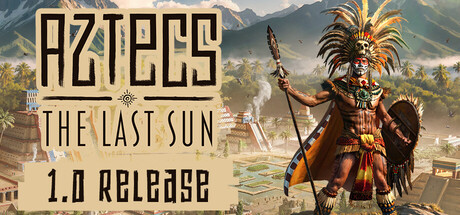
Aztecs: The Last Sun
A survival city-builder that swaps medieval Europe for Tenochtitlan and makes you earn every sunrise by managing blood zones, canal networks, and divine tributes across three distinct modes.
GamerScout Verdict
Best for Frostpunk and Anno fans who want a survival city-builder with genuine historical texture and a punishing night-cycle twist.
Compare Prices(6 stores)
Every store in this table quotes us in euros, so the EUR figure is the price the seller actually set, not our arithmetic — which is why EUR is also the currency we rank in. We only list an offer here when the store gives us its price in euros, so nothing in this table is a number we invented.
Pick USD, PLN, GBP, CAD or AUD in the header and we convert from EUR at the European Central Bank reference rate — converted amounts are prefixed with ~. Your bank or the store may apply a different rate at checkout. We never hide offers based on where you are: everyone sees this whole table.
We may earn a commission when you buy games through links on this page — at no extra cost to you. It never affects our rankings or verdicts.
Price History
Screenshots & Media
About Aztecs: The Last Sun
I spend a lot of time with city-builders that lean on medieval castles and wheat farms, so sitting down with Aztecs: The Last Sun felt like a genuine breath of fresh air. Play2Chill, a Polish indie studio better known for mechanic simulators, made a deliberate choice to build around one of the most architecturally and religiously complex civilizations in history, and that setting alone carries significant weight right from the first placement of a mud outpost on Lake Texcoco. The core loop is tighter than the setting might suggest. During daylight you are expanding the city: digging canals, reclaiming marshy land with harvested mud, placing housing near water sources to keep sickness down, and feeding a per-citizen meal tracker that actually bites back if you ignore it. Once night falls, production halts entirely and the survival pillar kicks in. The blood zone, fuelled by rituals and sacrifices, is your only shield against the Moon Goddess curse, which means population management is never a pure economic question. Do you work your captives, sacrifice them to maintain divine Grace, or try to convert them into productive citizens? That tension between workforce and fuel-for-the-gods is the most interesting decision space in the game, and it does not get old quickly. Over 25 building types, each upgradeable across up to four levels via the technology perk system, give you enough construction variety to feel like you are actually engineering a civilization rather than clicking through a checklist. Sending expeditions across the strategic map to secure obsidian, establish trade routes, and recruit citizens from distant settlements adds a light layer of outward expansion that breaks up the pure urban planning rhythm. The campaign runs across four difficulty tiers: Relaxed, Story, Adventure, and Doom, where the pause feature is permanently locked. That spread is smart design. Strategy newcomers can sit comfortably on Relaxed and learn why housing placement near canals matters without a catastrophic first-night wipeout, while veterans can use Doom as a genuine test of pre-planned build orders. The tutorial is described by most players as intuitive without being condescending, which is a bar a surprising number of city-builders still fail to clear. If you want to drop the narrative entirely and simply stress-test your urban layouts, Sandbox mode keeps the survival pressure but removes the story beats. Creative mode strips out economy and threats altogether, letting you compose the city visually before unlocking the full building roster by surviving nights in the other modes first, a gentle incentive to actually engage with the systems. Not everything lands cleanly. The AI-generated English voiceover is the single most consistent criticism in the community, and it is warranted. It pulls you out of the atmosphere at exactly the moments the story is trying to pull you in. Building state management also has rough edges: there is no persistent on/off indicator per structure, so tracking which production buildings have quietly gone idle requires manual click-through across your settlement. Some players also flag that combat depth is shallow, expedition units do not feel meaningfully differentiated, and building placement constraints on the island geography can occasionally corner you into dead ends that are difficult to recover from. These are polish-level problems rather than structural ones, and the 1.0 launch patch did ship balance fixes alongside the new Mud and Obsidian Miners Outposts and the Sun Pillar story building, so Play2Chill is clearly iterating. For the right audience, this is a confident entry in the survival city-builder space. If you have logged hours in Frostpunk for its hard-choice economy or appreciated the island logistics of Anno without wanting naval combat, the Tenochtitlan setting and blood-zone pressure system give you something those games do not. Go in on Story or Adventure difficulty, accept that the voiceover is a weak point, and focus on the building systems and night-cycle resource calculus. There is a real game here, and the Aztec theme does genuine work that a tenth medieval city-builder simply could not.

Strategy & simulation
Tags
System Requirements
Minimum
- OS
- Windows 10 (x64)
- Memory
- 16 GB RAM
- DirectX
- Version 11
- Storage
- 10 GB available space
- Graphics
- NVIDIA GeForce GTX 780, 6 GB or AMD Radeon RX 580, 8 GB or Intel Arc A580, 8 GB
- Processor
- Intel Core i5-4570 or AMD Ryzen 3 1300X
Recommended
- OS
- Windows 11 (x64)
- Memory
- 16 GB RAM
- DirectX
- Version 11
- Storage
- 10 GB available space
- Graphics
- NVIDIA GeForce RTX 2070 SUPER, 8 GB or AMD Radeon 6700, 10 GB or Intel Arc A770, 8 GB
- Processor
- Intel Core i7-11700K or AMD Ryzen 7 5800
Keep exploring
Community Discussion
Be the first to comment on Aztecs: The Last Sun.
Reviews & Ratings
No ratings available
Game Info
- Developer
- Play2Chill S.A.
- Publisher
- Toplitz Productions
- Release Date
- May 22, 2026