Aztaka
A hand-painted Aztec action-platformer with a genuinely clever energy-manipulation system buried under clunky early combat - if you stick past the slow start, there's a surprisingly deep indie lurking inside.
GamerScout Verdict
Best for patient players who want a mythology-rich Metroidvania-lite with a clever energy puzzle system and gorgeous hand-painted art.
Compare Prices(3 stores)
Every store in this table quotes us in euros, so the EUR figure is the price the seller actually set, not our arithmetic — which is why EUR is also the currency we rank in. We only list an offer here when the store gives us its price in euros, so nothing in this table is a number we invented.
Pick USD, PLN, GBP, CAD or AUD in the header and we convert from EUR at the European Central Bank reference rate — converted amounts are prefixed with ~. Your bank or the store may apply a different rate at checkout. We never hide offers based on where you are: everyone sees this whole table.
We may earn a commission when you buy games through links on this page — at no extra cost to you. It never affects our rankings or verdicts.
Price History
Screenshots & Media
About Aztaka
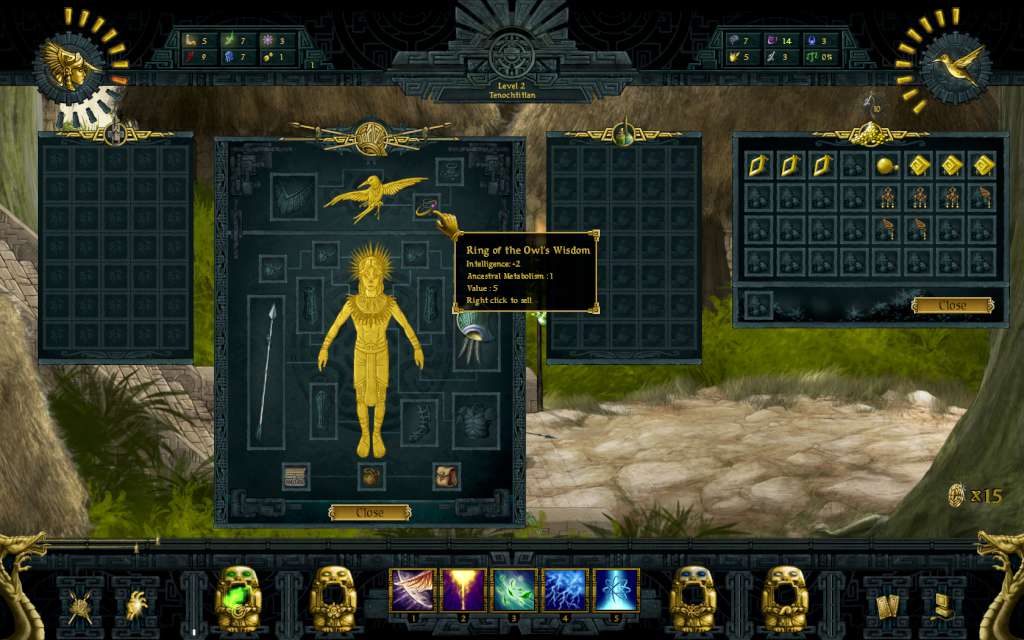
I went into Aztaka expecting a shallow mythology-themed platformer and came out genuinely surprised by how much original thinking a small Canadian studio packed into a 2009 release. The core loop is side-scrolling action-RPG: WASD to move warrior Huitzilo, mouse to attack, cast spells, and drag-and-drop spiritual energy globules around the screen to solve puzzles, open doors, heal NPCs, and unlock paths. That last part - the energy system - is the real hook. Four energy types (vital, divine, pure, and elemental) float around the levels as collectible globules, and routing them to the right targets is more interesting than it first appears. The world slows when you cast, which keeps the split keyboard-and-mouse demands from feeling impossible, though it still takes adjustment. The RPG layer is deliberately lean. Six stats, 14 unlockable skills, 7 talents, a quest log, equippable rings and armor found in hidden spots rather than looted from enemies - it all sits closer to a light action game than a proper stat-heavy RPG. Strength and Endurance do real work; Agility is mostly wasted points. Huitzilo's companion, a hummingbird called Ayopha, serves as your magic delivery system and can be geared up separately, though the bird's actual presence in combat is minimal. What does grow satisfyingly is Huitzilo himself: by the mid-game he wall-jumps, spin-attacks, and can damage enemies by jumping into them, turning the early spear-stab routine into something more kinetic and chaotic. The rough patches are real and worth naming. Combat hit detection is loose in early levels, bosses spike hard compared to regular enemies, and the lack of any controller support is a genuine annoyance on a game that already splits your attention between keyboard movement and mouse management. The overworld map is really just a menu dressed up as a picture - there's no true open exploration, just forward-or-back movement through 21 discrete areas. Spellcasting mechanics are never explained in-game, which cost at least one reviewer a playthrough. And a game-ending bug existed at launch, though patches addressed the worst of it. Where Aztaka earns honest respect is in its presentation and setting. The hand-painted backdrops - stone temples, dense jungles, mountaintops - hold up as art direction even by later standards, and the professionally recorded soundtrack blending vocals, flute, cello, and drums builds genuine atmosphere around a mythology most games never touch. The story itself, rooted in real Aztec legend with Huitzilo hunting seven Phonograms to quiet the gods, is more coherent and more carefully researched than its indie budget suggests. Critical reception on release landed in good-to-mixed territory, with most reviewers calling out the visuals and energy system as highlights while flagging the thin combat variety and pacing issues in the opening hours. This one is for players who can tolerate a slow-building action game, enjoy Metroidvania-lite backtracking, and appreciate handcrafted art over production-line polish. If the first two hours feel stiff, push to the midgame - the mechanics open up considerably. If you need tight combat feel from the start, Aztaka will frustrate before it rewards.

Catch-all
Tags
System Requirements
Keep exploring
Community Discussion
Be the first to comment on Aztaka.
Reviews & Ratings
No ratings available
Game Info
- Developer
- Citeremis Inc.
- Publisher
- Citeremis Inc.
- Release Date
- TBA