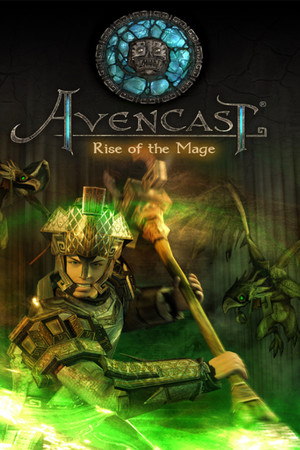
Avencast: Rise of the Mage
A forgotten Austrian indie ARPG that mixes Diablo-style dungeon crawling with beat-em-up spellcasting and surprisingly dense puzzle design - rough around the edges, genuinely worth your time if the genre fits.
GamerScout Verdict
Best for ARPG fans who want tactile spellcasting and puzzle-heavy dungeons and can forgive a clunky camera and dated production values.
Compare Prices(4 stores)
Every store in this table quotes us in euros, so the EUR figure is the price the seller actually set, not our arithmetic — which is why EUR is also the currency we rank in. We only list an offer here when the store gives us its price in euros, so nothing in this table is a number we invented.
Pick USD, PLN, GBP, CAD or AUD in the header and we convert from EUR at the European Central Bank reference rate — converted amounts are prefixed with ~. Your bank or the store may apply a different rate at checkout. We never hide offers based on where you are: everyone sees this whole table.
We may earn a commission when you buy games through links on this page — at no extra cost to you. It never affects our rankings or verdicts.
Price History
Screenshots & Media
About Avencast: Rise of the Mage
I have a soft spot for games that launched quietly and never got the coverage they deserved, and Avencast: Rise of the Mage is exactly that kind of underdog. ClockStone, a small Austrian studio, spent roughly four years building their first game largely from scratch - the CEO reportedly wrote most of the engine himself - and what came out in 2007 is a strange, endearing hybrid that sits somewhere between Diablo, a beat-em-up, and an old-school adventure game. It arrived without fanfare, scored a middling 68 on Metacritic, and then quietly earned Mostly Positive reviews on Steam over the years. That gap between critical reception and player sentiment tells you something. The core mechanical hook is the spellcasting system, and it is the one thing here that nobody else was really doing. Rather than point-and-click your way through hordes, you move with WASD and weave spells by combining rapid directional inputs with mouse buttons, almost like fighting game motions applied to an isometric RPG. If that sounds fiddly, it is - at least for the first couple of hours. Once it clicks, though, dodging flaming skulls and boulders while firing Soul Spark bolts and rolling out of melee range with a double-tap of the movement keys starts to feel genuinely satisfying. You can also bypass the motion inputs entirely by assigning spells to shortcut keys, which is a sensible accessibility option. The three spell trees - Blood Magic for close-combat staff work with moves like Inferno Lash and Hammer of Rage, Soul Magic for ranged projectile and wall-of-fire builds, and a Summoning tree for creature companions - give you real specialisation choices, even if each tree tops out at around 20 spells and the late-game mostly becomes a point-dump into your chosen school's attribute. What genuinely surprised me is how much puzzle-solving is baked in. Every dungeon layer carries riddles: mirror alignments to focus laser beams, rune-gate activations, switch sequences, alchemy ingredient combinations to craft items. This is not window dressing - it is load-bearing content that keeps the pacing varied when the combat loop threatens to go flat. The Crystal Caves opening area, a labyrinth of instant-kill automaton patrols, is a neat early signal that the game wants you to think as well as hack. The quest structure is fetch-heavy and the story is a well-worn magic academy cliche, but the writing occasionally surprises - the daemon invasion triggered by a dimension-travel experiment that succeeded a little too well is a better premise than the setup suggests. The rough edges are real and worth flagging. The camera is the biggest offender: it does not auto-track the player, so you are manually rotating with the middle mouse button during frantic fights, which causes unnecessary deaths, particularly early on. Voice acting has that slightly-too-reverberant school-hall echo that reviewers have been gently roasting for fifteen years. The character system is classless but shallow - four attributes, two active magic schools, and once you have spent points on your preferred dozen spells, level-ups become routine stat bumps. The visuals carry their age visibly, sitting somewhere in the neighbourhood of early Neverwinter Nights, and on modern Windows you may need to sort out a StarForce DRM driver update before the game will run cleanly. None of this is dealbreaking, but go in with eyes open. For players who love the feeling of a small team punching above its weight - who can appreciate a spell combo system that took genuine design courage to ship in 2007, and who do not mind a story that coasts on familiar fantasy scaffolding - Avencast holds up better than its score implies. It is not a long game, it knows roughly when to end, and the puzzle-to-combat rhythm gives it a texture most Diablo-alikes lack entirely.

Indie & narrative
Tags
System Requirements
Minimum
- OS
- Windows XP/Vista/7
- Sound
- DirectSound compatible
- Memory
- 512 MB (1GB Vista)
- Graphics
- GeForce FX 5700 or better / ATI Radeon 9700 or better
- DirectX®
- 9.0c
- Processor
- 2.2 GHz Intel Pentium or 2200+ AMD Athlon processor
- Hard Drive
- 4.4 GB of free space
Keep exploring
Community Discussion
Be the first to comment on Avencast: Rise of the Mage.
Reviews & Ratings
Game Info
- Developer
- ClockStone
- Publisher
- Meridian4
- Release Date
- Mar 17, 2010