Atom Zombie Smasher
A lean, wickedly smart overworld-versus-city strategy loop that squeezes more decision weight into a single campaign than most zombie games manage across a trilogy.
GamerScout Verdict
Best for strategy players who want tight, repeatable campaigns with genuine decision stakes and can tolerate RNG loadout variance.
Compare Prices(4 stores)
Every store in this table quotes us in euros, so the EUR figure is the price the seller actually set, not our arithmetic — which is why EUR is also the currency we rank in. We only list an offer here when the store gives us its price in euros, so nothing in this table is a number we invented.
Pick USD, PLN, GBP, CAD or AUD in the header and we convert from EUR at the European Central Bank reference rate — converted amounts are prefixed with ~. Your bank or the store may apply a different rate at checkout. We never hide offers based on where you are: everyone sees this whole table.
We may earn a commission when you buy games through links on this page — at no extra cost to you. It never affects our rankings or verdicts.
Price History
Screenshots & Media
About Atom Zombie Smasher
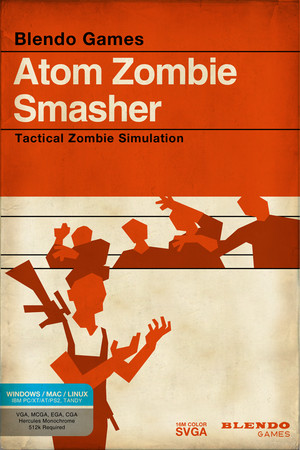
I pulled up the worldmap of Nuevos Aires expecting a breezy indie distraction and instead spent three hours micromanaging sniper placement, rationing scientists for research upgrades, and watching the Victory Track inch toward the Zed side in slow, stomach-dropping increments. Atom Zombie Smasher is a two-layer strategy game: a territory-control overworld where zombie infestations spread month by month, and a top-down city screen where you actually fight them off using a roster of hired mercenaries. Those two layers lock together in a way that feels closer to classic XCOM than to tower defense, despite the cute abstract art style. The tactical city layer is where the moment-to-moment tension lives. Before each mission you plan your merc deployment, positioning snipers, demo teams, infantry, and orbital bombardment crews on the map before pressing play. Then it all runs in real time: yellow civilian dots sprint for your rescue helicopter while purple zombie dots pour in from the district edges, and you redirect your helicopter, trigger artillery salvos, and detonate mines reactively. Skirmishes rarely last more than ten minutes, which keeps the pacing sharp. As the campaign progresses, you rescue scientists who fund research upgrades, and you unlock increasingly eccentric hardware. The Elephantbird orbital cannon, the Catbird area-denial weapon, and the Llama Bomb are not jokes, they are genuine late-game pivot tools that shift how you approach high-severity districts rated 3 or 4 on the infestation scale. There is real build logic here: deciding whether to spend scientists on faster helicopter attraction, merc XP multipliers, or heavy ordnance damage buffs against Mega Zeds requires actual prioritisation. The overworld operates on a points-race called the Victory Track, and the math almost always favours the Zed side. Monthly event modifiers, shorter daylight windows, and gas-line ruptures in cities keep the pressure from becoming predictable. The randomised merc pool available each month means you sometimes go into a difficulty-4 territory with only a sniper and a demo crew, because that is what the game handed you. Critics and the community have been consistent on this friction point: the RNG-gated loadout system can feel punishing, and a bad early run of merc luck can cost a campaign before you have the research depth to compensate. That said, longer campaign lengths give you more time to claw back a deficit through unlocks, which is worth knowing before you quit a session in frustration. The tutorial is minimal but the systems are legible within a couple of missions, and the difficulty dial at campaign start lets newcomers experiment without commitment. Mod support is baked into the main menu, with an in-game file share for downloading and distributing rule modifications. The active mod scene is modest in scale, but the tools are open enough to rework mercenary parameters, zombie chase behaviour, and city generation, which extends the replay value past the point where the base campaign starts to feel sampled-out. Local co-op for up to three players exists using a mouse-and-gamepads setup, though the implementation is awkward enough that most people treat this as a solo game with occasional co-pilot duties. The 60s surf-rock soundtrack from Benny and the Mid-Knights gives the whole thing a deadpan retro tone that suits Brendon Chung's offbeat vignette storytelling between missions. If you need to know where this lands: it is a compact, replayable strategy game with genuine depth in its upgrade and territory layers, a low price point, and a campaign length that respects your time. The randomisation that some players bounce off is also what makes replays feel different. Go in knowing the Zed multiplier on the Victory Track is designed to make you sweat, and you will find the difficulty curve fair rather than arbitrary.

Strategy & simulation
Tags
System Requirements
Minimum
- OS
- Windows XP/Vista/7
- Memory
- 512MB
- Optional
- Gamepad or Joystick required for multiplayer
- Processor
- 1GHz
- Video Card
- 60MB OpenGL-compatible
- Hard Disk Space
- 60MB
Keep exploring
Community Discussion
Be the first to comment on Atom Zombie Smasher.
Reviews & Ratings
Game Info
- Developer
- Blendo Games
- Publisher
- Blendo Games
- Release Date
- Mar 14, 2011