
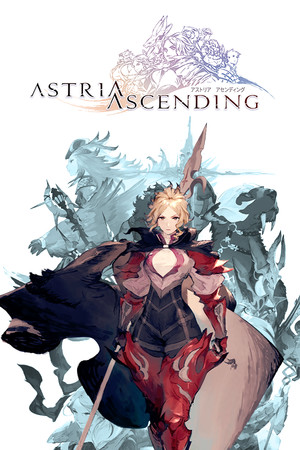
Astria Ascending
Gorgeous hand-drawn aesthetics and a genuinely clever Focus Point combat system carry this JRPG further than its lukewarm story deserves - but old-school grind tolerance is non-negotiable.
GamerScout Verdict
Worth it for patient JRPG veterans who rate job-system depth over narrative polish - everyone else should wait for a deep discount.
Compare Prices(7 stores)
Every store in this table quotes us in euros, so the EUR figure is the price the seller actually set, not our arithmetic — which is why EUR is also the currency we rank in. We only list an offer here when the store gives us its price in euros, so nothing in this table is a number we invented.
Pick USD, PLN, GBP, CAD or AUD in the header and we convert from EUR at the European Central Bank reference rate — converted amounts are prefixed with ~. Your bank or the store may apply a different rate at checkout. We never hide offers based on where you are: everyone sees this whole table.
We may earn a commission when you buy games through links on this page — at no extra cost to you. It never affects our rankings or verdicts.
Price History
Screenshots & Media
About Astria Ascending
My first instinct when I saw Astria Ascending was to compare it to the golden-era JRPGs I grew up loving - and the game is absolutely counting on that reaction. Artisan Studios assembled pedigree talent: developers who worked on Final Fantasy, Nier: Automata, and Bravely Default, with composer Hitoshi Sakimoto handling the score. The result is a 50-plus-hour side-scrolling RPG set in Orcanon, a world policed by eight demigods of the 333rd Cohort who get exactly three years of service before they transcend - a death sentence dressed up as a calling. The premise is melancholy and interesting. The execution is messier. On the mechanical side, Astria Ascending earns genuine respect. Each character equips a Main Class, Sub Class, and Support Class drawn from a pool of 20 options, and the Ascension Grid - think a leaner version of Final Fantasy X's Sphere Grid - gates skills and stat boosts behind SP earned in battle. Classes like Soldier, Assassin, White Mage, Chronomancer, and Hunter each have distinct identities, and the game lets you build around elemental exploitation, status-effect stacking, or buff extension through passive skills. The Focus Point system ties it together neatly: hitting an enemy weakness accumulates FP, which you then spend to boost ability power or extend buff durations. It rewards aggression and smart target selection without punishing you for experimenting. Class choices are permanent once committed, so save before you lock in - but the flexibility across the three job slots means most party compositions are viable. The art is the other genuine strength. Every character, NPC, enemy, and background is hand-drawn with the kind of detail that makes you want to stand still and look. The five humanoid races - the Meryo, Peyska, Arktan, Awisi, and Zeft - each have striking visual designs, and the dungeon environments are colorful and distinct. Full Japanese and English voice acting is present, though the consensus from players is to go with the Japanese track for immersion. Mini-games including a hexagon-based card game called J-ster (yes, it has Triple Triad energy) and shoot-em-up sequences add texture without overstaying their welcome. The problems are real, though, and worth knowing before you commit. The story introduces your eight demigods as if they have fought side-by-side for nearly three years, yet they behave with the social awareness of strangers who just met on a bus. The character writing has good ingredients - Ulan's self-doubt, Alek's arrogance, Echo's struggle against prejudice - but the narrative rarely does enough with them to produce the emotional payoff the premise promises. Dungeon navigation is a recurring frustration: the 2D side-scrolling layout can make exits and paths genuinely hard to read, and the in-game map offers minimal guidance. Random enemy encounters come thick and fast, difficulty spikes arrive without warning, and farming SP for the Ascension Grid can tip into a grind that feels earned only if you have a high threshold for repetition. Steam reviews landed at a mixed 51 percent positive, which tracks with the split between players who loved the combat depth and players who bounced off the dungeon slog. For the right player - someone who rates Final Fantasy V-era job systems, doesn't need their narrative to be watertight, and can tolerate some pacing friction in exchange for gorgeous visuals and a combat system worth poking at - Astria Ascending delivers a reasonably satisfying 50-hour run. If you need choices that reverberate, a story that rewards close reading, or dungeons that feel fair to navigate, this one will frustrate more than it fulfills. It is the kind of game that would have been celebrated without question in 2003 and lands as competent-but-uneven in the current JRPG landscape.

RPGs
Tags
System Requirements
Minimum
- OS
- Windows 10 64-bit
- Memory
- 8 GB RAM
- DirectX
- Version 11
- Storage
- 25 GB available space
- Graphics
- NVIDIA GeForce GTX 750
- Processor
- Intel Core i3-550 / AMD FX-770K
Recommended
- OS
- Windows 10 64-bit
- Memory
- 16 GB RAM
- DirectX
- Version 11
- Storage
- 25 GB available space
- Graphics
- NVIDIA GeForce GTX 1070Ti / AMD Radeon RX 5700
- Processor
- Intel Core i5-7600K / AMD Ryzen 5 1600X
DLC & Add-ons for Astria Ascending2
Expansions, DLC packs and add-on content for this game. Click any item to see store offers.
Keep exploring
Community Discussion
Be the first to comment on Astria Ascending.
Reviews & Ratings
Game Info
- Developer
- Artisan Studios
- Publisher
- Dear Villagers
- Release Date
- Sep 30, 2021