
As I Began to Dream
Hand-crafted grief in puzzle form: Strayflux's debut is a 4-6 hour storybook platformer that earns every tear it asks for, if you can forgive some rough edges.
GamerScout Verdict
Worth it for Gris fans and narrative-first players who want a compact, handcrafted puzzle story that sticks with you after the credits.
Compare Prices(8 stores)
Every store in this table quotes us in euros, so the EUR figure is the price the seller actually set, not our arithmetic — which is why EUR is also the currency we rank in. We only list an offer here when the store gives us its price in euros, so nothing in this table is a number we invented.
Pick USD, PLN, GBP, CAD or AUD in the header and we convert from EUR at the European Central Bank reference rate — converted amounts are prefixed with ~. Your bank or the store may apply a different rate at checkout. We never hide offers based on where you are: everyone sees this whole table.
We may earn a commission when you buy games through links on this page — at no extra cost to you. It never affects our rankings or verdicts.
Price History
Screenshots & Media
About As I Began to Dream
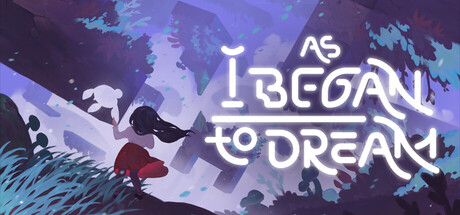
I have a soft spot for the small Indonesian studios that nobody covers in the western gaming press, and Strayflux is exactly that kind of find. Their debut, released in November 2025, is a puzzle platformer built around one of the most structurally honest conceits I've seen in the genre: each of its five chapters maps directly to one of the five stages of grief, and the world's colour and atmosphere shift to match. The opening chapter, Denial, is warm and autumnal. Anger drops you into a sand-whipping desert. Depression goes grey and suffocating. The design commitment here is not subtle, and it is not trying to be. The core mechanic asks you to stand at specific blue marker points and then rotate or swap large square segments of the level around Lily, reshaping platforms, creating paths, and occasionally weaponising the slow-moving blob enemies that patrol back and forth. Early puzzles are gentle primers: flip a platform, assemble a rough staircase, collect the yellow gem that unlocks the next gate. Later chapters layer in timed switches, bounce pads, portals, and chain reactions where one rotation sets off a sequence you have to pre-visualise before committing. Those later puzzles are genuinely satisfying, the kind where a solution clicks into place and you feel the logic of it rather than just luck your way through. The game is forgiving enough that precision platformer veterans may find the difficulty ceiling modest, but that accessibility is a deliberate choice, not an oversight. The five-chapter structure also includes optional blue orbs, both whole and fractured variants, scattered through each stage for players who want a reason to replay carefully. What holds the whole thing together is the craft on display in every frame. The visual art was influenced by children's storybooks and you feel it: the illustrated cutscenes carry a watercolour warmth that belongs in a short film, not tucked inside a puzzle game. Composer JabFina scores the dreamscapes with slow, melancholic melodies that sit quietly beneath the platforming without demanding your attention, the best kind of game music. Reviewers compared the overall vibe to Gris and that is not a stretch, though As I Began to Dream is less abstract and more willing to tell its story directly through Lily and her companion, a turtle named Flippy. The honest criticism sits in two places. First, the physics can be inconsistent: boxes slip out of Lily's grip mid-carry, and certain block-stacking interactions disable the rotation ability in ways that feel like bugs rather than design. Second, puzzles generally have one correct solution, which means a mistake in a multi-room sequence often requires a full room reset with no partial undo. For a 4-6 hour game built on momentum and emotional pacing, those forced resets create friction exactly where the experience should breathe. Neither issue breaks the game, but players who lean heavily into the mechanical side of puzzle-platformers will notice the wobble. For the audience this is made for, those who finished Gris and wanted something slightly more tactile, or who loved the grief-as-architecture concept of Spiritfarer but wanted something shorter and less management-heavy, the rough edges are easy to overlook. The story earns its quieter ending. It knows what it wants to say and it says it cleanly, which is rarer than it should be.

Indie & narrative
Tags
System Requirements
Minimum
- OS
- TBA
- Memory
- 4 GB RAM
- Storage
- 2 GB available space
- Graphics
- TBA
- Processor
- TBA
- Sound Card
- TBA
- VR Support
- TBA
Recommended
- OS
- TBA
- Memory
- 4 GB RAM
- Storage
- 2 GB available space
- Graphics
- TBA
- Processor
- TBA
- Sound Card
- TBA
- VR Support
- TBA
Keep exploring
Community Discussion
Be the first to comment on As I Began to Dream.
Reviews & Ratings
No ratings available
Game Info
- Developer
- Strayflux
- Publisher
- Soft Source
- Release Date
- Nov 19, 2025