
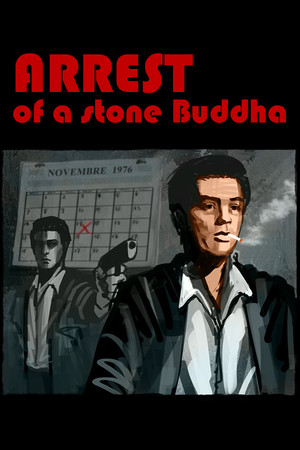
Arrest of a stone Buddha
A brutalist mood piece from solo developer yeo that weaponises boredom and bullet-spray in equal measure - respect its bleak wavelength or bounce off it hard.
GamerScout Verdict
Best for players who can read intentional frustration as authorial voice, not broken design - everyone else should try Ringo Ishikawa first.
Compare Prices(3 stores)
Every store in this table quotes us in euros, so the EUR figure is the price the seller actually set, not our arithmetic — which is why EUR is also the currency we rank in. We only list an offer here when the store gives us its price in euros, so nothing in this table is a number we invented.
Pick USD, PLN, GBP, CAD or AUD in the header and we convert from EUR at the European Central Bank reference rate — converted amounts are prefixed with ~. Your bank or the store may apply a different rate at checkout. We never hide offers based on where you are: everyone sees this whole table.
We may earn a commission when you buy games through links on this page — at no extra cost to you. It never affects our rankings or verdicts.
Price History
Screenshots & Media
About Arrest of a stone Buddha
My first hour with this game felt like sitting in a grey November waiting room with no magazine rack and a pistol in my coat. That is not a complaint. Arrest of a stone Buddha is yeo's follow-up to The Friends of Ringo Ishikawa, and where that game circled the restless urgency of youth, this one plants you inside the hollow routine of a contract killer drifting through 1976 Paris, marking a date on a calendar and not talking about why. The structure is a strict alternation: execute a target, fight your way through what feels like a corridor stuffed with an inexhaustible supply of suited henchmen, then return to a muted city and kill time until the phone rings again. The combat loop is genuinely strange to describe. Every mission opens in silence - no music, no UI, just the protagonist standing behind his mark. The second the trigger is pulled, waves of enemies pour in from both sides of the screen and you are managing a one-shot-one-kill economy with no ammo counter and no health bar. Weapons run dry; you disarm a thug with a melee move and steal his gun. The controls layer aim, quickfire, and disarm across button combinations that feel unintuitive until muscle memory quietly assembles itself over repeated deaths. Off-mission, the city is small but full of half-hidden texture: change your coat, sit at a cafe, watch a film, stare off a rooftop. None of it is mechanically rewarding in any conventional sense, and that blankness is the point. Here is the honest tension at the heart of this thing. The slow walking speed, the absence of a health meter, the combat that never quite snaps into the satisfying groove you keep expecting - critics and players have split almost perfectly on whether these are failures of craft or intentional design statements. The philosophical reading, which I find hard to dismiss, is that the protagonist does not run toward danger or away from it because he is indifferent to survival. The walk speed confronts you with the emptiness between jobs. The no-UI approach strips away the scaffolding that usually makes violence feel like a game. Yeo is drawing from French New Wave cinema and John Woo in the same breath, and the resulting tone is closer to Melville's Le Samourai than to anything with a kill streak counter. Not everyone will buy that framing, and the cheap off-screen deaths that close out combat segments are hard to defend on pure design terms regardless of intent. The pixel art is quiet and carefully assembled, all muted greys and cold French light. The soundtrack does something rare: it earns the word atmospheric without ever becoming ambient wallpaper. It pulls your attention inward during the slow segments in a way that the gameplay alone cannot always achieve. The whole experience runs around five hours, which is the right length for what it is trying to say. Anything longer would collapse under the weight of its own restraint. If you came here from Ringo Ishikawa expecting more of that game's life-sim richness, you will likely feel the absence. If you are the kind of player who can sit with discomfort and let a game's logic reveal itself on its own terms, there is something genuinely singular here - bruised and difficult and worth the time.

Indie & narrative
Tags
System Requirements
Minimum
- OS
- 7
- Memory
- 2 MB RAM
- Storage
- 200 MB available space
- Processor
- 1.2 GHZ
Keep exploring
Community Discussion
Be the first to comment on Arrest of a stone Buddha.
Reviews & Ratings
No ratings available
Game Info
- Developer
- yeo
- Publisher
- yeo
- Release Date
- Feb 27, 2020