Armikrog
The claymation craft here is genuinely one-of-a-kind, but Neverhood veterans should know upfront: this is a shorter, rougher, less inspired reunion than anyone wanted.
GamerScout Verdict
Worth a look at a low price for the visual craft alone, but Neverhood fans will find it a hollow and frustratingly brief reunion.
Compare Prices(8 stores)
Every store in this table quotes us in euros, so the EUR figure is the price the seller actually set, not our arithmetic — which is why EUR is also the currency we rank in. We only list an offer here when the store gives us its price in euros, so nothing in this table is a number we invented.
Pick USD, PLN, GBP, CAD or AUD in the header and we convert from EUR at the European Central Bank reference rate — converted amounts are prefixed with ~. Your bank or the store may apply a different rate at checkout. We never hide offers based on where you are: everyone sees this whole table.
We may earn a commission when you buy games through links on this page — at no extra cost to you. It never affects our rankings or verdicts.
Price History
Screenshots & Media
About Armikrog
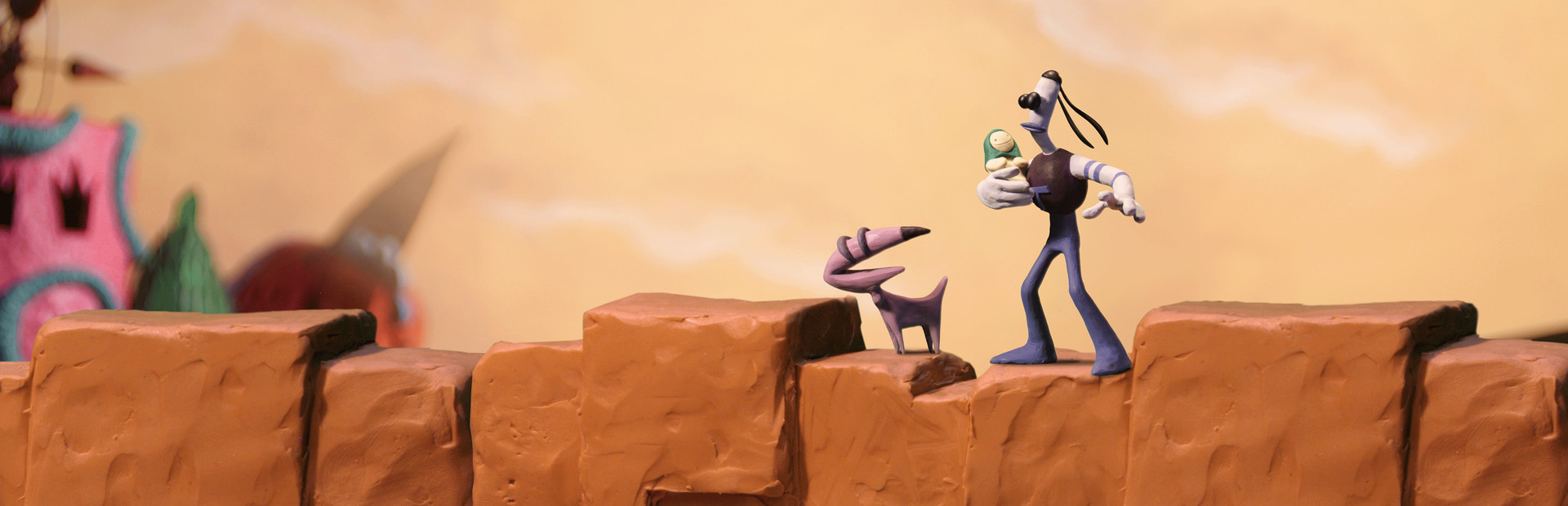
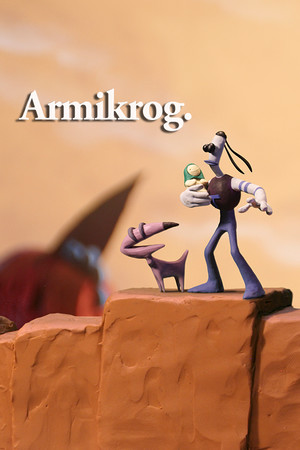
My first hour with Armikrog was spent with my jaw somewhere near the floor. The stop-motion clay sets, the thumb-groove textures pressed into alien walls, Tommynaut's lopsided saunter through corridors that look stitched together from egg-boxes and fever dreams - nothing else on Steam looks remotely like this. Pencil Test Studios built something visually precious here, and I want to be honest about that before I get into the harder conversation. The craft of the art alone earns your curiosity. Whether it earns your patience is a different question. The mechanics are classic point-and-click with a one-click-does-all cursor - click to move, click to interact, click to combine items automatically when the game decides you are in the right spot. You control two characters: Tommynaut, who pulls levers, stores items inside his own body (yes), and drives a Zipkicker cart between zones; and Beak-Beak, his blind alien dog, who can fly into elevated areas and access tight tunnels rendered in a strange black-and-white canine-vision filter. Toggling between them to coordinate switches is the core puzzle logic, and early on it feels fresh and tactile. The problem is that this two-character choreography gets recycled hard. By the third time you are sending Beak-Beak to sit on a floor button while Tommynaut shuffles a large object through the room, the loop has worn itself thin. The symbol-tile puzzles repeat on the same logic across multiple areas, and the lever-into-socket mechanic appears so often it starts to feel less like game design and more like a filler pattern. The story places Tommynaut and Beak-Beak crash-landed inside the Armikrog fortress on planet Spiro 5, discovering a baby named P, a mystery about stolen P-tonium crystals, and a villain called Vognaut whose personal connection to Tommynaut is hinted at but never properly developed. The whole narrative is delivered through environmental clues and sparse cutscenes, which in a richer game would feel atmospheric. Here it mostly feels incomplete. The voice cast - including Michael J. Nelson from RiffTrax and Rob Paulsen - is barely used inside actual gameplay, leaving long stretches of ambient silence where character commentary should have been. Terry Scott Taylor returned to score the game, and when his music does appear it carries exactly the eccentric warmth you would want, but audio bugs at launch meant tracks failed to trigger consistently, so much of the fort is quieter than it should be. At launch, bug reports were significant: characters refusing to press buttons, Beak-Beak locking into a perpetual fly-state, lever triggers not registering and softlocking progress. Patches addressed some of this, but the game arrived feeling undercooked, and several critics noted it carried the mark of Kickstarter budget constraints throughout. Colour-specific tile puzzles caused accessibility problems for players who struggled to distinguish yellow from orange or blue from purple. These are not obscure edge cases - they are design oversights that should have been caught. The game runs three to five hours depending on how stuck you get, and there is no meaningful replay hook once the fortress is done. I want to defend this game to a point, because I genuinely believe the people who will love it most are those who go in without The Neverhood hanging over every frame. Newcomers to claymation adventure games will find something genuinely strange and handmade in a medium full of procedural polish. The opening cutscene alone is a small piece of animation art, and certain moments - decoding ant-creature hints to fire a cannon, switching characters to navigate a multi-stage environmental puzzle - show what the game could have been with more time and money. But the honest read at a 57 Metacritic is basically correct. This is a studio running on fumes after a constrained Kickstarter, shipping something incomplete, and hoping the aesthetic covers the gaps. Sometimes it does. Mostly it does not.

Indie & narrative
Tags
System Requirements
Minimum
- OS
- Windows XP+
- Memory
- 2 GB RAM
- DirectX
- Version 9.0
- Storage
- 2 GB available space
- Graphics
- Pentium 4 or equivalent
Keep exploring
Community Discussion
Be the first to comment on Armikrog.
Reviews & Ratings
Game Info
- Developer
- Pencil Test Studios
- Publisher
- Versus Evil
- Release Date
- Sep 30, 2015