
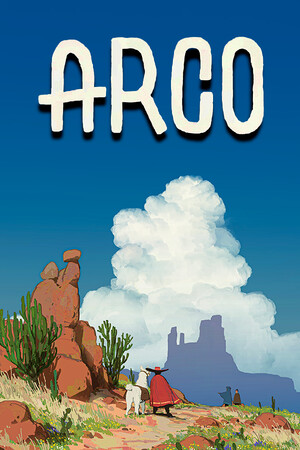
Arco
Forget every Mesoamerican setting you thought you knew from games, Arco puts four indigenous protagonists front and centre in a revenge story against colonial forces, backed by a combat system sharp enough to earn 86 on Metacritic and 96% positive on Steam.
GamerScout Verdict
Best for tactics fans who want their moral choices to actually change how hard the next fight is.
Compare Prices(3 stores)
Every store in this table quotes us in euros, so the EUR figure is the price the seller actually set, not our arithmetic — which is why EUR is also the currency we rank in. We only list an offer here when the store gives us its price in euros, so nothing in this table is a number we invented.
Pick USD, PLN, GBP, CAD or AUD in the header and we convert from EUR at the European Central Bank reference rate — converted amounts are prefixed with ~. Your bank or the store may apply a different rate at checkout. We never hide offers based on where you are: everyone sees this whole table.
We may earn a commission when you buy games through links on this page — at no extra cost to you. It never affects our rankings or verdicts.
Price History
Screenshots & Media
About Arco
I track turn-based systems the way some people track football stats, so when I say Arco's simultaneous combat is genuinely novel, that means something. Most tactical RPGs ask you to plan, then wait. Arco asks you to plan while knowing your enemies are planning too, and then watch both sets of actions resolve at the same time. You choose your move, the enemy telegraphs theirs, and everything plays out in one chaotic burst before the cycle resets. The resource at the centre of all this is magia, spend it to attack or use abilities, regenerate it by moving or holding position, which quietly encourages constant repositioning rather than the static corner-camping that ruins so many grid-based games. Toss in environmental hazards like exploding cacti and trigger-able bear traps, plus an interrupt ability that can stop a gatling gun mid-spray, and you have a system where reading the battlefield actually matters every single turn. Each of the four playable characters runs on a distinct skill tree, and the builds diverge meaningfully. Tizo fires arrows that land two turns after release, letting you layer damage with positioning to wipe clustered enemies in one volley. Zoka is close-range, built around closing distance to stun or interrupt. The Kanek prince Kaax deflects projectiles, including bullets, turning him into a living shield when placed correctly. Recruiting companions for each chapter adds another layer, since you are slotting skills into limited equipment slots and deciding which synergies to prioritise. Over 100 skills across the roster means there is genuine build variety here, not just a handful of numbers going up. The guilt system deserves its own paragraph because it is the most mechanically clever moral consequence I have seen in a small RPG in years. Bad decisions in the story increase your guilt meter, and guilt spawns ghosts in combat, enemies that keep moving even when time is frozen between your turns. This means a narratively dark run is also a mechanically harder run, because those ghosts eat into the planning window that is otherwise the game's main accessibility lever. Accumulate enough guilt and the game tilts from turn-based toward real-time, compressing your decision time further. It is a direct feedback loop between story choices and combat difficulty, and it adds genuine replay incentive: a low-guilt run and a high-guilt run play like different difficulty modes. Where Arco is less clean: the UI occasionally struggles to distinguish between a movement command and a menu interaction, which has cost players progress when using a controller. Some critics flagged that the final boss content is locked behind the higher-guilt ending, making the cleaner moral path feel anticlimatic at its close. A handful of dialogue lines lean into internet-speak that clashes with the otherwise sombre tone. And the minimalist pixel art, while striking in the overworld panoramas, leaves individual characters as near-unreadable blobs, fine aesthetically, potentially fatiguing over twelve-plus hours. The accessibility options cover most of these gaps: battles can be restarted instantly with no penalty, an Assist mode allows skipping fights entirely, and most of the punishing optional encounters can simply be avoided. For strategy players, the question is always depth-versus-length, and Arco sits at a satisfying ratio. Around twelve hours for a focused run, more if you dig into the 200-plus locations and side content, with a second playthrough justified by the branching guilt paths. There is no mod ecosystem to speak of, this is a handcrafted single-player experience, not a sandbox, but the encounter design is tight enough that the combat holds up on repeat visits. If you find the opening couple of hours slow, the system does not fully open up until the first full combat chapter lands; push through the prologue and judge it from there.

Strategy & simulation
Tags
System Requirements
Minimum
- OS
- Windows 7
- Memory
- 4 GB RAM
- Storage
- 1 GB available space
- Graphics
- 1GB
- Processor
- i3 2GHz
- VR Support
- no
Recommended
- OS
- Windows 10
- Memory
- 8 GB RAM
- Storage
- 1 GB available space
- Graphics
- 2GB
- Processor
- i5 3GHz
- VR Support
- no
Keep exploring
Community Discussion
Be the first to comment on Arco.
Reviews & Ratings
Game Info
- Developer
- Franek
- Publisher
- Panic
- Release Date
- Aug 15, 2024