
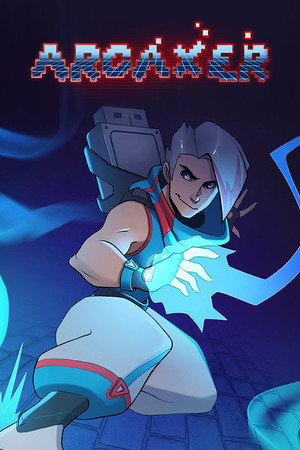
Arcaxer
Turn-based JRPG combat gets a VR body - you physically dodge spells and swing weapons while climbing a procedurally generated sci-fi tower. Quietly one of the strangest, most committed indie experiments in VR.
GamerScout Verdict
Best for VR owners who want turn-based RPG depth with physical combat, and can forgive thin dungeon layouts for a genuinely inventive core loop.
Compare Prices(4 stores)
Every store in this table quotes us in euros, so the EUR figure is the price the seller actually set, not our arithmetic — which is why EUR is also the currency we rank in. We only list an offer here when the store gives us its price in euros, so nothing in this table is a number we invented.
Pick USD, PLN, GBP, CAD or AUD in the header and we convert from EUR at the European Central Bank reference rate — converted amounts are prefixed with ~. Your bank or the store may apply a different rate at checkout. We never hide offers based on where you are: everyone sees this whole table.
We may earn a commission when you buy games through links on this page — at no extra cost to you. It never affects our rankings or verdicts.
Price History
Screenshots & Media
About Arcaxer
My instinct when I first heard 'turn-based RPG in VR' was mild suspicion. Those words historically cancel each other out. Arcaxer, the small indie release from Overrun Games, quietly argues the opposite, and it won me over through sheer commitment to a weird idea. The core conceit is genuinely clever. Combat drops you into first-person view where, even though it's still technically turn-based, you have to physically lean and step to dodge incoming projectiles, and physically aim and time your own attacks with gesture-based inputs. It borrows obvious DNA from Paper Mario and Undertale in the way it turns every fight into a little performance, and the VR layer makes that feel visceral rather than academic. Between fights, the game shifts to a top-down god-view for dungeon navigation, which sounds disorienting but turns out to be the right call. The procedurally generated floors of The Stack look better from a distance, and the isometric perspective gives you the spatial overview you need when rooms start filling up with traps and ambushes. You pick from five classes at the start: Fighter leans into physical melee, Mage works the 'Hax' ability system (think magic with a sci-fi rename), Thief brings wildcard abilities that can flip a fight unexpectedly, Blue Mage lets you absorb and reuse monster skills, and Dark Knight borrows randomly from other classes for a chaotic run. The class spread genuinely changes how combat feels across playthroughs. Outside the dungeons, a hub world lets you buy gear with earned credits, work out in minigames to raise stats, and meet the colorful cast of voiced and unvoiced NPCs whose tonal inconsistency is, somehow, part of the charm. The script leans hard into fourth-wall comedy and simulation-world absurdism, and a surprising amount of it lands. The weaknesses are real. Dungeon floors, especially early in The Stack, are sparse and repetitive. The story sets up its premise and then mostly steps aside, so if you came for narrative depth you will find a thin trail. Asset quality becomes noticeable in first-person, which is part of why the isometric mode ends up being the natural default. Dialogue hints at branching choices but the story path stays linear throughout. These are the friction points of a small team making an ambitious game, not signs of carelessness. What I keep returning to is how intentional the whole package feels. The funky soundtrack has a retro-futurist energy that matches the simulation setting. The enemy designs, from web-crawler spiders with webcam bodies to whatever internet-meme creature shows up next, have a visual vocabulary that commits to the bit. Post-launch updates added new areas, enemies, and abilities, and the developers have been active with their small but genuine community. For VR owners who have burned through the action-reflex catalog and want something with class variety, looting loops, and a sense of humor about itself, Arcaxer is that odd little game you tell someone about in hushed tones.

Indie & narrative
Tags
System Requirements
Minimum
- OS
- 10
- Memory
- 8 GB RAM
- Storage
- 1 GB available space
- Graphics
- NVIDIA GTX 1060 / AMD Radeon RX 480 or greater
- Processor
- Intel i5-4590 / AMD Ryzen 5 1500X or greater
- VR Support
- SteamVR. Room Scale 2m by 1.5m area required
Recommended
Requires a 64-bit processor and operating system
Keep exploring
Community Discussion
Be the first to comment on Arcaxer.
Reviews & Ratings
No ratings available
Game Info
- Developer
- Overrun Games
- Publisher
- Well Played Studios
- Release Date
- Feb 25, 2021