
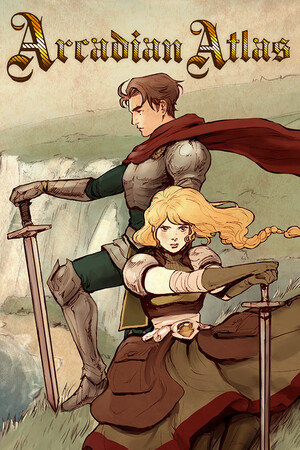
Arcadian Atlas
Nostalgia-first tactical RPG that plays it safe with the Final Fantasy Tactics formula - accessible enough for genre newcomers but thin enough to frustrate veterans hunting for deep build complexity.
GamerScout Verdict
Best for tactics newcomers and FFT nostalgists who want a short, story-driven SRPG - veterans chasing deep build systems should look elsewhere.
Compare Prices(4 stores)
Every store in this table quotes us in euros, so the EUR figure is the price the seller actually set, not our arithmetic — which is why EUR is also the currency we rank in. We only list an offer here when the store gives us its price in euros, so nothing in this table is a number we invented.
Pick USD, PLN, GBP, CAD or AUD in the header and we convert from EUR at the European Central Bank reference rate — converted amounts are prefixed with ~. Your bank or the store may apply a different rate at checkout. We never hide offers based on where you are: everyone sees this whole table.
We may earn a commission when you buy games through links on this page — at no extra cost to you. It never affects our rankings or verdicts.
Price History
Screenshots & Media
About Arcadian Atlas
My instinct when sitting down with a tactics game is to open a spreadsheet before the first battle loads. Arcadian Atlas did not reward that habit in the way I hoped, but it rewarded patience in other ways I did not expect. The setup is a grid-based isometric TRPG with four starting classes - Cavalier, Warmancer, Ranger, and Apothecary - each branching into two advanced promotions for a total of twelve classes across the campaign's 70-plus encounters. The turn order runs on a speed-based initiative meter rather than alternating player and enemy phases, terrain elevation genuinely matters (Rangers and Hunters get a real sniping advantage from high ground), and the Shaman's Unholy Revival skill - which raises fallen units as undead - is the kind of wild ability that makes you sit up straight. On paper, that is a respectable mechanical toolkit for a two-person indie studio's first release. In practice, the system has a hard ceiling. Class promotion is a one-way door: once a Cavalier advances to Inquisitor or Ronin, the skill trees they left behind are frozen. Equipment progression is fully linear, no affixes, no interesting augments. Consumable items were cut altogether. The result is that after the midgame your party feels locked in, and the late-game encounters - some of which border on punishing even on lower difficulty settings - arrive just as your build options run dry. For newcomers to the genre, though, that same simplicity is genuinely inviting. Leveling is automatic: every unit that participates in a battle gains a level afterward, and key story characters like Vashti and Desmond level up passively so you cannot fall behind. New recruits hired at the Tavern arrive pre-leveled to match your current progress, which means you can slot fresh classes into your roster without grinding. There are four difficulty settings and you can swap between them at the main menu, which is honest design. The mouse-and-keyboard experience is rough - tile selection is fiddly with no camera rotation to compensate - so a controller is strongly recommended if you are playing on PC. The skip-cutscene feature skipping past decision prompts without pausing is a genuine annoyance worth knowing about before you use it. The presentation is where the game earns its warmth. The sprite work is large-scale and expressive, with subtle facial animations that would be impossible at a smaller resolution. The Art Nouveau portrait style is divisive - some of the human faces read oddly - but the jazz-inflected soundtrack by composer Moritz P.G. Katz is a consistent standout. It is not what you expect from a civil-war fantasy, and it is better for that. The story follows Vashti and Desmond, two lovers on opposite sides of a succession war, with a framing structure that deliberately echoes Final Fantasy Tactics. The parallel is unavoidable and the writing rarely pushes beyond its inspirations - much of the worldbuilding sits in a compendium rather than the dialogue - but the political setup is coherent and the pacing holds across a roughly 12-to-13 hour campaign. Critically, Steam user sentiment landed at a mixed 56 percent positive from 140 reviews, and the Metacritic aggregate sits at 63. Those numbers are honest. This is a debut effort from a brother-sister studio that spent seven years getting here, and the seams show in the class system depth, the fixed camera, the absent consumables, and some balancing rough edges. Compared to Fell Seal or Triangle Strategy - both of which deliver more build latitude at a similar or lower budget tier - Arcadian Atlas feels constrained. But constrained is not the same as bad. If you have never played a tactics RPG and want an entry point that will not bury you in job trees, or if you simply want a clean 13-hour story-driven TRPG with a great soundtrack and beautiful sprites, this delivers that without friction.

Strategy & simulation
Tags
System Requirements
Minimum
- OS
- Windows 7
- Memory
- 4 GB RAM
- DirectX
- Version 9.0c
- Storage
- 6 GB available space
- Graphics
- NVIDIA GT 630 / 650m, AMD Radeon HD6570 or equivalent
- Processor
- Intel Core 2 Quad Q6600 @ 2.4 GHz, AMD FX 8120 @ 3.1 GHz
- Sound Card
- 100% DirectX 9.0c compatible sound card
Keep exploring
Community Discussion
Be the first to comment on Arcadian Atlas.
Reviews & Ratings
Game Info
- Developer
- Twin Otter Studios
- Publisher
- Serenity Forge
- Release Date
- Jul 27, 2023