
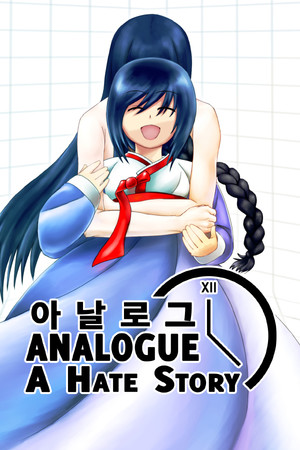
Analogue: A Hate Story
A five-to-seven-hour visual novel about digging through a dead spaceship's logs alongside two AIs who both have reasons to lie to you. Uncomfortable, precise, and harder to put down than it has any right to be.
GamerScout Verdict
Best for readers who want interactive fiction that respects their intelligence and doesn't flinch from its own darkness.
Compare Prices(5 stores)
Every store in this table quotes us in euros, so the EUR figure is the price the seller actually set, not our arithmetic — which is why EUR is also the currency we rank in. We only list an offer here when the store gives us its price in euros, so nothing in this table is a number we invented.
Pick USD, PLN, GBP, CAD or AUD in the header and we convert from EUR at the European Central Bank reference rate — converted amounts are prefixed with ~. Your bank or the store may apply a different rate at checkout. We never hide offers based on where you are: everyone sees this whole table.
We may earn a commission when you buy games through links on this page — at no extra cost to you. It never affects our rankings or verdicts.
Price History
Screenshots & Media
About Analogue: A Hate Story
I went into this one expecting a quiet curiosity from 2012 and came out genuinely unsettled, which is exactly what Christine Love intended. You play an unnamed investigator tasked with boarding the long-lost generation ship Mugunghwa, piecing together what happened to its crew by reading through centuries-old diaries, letters, and court records. The catch is that your two guides through this archive, the AIs *Hyun-ae and *Mute, have radically different accounts of the same events and deeply personal reasons to shape what you learn. The interface mirrors a basic email client: log blocks arrive in rough chronological order, you read, you bring interesting entries back to whichever AI you have active, and the story unlocks in layers. It sounds passive. It is not. The writing is where this game earns its reputation. The dead crew of the Mugunghwa are people you only ever encounter as text on a screen, yet the accumulated weight of their letters builds something that feels genuinely inhabited. The ship's society had collapsed into a rigid patriarchal order drawn from Joseon-era Korea, and Love does not soften that. Reading the logs can make you angry in a productive, specific way. *Hyun-ae, the archive AI, is emotionally raw and quietly manipulative in equal measure; *Mute, the security AI, is cheerfully misogynistic and somehow still sympathetic once you understand where her values came from. Their conflict is the engine that drives every one of the five endings, which branch depending on which AI you side with during a reactor meltdown sequence that locks your path for the rest of the run. The meltdown itself introduces a real-time pressure element inside an otherwise contemplative game, and it lands with more weight than you expect from a title this small. There are genuine structural complaints worth knowing before you buy. The middle section loses momentum; once you have both AIs unlocked and the log blocks start flowing freely, the rhythm of read-then-discuss can tip into repetition. Some endings feel more abrupt than resolved, especially on the *Mute route. The resolution cap of 1024x640 is also a legitimate annoyance in windowed mode on modern displays, and macOS users should be aware that compatibility issues exist with newer operating systems. The sound design is quiet and ambient throughout, subdued enough to register as texture rather than foreground music, but it suits the cold-void-of-space setting without calling attention to itself. The unreliable narrator mechanic, where both AIs selectively withhold log entries and the documents themselves are written by biased hands, is handled with genuine craft. You are an archaeologist assembling a picture from fragments, and the game trusts you to do that without too much hand-holding. A second playthrough to pursue the alternate AI route takes less time and reveals just enough new material to feel worthwhile rather than obligatory. If you want the harem ending you will need outside knowledge, which is either charming or annoying depending on your tolerance for that kind of puzzle design. At around 59,000 words total it is a lean experience, and it knows when to end even if the endings themselves occasionally arrive a beat early. This is not a game for everyone. It asks you to sit with difficult history, to extend empathy toward characters who have done terrible things, and to accept that the interactivity is mostly in service of revelation rather than agency. For readers who also play games, for anyone curious about how text and interface can carry genuine moral weight, it remains one of the more honest pieces of interactive fiction on PC.

Indie & narrative
Tags
System Requirements
Minimum
- OS
- Windows XP
- Memory
- 1 GB
- DirectX®
- 9.0c
- Processor
- 1.66 GHz
- Video Card
- DirectX compatible card
- Hard Disk Space
- 80 MB
Keep exploring
Community Discussion
Be the first to comment on Analogue: A Hate Story.
Reviews & Ratings
Game Info
- Developer
- Love Conquers All Games
- Publisher
- Love Conquers All Games
- Release Date
- Apr 27, 2012