
Amygdala
A solo-developer nightmare anthology that earns its rough edges through genuine creature artistry, but performance woes and AI-assisted audio will test your patience before the horror lands.
GamerScout Verdict
Worth it for creature-design devotees and indie horror collectors who can overlook rough optimization and a two-hour runtime.
Compare Prices(4 stores)
Every store in this table quotes us in euros, so the EUR figure is the price the seller actually set, not our arithmetic — which is why EUR is also the currency we rank in. We only list an offer here when the store gives us its price in euros, so nothing in this table is a number we invented.
Pick USD, PLN, GBP, CAD or AUD in the header and we convert from EUR at the European Central Bank reference rate — converted amounts are prefixed with ~. Your bank or the store may apply a different rate at checkout. We never hide offers based on where you are: everyone sees this whole table.
We may earn a commission when you buy games through links on this page — at no extra cost to you. It never affects our rankings or verdicts.
Price History
Screenshots & Media
About Amygdala
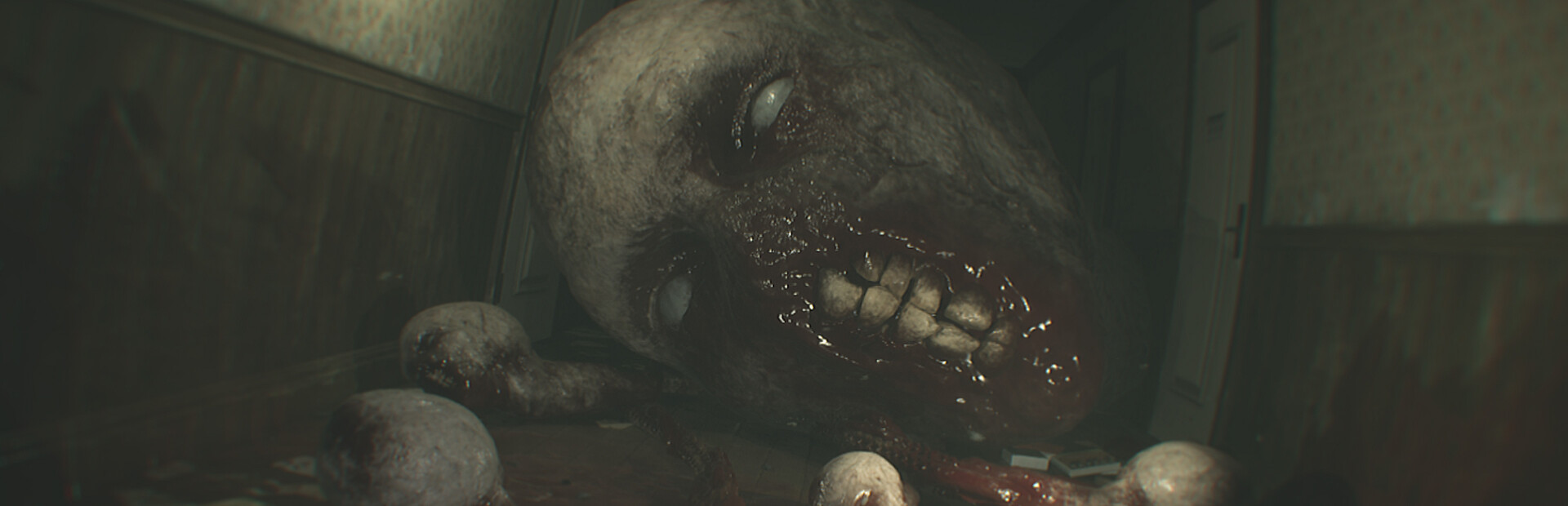
My first impression of Amygdala was that somebody had built a personal fear museum and left the door unlocked for strangers. That feeling, strange and oddly intimate, is the game's greatest asset, and also the most honest thing I can say about what it is: a first-person horror walking experience assembled by a single developer who cared far more about the creatures inside it than the scaffolding holding them up. The structure is a hub-and-nightmare model. You start in a central space after a brief address from an entity called the Absolute Judge, and from there you choose which self-contained nightmare to enter. Each nightmare is its own pocket dimension, themed around a specific Ruler of Nightmares, one of the game's hand-designed grotesque beings. The standout is the Big Head nightmare, set in the decaying corridors of an abandoned hotel, where ritual imagery bleeds into creature encounter in a way that actually unsettles rather than merely startles. Your objective across these nightmare chapters is consistent: survive the space, understand what haunts it, and claim the eyes of its ruler. The Eye of the Amygdala mechanic, which lets you pierce certain layers of darkness to reveal hidden geometry or lurking threats, is the most considered design choice in the game. It is simple, but it creates a real sense that looking closer might not always be wise. Where Amygdala earns its "Mostly Positive" Steam rating is almost entirely on monster design. The creatures are the creative core here, and the developer has said plainly that the game exists to give these beings a context and a world. That honesty is refreshing. Under Unreal Engine 5 with Lumen lighting, the visual presentation for a solo project is genuinely striking in specific moments, particularly when a Ruler fills a corridor and the dynamic shadows do the heavy lifting. The atmospheric soundscape, sinister ambient tones and layered whispers, works hard to carry the mood even when the pacing stalls. The caveats matter, though, and they are worth knowing. Optimization is a known limitation the developer flagged before launch: this is an UE5 title running Lumen built by one person with finite resources, and framerate hiccups are reported by a meaningful portion of the playerbase. The AI-assisted audio, covering both speech localization and musical elements, is audible as synthetic in places, and that seam breaks immersion at exactly the wrong moments. Post-launch support has wound down as the developer moved to new projects, so what exists now is largely what you will get. At roughly two hours of content, the runtime is short, which I consider a virtue when a small game knows its own limits, but buyers expecting a sprawling campaign will be disappointed. Enemy AI behavior has drawn criticism as inconsistent, leaning more toward atmosphere-carrier than genuine threat. For a certain kind of player, none of that is disqualifying. If you find yourself drawn to the margins of the horror genre, to the one-person projects where the weird idea wins out over the polished execution, Amygdala has a specific frequency it broadcasts on. The nightmare anthology format means even a short session feels complete. Go in with calibrated expectations, a mid-range or better GPU, and a genuine appreciation for creature design as art, and the game delivers its small, strange vision intact.

Indie & narrative
Tags
System Requirements
Minimum
- OS
- Windows 10
- Memory
- 16 GB RAM
- DirectX
- Version 11
- Storage
- 3 GB available space
- Graphics
- NVIDIA GeForce GTX 1060, 6 GB
- Processor
- Intel Core i7-3770
Recommended
- OS
- Windows 10
- Memory
- 32 GB RAM
- DirectX
- Version 12
- Storage
- 3 GB available space
- Graphics
- NVIDIA GeForce RTX 2080, 8 GB
- Processor
- Intel Core i7-6700K
Keep exploring
Community Discussion
Be the first to comment on Amygdala.
Reviews & Ratings
No ratings available
Game Info
- Developer
- Stigma Studios
- Publisher
- Stigma Studios
- Release Date
- Mar 15, 2024