
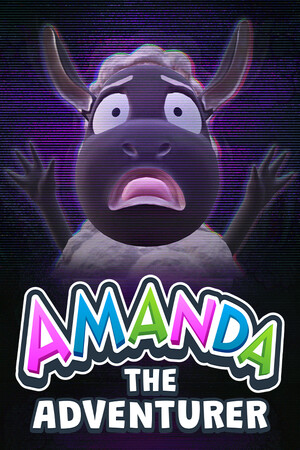
Amanda the Adventurer
Spend two hours in a dusty attic with a children's cartoon that slowly stops pretending to be harmless. Short, strange, and far more memorable than its runtime suggests.
GamerScout Verdict
Best for analog horror fans who trust atmosphere over answers and don't need a game to overstay its welcome.
Compare Prices(6 stores)
Every store in this table quotes us in euros, so the EUR figure is the price the seller actually set, not our arithmetic — which is why EUR is also the currency we rank in. We only list an offer here when the store gives us its price in euros, so nothing in this table is a number we invented.
Pick USD, PLN, GBP, CAD or AUD in the header and we convert from EUR at the European Central Bank reference rate — converted amounts are prefixed with ~. Your bank or the store may apply a different rate at checkout. We never hide offers based on where you are: everyone sees this whole table.
We may earn a commission when you buy games through links on this page — at no extra cost to you. It never affects our rankings or verdicts.
Price History
Screenshots & Media
About Amanda the Adventurer
My first impression was that MANGLEDmaw Games had no business making something this quietly unnerving on what appears to be a shoestring budget. You play as Riley, newly inheriting a deceased aunt's house, and the only thing waiting for you in the attic is a TV set and a stack of VHS tapes labeled with the cheerful title of a kids' cartoon. Then you press play, and a computer-animated girl named Amanda starts asking you questions. The early puzzles are disarmingly simple, the kind you'd find in a genuine early-2000s edutainment show: what tool do you use to cut apples, what ingredients go in a pie. It feels almost quaint. And then something shifts. Amanda's expressions flicker wrong. Wooly the sheep, her meek companion, seems perpetually on the edge of saying something he isn't allowed to say. The cartoon is not what it appears, and neither is the reason your aunt left you here. The core loop is a first-person point-and-click puzzle game set entirely within the attic. You watch a tape, pick up clues hidden in the background of each episode, then interact with real attic objects (a toy oven, a colorful robot, a bulletin board covered in your aunt's investigation notes) to unlock the next tape. The interaction with Amanda herself is where the game earns its reputation: when prompted, you type responses directly to her on screen, and the game tracks what you say. Give the wrong answer too many times and Amanda stares directly into the camera with an expression that children's television was never designed to contain. That single mechanic, a friendly cartoon that registers your disobedience and resents it, does more atmospheric work than a dozen jump scares could manage. The sound design is doing serious heavy lifting here too. The attic hum between tapes has this specific quality of a space that feels observed rather than empty, and the intentional lo-fi degradation of the cartoon audio sits in a register that goes straight for the childhood memory centers. The honest caveat is that the game's strength and its frustration come from the same place. There are five endings and several secret tapes to uncover, and seeing everything requires multiple playthroughs with cross-run persistence, meaning certain attic states carry over. Some puzzles are genuinely clever in their multi-run design. Others are obtuse enough that walkthroughs become a real temptation. The story commits hard to cryptic implication and deliberately withholds tidy resolution, which some players will find hauntingly appropriate and others will find maddening. Critics were split along exactly that line, with enthusiasts praising the lore density and detractors feeling the narrative never quite pays off its own setup. If you are someone who prefers atmospheric suggestion to explicit answers, the ambiguity feels intentional and earned. If you need closure, the endings may leave you cold. Total runtime across all playthroughs runs roughly two to three hours, which is either exactly the right length or the main complaint depending on what you hoped for. The game knows what it is: a contained, handcrafted oddity that trades on the specific unease of corrupted childhood media. It was built out of a game jam entry and it carries that focused, singular-vision energy throughout. MANGLEDmaw went on to build this into a full trilogy, and having played the first installment it is easy to understand why the premise generated that kind of momentum. The attic setting, the VHS aesthetic, the performance behind Amanda's voice, the way Wooly's silent distress accumulates across tapes without a single word of explanation, all of it adds up to something genuinely affecting in a genre that is often content to be merely startling.

Indie & narrative
Tags
System Requirements
Minimum
- OS
- Windows 7 or higher
- Memory
- 4 GB RAM
- DirectX
- Version 11
- Storage
- 2 GB available space
- Graphics
- NVIDIA GeForce 470 GTX or AMD Radeon 6870 HD Series
- Processor
- Quad-core Intel or AMD processor, 2.0 GHz or Faster
Keep exploring
Community Discussion
Be the first to comment on Amanda the Adventurer.
Reviews & Ratings
No ratings available
Game Info
- Developer
- MANGLEDmaw Games
- Publisher
- DreadXP
- Release Date
- Apr 25, 2023