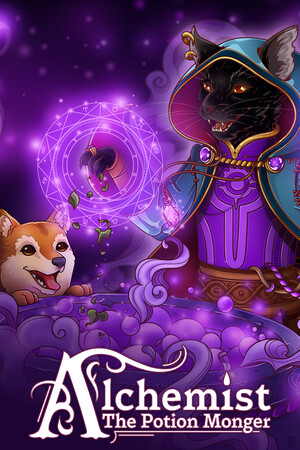
Alchemist: The Potion Monger
A cozy-but-surprisingly-layered potion sim that hides a genuine ingredient-aspect puzzle system behind its fluffy anthropomorphic exterior. Worth a look if Potionomics felt too deck-buildy and you want to actually forage your own reagents.
GamerScout Verdict
Best for players who want genuine crafting puzzle depth wrapped in cozy sim packaging, and can forgive a world that sometimes feels underpopulated.
Compare Prices(3 stores)
Every store in this table quotes us in euros, so the EUR figure is the price the seller actually set, not our arithmetic — which is why EUR is also the currency we rank in. We only list an offer here when the store gives us its price in euros, so nothing in this table is a number we invented.
Pick USD, PLN, GBP, CAD or AUD in the header and we convert from EUR at the European Central Bank reference rate — converted amounts are prefixed with ~. Your bank or the store may apply a different rate at checkout. We never hide offers based on where you are: everyone sees this whole table.
We may earn a commission when you buy games through links on this page — at no extra cost to you. It never affects our rankings or verdicts.
Price History
Screenshots & Media
About Alchemist: The Potion Monger
My first instinct with Alchemist: The Potion Monger was to file it under "light sim, skip unless you love cute animals" and move on. That read was wrong. Spend an hour past the opening tutorial and what surfaces is a crafting loop with real combinatorial teeth: four alchemical elements (earth, water, fire, wind), each split into sixteen aspects, and every ingredient sitting somewhere on that grid. Getting an ingredient to the exact aspect a recipe demands means running it through a chain of processing tools - mortar and pestle, drying rack, distillation flask - in a specific order, because changing the form of an ingredient also shifts its elemental properties. Get the sequence wrong and the ingredients are gone. It is, mechanically, a logic puzzle dressed in a witch's hat, and that distinction matters if you are deciding whether this belongs in your library. The crafting loop feeds into two parallel economies. You can fulfill NPC contracts brokered through Salem, an orange cat middleman who dishes out daily orders, or you can unlock a market stall in the town square and sell freely. Reviewers flagged the stall as the smarter early priority, with perfumes in particular generating strong margins for the effort required. On top of that sits a reputation-adjacent morality system: choices made during quests push you toward benevolent alchemist or town menace, and both paths carry distinct rewards. Combat exists too - slimes, wolves, and bosses drop ingredients - and it starts with a stick and an acid-puke potion before expanding into a proper toolset as you progress. It is light by action-RPG standards, but it is not purely decorative either. Death just teleports you home with no item loss, which is the right call for a game of this tone. Character selection offers a meaningful but not overwhelming set of trade-offs: cats are fast but fragile, bears are tanky but slow, foxes earn more but also spend more, mice experience all potion effects - good and bad - for amplified duration. These differences are minor enough that no pick is a trap, but they add a light build-identity layer that sim-leaning players will appreciate. Animal companions (including the dog you start with) serve a practical function beyond aesthetics: letting your pet sniff unknown ingredients reveals their elemental aspect, acting as a field identification tool that keeps exploration feeling purposeful rather than random. Skill books scattered through the world add incremental stat bonuses tied to quest completion, giving side content a concrete return. Where the game stumbles is in the areas that budget tends to limit. Multiple reviewers noted the world can feel sparse once the novelty of its furry-populated island wears off. Quest descriptions occasionally run vague, NPC schedules mean townsfolk leave at sunset so time management matters, and the save system (sleep in your bed to save) has caught some players off-guard after long runs without resting. The home decoration system - furniture, ingredient display shelves, a garden, a small farm - adds genuine depth to the base loop, but players expecting a polished Stardew-tier life sim will find the world underbuilt by comparison. The brewing minigame on PC asks you to draw symbols through cauldron bubbles rather than press buttons, which is more demanding than the controller version and can feel fiddly in later recipes until the auto-brew unlock removes the friction entirely. For the niche this targets - players who wanted more mechanical substance from potion-crafting games but do not want the competitive pressure of something like Potionomics - Alchemist: The Potion Monger delivers more than its modest presentation suggests. The tutorial respects newcomers by introducing tools gradually and providing a Philosopher's Stone item that shows valid ingredient paths for any pinned recipe. The achievement list (33 at launch, no DLC gates, no RNG) is completionist-friendly, with only two missable entries tied to morality choices. Budget constraints are visible at the seams, but the core ingredient-aspect transformation system has enough depth to sustain 15-plus hours of focused play and rewards experimentation over rote execution.

Strategy & simulation
Tags
System Requirements
Minimum
- OS
- Windows 7/8/8.1/10 (x64 x86)
- Memory
- 8 GB RAM
- Storage
- 3 GB available space
- Graphics
- GTX 760 2 GB or equivalent
- Processor
- Quad Core Processor or equivalent
- Sound Card
- DirectX compatible
Recommended
- OS
- Windows 7/8/8.1/10 (x64 x86)
- Memory
- 8 GB RAM
- Storage
- 3 GB available space
- Graphics
- NVIDIA GTX 970 or equivalent
- Processor
- Intel Core i7-4790k (AMD Ryzen 7 1700)
- Sound Card
- DirectX compatible
Keep exploring
Community Discussion
Be the first to comment on Alchemist: The Potion Monger.
Reviews & Ratings
No ratings available
Game Info
- Developer
- Art Games Studio S.A.
- Publisher
- Art Games Studio S.A.
- Release Date
- Sep 25, 2024