
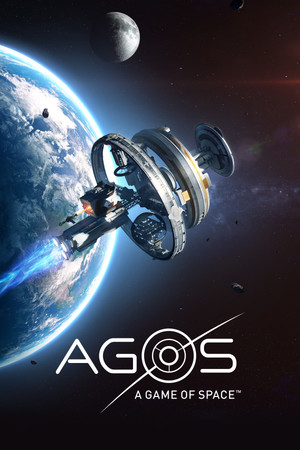
AGOS - A Game Of Space
A VR-exclusive space sim where depth of decision-making takes a back seat to probe piloting across eight star systems - worth knowing before you buy.
GamerScout Verdict
Best for VR owners who want a calm, atmospheric space experience and can forgive a thin gameplay loop and mandatory Ubisoft Connect login.
Compare Prices(2 stores)
Every store in this table quotes us in euros, so the EUR figure is the price the seller actually set, not our arithmetic — which is why EUR is also the currency we rank in. We only list an offer here when the store gives us its price in euros, so nothing in this table is a number we invented.
Pick USD, PLN, GBP, CAD or AUD in the header and we convert from EUR at the European Central Bank reference rate — converted amounts are prefixed with ~. Your bank or the store may apply a different rate at checkout. We never hide offers based on where you are: everyone sees this whole table.
We may earn a commission when you buy games through links on this page — at no extra cost to you. It never affects our rankings or verdicts.
Price History
Screenshots & Media
About AGOS - A Game Of Space
I came into AGOS expecting something with the layered resource loops and strategic tension I associate with good space sims. What I found is something narrower and more meditative: a VR-exclusive experience built around piloting physics-driven probes across eight star systems, collecting resources, and slowly upgrading your mothership. You play as the AI of Earth's last world-ship, guiding a group of survivors in search of a habitable planet. The premise has genuine weight to it, and the visual presentation - sparse, cold, occasionally beautiful - does a decent job of selling the loneliness of deep space. The core loop is straightforward to the point of being its own limitation. You deploy from your command screen, review the star map, pick a mission or resource node, and fly your probe out to collect. Probe modifications include drilling tools and grabbing attachments that are swapped depending on the task at hand, and there is a tech tree that unlocks new parts for both your probe and the mothership. On paper that sounds like meaningful progression. In practice, the variety of tasks never really expands beyond what you see in the first hour. Players who have bounced off repetitive resource runs in other space games will find little here to change their mind. The VR implementation is the most interesting angle, and it is genuinely thoughtful in one specific way: the game is played in third-person perspective, which sidesteps the motion sickness problem that kills so many VR space games. Movement is deliberate and slow, so even players who normally struggle with VR locomotion should be fine. The physics-based controls for piloting and the hands-on crafting between missions have real tactile appeal, and once you work out the 360-degree movement and momentum system, there are moments of calm satisfaction. The friction point is that Ubisoft Connect login is required and, on launch, the prompt did not surface inside VR - meaning headset-off, monitor login, then back in. That friction is a recurring complaint from players and it matters in a VR-first product. From a strategy-and-sim perspective, the honest assessment is that AGOS does not deliver the decision depth that genre fans expect. There is no meaningful branching in how you build or progress, the AI encounters are minimal, and the mod ecosystem is essentially nonexistent. What it offers instead is a calm, low-aggression VR environment that a certain type of space enthusiast - one who enjoys the aesthetic of being adrift between stars more than optimizing build orders - will find genuinely pleasant. Think of it less as a sim and more as an interactive space film, and the experience lands better.

Strategy & simulation
Tags
System Requirements
Minimum
- OS
- Windows 10
- Memory
- 8 GB RAM
- DirectX
- Version 11
- Network
- Broadband Internet connection
- Storage
- 10 GB available space
- Graphics
- nVidia gForce1060 - AMD RXVega56
- Processor
- I5-4590 / Ryzen5 1500X
- VR Support
- SteamVR
Recommended
- OS
- Windows 10
- Memory
- 8 GB RAM
- DirectX
- Version 12
- Network
- Broadband Internet connection
- Storage
- 10 GB available space
- Graphics
- nVidia gForce 1070 - AMD RXVega56
- Processor
- i7-4790 / Ryzen5 2600
Keep exploring
Community Discussion
Be the first to comment on AGOS - A Game Of Space.
Reviews & Ratings
No ratings available
Game Info
- Developer
- Ubisoft
- Publisher
- Ubisoft
- Release Date
- Oct 28, 2020