Compare Age of Mythology: Retold prices across trusted key stores and find the best deal. Developed by World's Edge, Forgotten Empires, Tantalus Media, CaptureAge, Virtuos Games. Published by Xbox Game Studios. Released on 9/4/2024. Available on PC, Xbox. Genres: Strategy. Metacritic score: 83/100.

Eighty-three on Metacritic, four pantheons with wildly different playstyles, and a campaign that kept at least one reviewer up until 2am. If you have any love for RTS games, Retold earns serious consideration.

I've tracked a lot of remasters that squander their source material, so let me be direct about where Age of Mythology: Retold stands: this is one of the cleaner executions of the genre in recent memory, and the 83 Metacritic score undersells how well the core loop has aged. The original 2002 design, built around advancing through four ages while balancing food, wood, and gold against an ever-growing need for Favor, was always more strategically layered than it looked at surface level. Retold keeps that skeleton completely intact, which is the right call, and then sands off the rough edges that made the original frustrating to return to. The four pantheons, Greeks, Egyptians, Norse, and Atlanteans, remain meaningfully asymmetric. Greeks play closest to a conventional Age of Empires style, making them the sensible starting point for newcomers. Norse units generate Favor just by fighting, which rewards aggression and punishes passive boom strategies. Egyptians lean on monument-powered economies and priest mechanics that open up a slower, more calculated game plan. Atlanteans are the wildcard: their Citizens drop resources without returning to a building, which sounds like a free economy advantage until you realize that losing even a handful of them to a raid is cripplingly expensive. Each major god you select at the start then branches into minor god choices at each age advance, and those choices stack into genuinely distinct build paths. A Zeus player who pivots through Ares into Hephaestus is running a different army composition than one who goes Hermes into Apollo. That layering is where Retold earns its hours. The mechanical additions are mostly sensible. The attack-move command, conspicuously absent from the original, now keeps your army from sprinting past enemy infantry to headbutt a wall. The AI villager priority system lets you define resource ratios and step back from villager micromanagement, which is a genuine learning-wheels option for newcomers rather than a crutch that breaks the game at higher levels. God Powers have been made rechargeable, meaning a well-timed Lightning Storm or Earthquake is no longer a one-shot resource you hoard anxiously until the game decides to end. That single change noticeably loosens up mid-game pacing and makes skirmish mode feel less like a race to the first decisive power usage. Pathfinding is improved where it counts most, in combat, though units can still commit to inexplicable cross-map wandering when left unattended. The accessibility suite is also genuinely comprehensive, covering colorblind modes, text narration, adjustable contrast on the minimap, and speech-to-text chat options that strategy games rarely bother with. Not everything landed. The new character portraits drew immediate community pushback, and while the developers confirmed human artists produced them, the criticism that they lack charm compared to the originals is fair. The voice acting overhaul is similarly divisive: it is technically more competent than the original's gloriously clunky delivery, but that clunk was part of the flavor, and the polished replacement can feel oddly sterile mid-campaign. The Chinese pantheon, present in the old Extended Edition, was absent at launch as paid DLC called Immortal Pillars, and a separate Norse civilization was also offered as an additional purchase, which felt like a fragmentation of content that should have shipped complete. Post-launch additions have since expanded the roster further, including Japanese and Aztec pantheons, so the DLC roadmap is active if you want to track it. For someone new to the genre entirely, I would actually recommend starting here before anything else in the Age of Empires family. The mythological framing gives every decision a visual identity that makes unit counters easier to internalize: you remember what a Cyclops does because it is a Cyclops, not because you memorized a stat line. The campaign runs Arkantos through all three base-game pantheons in sequence, which functions as a structured tour of every major mechanic. The adjustable difficulty and the villager AI system mean you can compress the learning curve without being blocked from the real content. And once skirmish and PvP click, the major-god-plus-minor-god selection matrix gives you enough build variety to stay occupied for a very long time. Diego, Scout Team

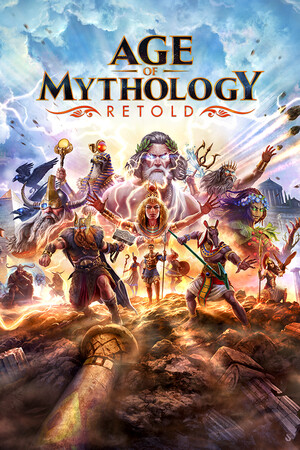
Age of Mythology: Retold

Age of Mythology: Retold

Sep 4, 2024World's Edge, Forgotten Empires, Tantalus Media, CaptureAge, Virtuos GamesXbox Game Studios
GamerScout Says

Eighty-three on Metacritic, four pantheons with wildly different playstyles, and a campaign that kept at least one reviewer up until 2am. If you have any love for RTS games, Retold earns serious consideration.

PCXbox
Best Price Available
€0.00
at N/A

GamerScout Verdict

Strong pick for RTS fans old and new, though DLC fragmentation and tonal voice acting missteps are worth knowing before you commit.

Compare Prices(0 stores)

Loading prices...

We may earn a commission when you buy games through links on this page — at no extra cost to you. It never affects our rankings or verdicts.

Screenshots & Media

About Age of Mythology: Retold

I've tracked a lot of remasters that squander their source material, so let me be direct about where Age of Mythology: Retold stands: this is one of the cleaner executions of the genre in recent memory, and the 83 Metacritic score undersells how well the core loop has aged. The original 2002 design, built around advancing through four ages while balancing food, wood, and gold against an ever-growing need for Favor, was always more strategically layered than it looked at surface level. Retold keeps that skeleton completely intact, which is the right call, and then sands off the rough edges that made the original frustrating to return to. The four pantheons, Greeks, Egyptians, Norse, and Atlanteans, remain meaningfully asymmetric. Greeks play closest to a conventional Age of Empires style, making them the sensible starting point for newcomers. Norse units generate Favor just by fighting, which rewards aggression and punishes passive boom strategies. Egyptians lean on monument-powered economies and priest mechanics that open up a slower, more calculated game plan. Atlanteans are the wildcard: their Citizens drop resources without returning to a building, which sounds like a free economy advantage until you realize that losing even a handful of them to a raid is cripplingly expensive. Each major god you select at the start then branches into minor god choices at each age advance, and those choices stack into genuinely distinct build paths. A Zeus player who pivots through Ares into Hephaestus is running a different army composition than one who goes Hermes into Apollo. That layering is where Retold earns its hours. The mechanical additions are mostly sensible. The attack-move command, conspicuously absent from the original, now keeps your army from sprinting past enemy infantry to headbutt a wall. The AI villager priority system lets you define resource ratios and step back from villager micromanagement, which is a genuine learning-wheels option for newcomers rather than a crutch that breaks the game at higher levels. God Powers have been made rechargeable, meaning a well-timed Lightning Storm or Earthquake is no longer a one-shot resource you hoard anxiously until the game decides to end. That single change noticeably loosens up mid-game pacing and makes skirmish mode feel less like a race to the first decisive power usage. Pathfinding is improved where it counts most, in combat, though units can still commit to inexplicable cross-map wandering when left unattended. The accessibility suite is also genuinely comprehensive, covering colorblind modes, text narration, adjustable contrast on the minimap, and speech-to-text chat options that strategy games rarely bother with. Not everything landed. The new character portraits drew immediate community pushback, and while the developers confirmed human artists produced them, the criticism that they lack charm compared to the originals is fair. The voice acting overhaul is similarly divisive: it is technically more competent than the original's gloriously clunky delivery, but that clunk was part of the flavor, and the polished replacement can feel oddly sterile mid-campaign. The Chinese pantheon, present in the old Extended Edition, was absent at launch as paid DLC called Immortal Pillars, and a separate Norse civilization was also offered as an additional purchase, which felt like a fragmentation of content that should have shipped complete. Post-launch additions have since expanded the roster further, including Japanese and Aztec pantheons, so the DLC roadmap is active if you want to track it. For someone new to the genre entirely, I would actually recommend starting here before anything else in the Age of Empires family. The mythological framing gives every decision a visual identity that makes unit counters easier to internalize: you remember what a Cyclops does because it is a Cyclops, not because you memorized a stat line. The campaign runs Arkantos through all three base-game pantheons in sequence, which functions as a structured tour of every major mechanic. The adjustable difficulty and the villager AI system mean you can compress the learning curve without being blocked from the real content. And once skirmish and PvP click, the major-god-plus-minor-god selection matrix gives you enough build variety to stay occupied for a very long time.

Diego
Diego · Scout Team

Strategy & simulation

Tags

auto-admittedPantheon SelectionRechargeable God PowersMyth Unit CombatVillager Priority SystemAttack-Move CommandAsymmetric CivsAge AdvancementCampaign + SkirmishCross-Platform PvP

System Requirements

Minimum

OS
Windows 10 64bit
Processor
Intel® i3-4130 or AMD FX 4350 at 2.4GHZ+ with 2 cores / 4 threads and AVX support
Memory
8 GB RAM
Graphics
NVIDIA® GeForce®…

Recommended

OS
Windows 10 64bit
Processor
3.6 Ghz i5 or greater or AMD equivalent and AVX support
Memory
16 GB RAM
Graphics
Nvidia® GeForce® GTX 970 or AMD Radeo…

Keep exploring

Community Discussion

Be the first to comment on Age of Mythology: Retold.

Reviews & Ratings

Metacritic
83

Game Info

Developer
World's Edge, Forgotten Empires, Tantalus Media, CaptureAge, Virtuos Games
Publisher
Xbox Game Studios
Release Date
Sep 4, 2024

Features

Single-playerMultiplayerPvPOnline PvPCo-opOnline Co OpCross Platform MultiplayerSteam Achievements+11 more

Price Alert

Get notified when the price drops below your target!

Create Alert

No card? Pay another way

Top up your Steam Wallet or buy crypto with any card — instant delivery, no bank account needed.

Buy smarter: helpful guides

Frequently asked questions about Age of Mythology: Retold

How much does Age of Mythology: Retold cost?

Age of Mythology: Retold pricing changes often and varies by store, edition and region. The live price table on this page compares the cheapest in-stock offers from trusted key stores like Eneba and Kinguin, so you always see the current lowest price before you buy.

Where can I buy Age of Mythology: Retold cheapest?

Compare Age of Mythology: Retold prices across every verified store in the price table on this page. We list the cheapest in-stock key and store offers, updated regularly, so you always see the best current deal before you buy.

What platforms is Age of Mythology: Retold available on?

Age of Mythology: Retold is available on PC, Xbox.

When was Age of Mythology: Retold released?

Age of Mythology: Retold was released on 4 September 2024.

Who developed Age of Mythology: Retold?

Age of Mythology: Retold was developed by World's Edge, Forgotten Empires, Tantalus Media, CaptureAge, Virtuos Games and published by Xbox Game Studios.

Is Age of Mythology: Retold worth buying?

Age of Mythology: Retold holds a Metacritic score of 83/100, making it one of the standout Strategy titles. See the full reviews, ratings and how-long-to-beat times on this page to decide.