Age of Darkness: Final Stand
If you can stomach unit AI that occasionally forgets what a wall is, survival mode's Death Night pressure-cooker delivers some of the most genuinely nerve-wracking base-defense sessions in recent RTS memory.
GamerScout Verdict
Best for They Are Billions veterans who want a darker fantasy spin with roguelite variance and can tolerate rough unit AI at the edges.
Compare Prices(10 stores)
Every store in this table quotes us in euros, so the EUR figure is the price the seller actually set, not our arithmetic — which is why EUR is also the currency we rank in. We only list an offer here when the store gives us its price in euros, so nothing in this table is a number we invented.
Pick USD, PLN, GBP, CAD or AUD in the header and we convert from EUR at the European Central Bank reference rate — converted amounts are prefixed with ~. Your bank or the store may apply a different rate at checkout. We never hide offers based on where you are: everyone sees this whole table.
We may earn a commission when you buy games through links on this page — at no extra cost to you. It never affects our rankings or verdicts.
Price History
Screenshots & Media
About Age of Darkness: Final Stand
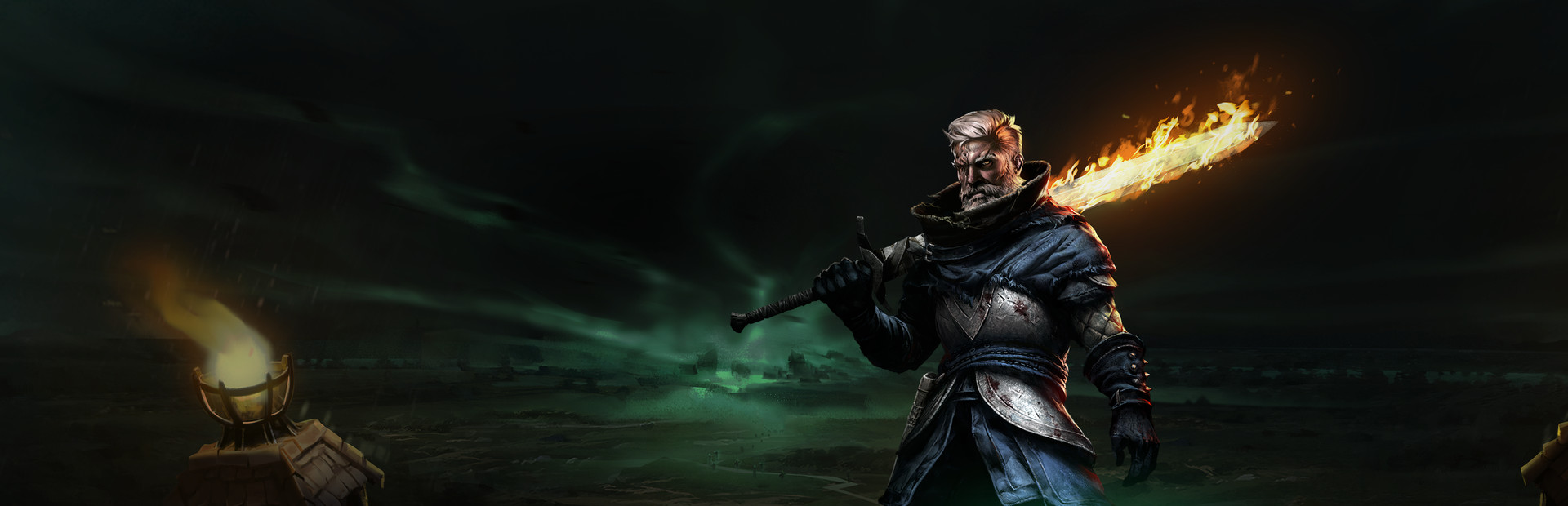
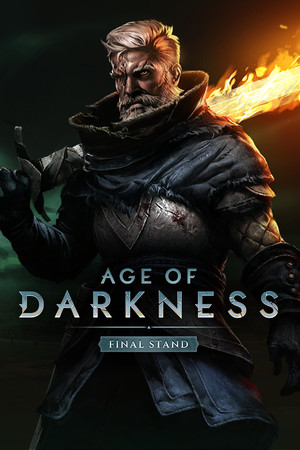
My spreadsheet instincts told me to min-max the lumber yards first, and Age of Darkness: Final Stand rewarded that impulse immediately, then punished my overconfidence the moment the first Death Night arrived. This is a horde-survival RTS built around a day-night rhythm: expand and consolidate by day, then brace for Nightmare swarms at night, with periodic Death Nights unleashing synchronized mass attacks that can realistically number in the tens of thousands of enemies on screen at once, courtesy of PlaySide's internally developed SwarmTech renderer. Comparing it to They Are Billions is unavoidable because the game essentially uses that blueprint as its foundation, but it layers in enough of its own systems to hold its own once you get past the obvious DNA. The decision architecture is where the game earns its keep. Three factions, the Order, the Rebellion, and the Volatists, each bring distinct heroes, unit rosters, and playstyle incentives. You are not just picking a skin. Each hero levels up, unlocks abilities, and needs careful micro-management during fights while also being a primary scouting tool in the lulls between waves. Resources come in four flavors, wood, stone, iron, and gold, and the game pressures you to prioritize stone aggressively in the early game or your Training Hall and keep upgrades will bottleneck badly. Lodges over basic houses, storehouses adjacent to quarries, layered choke-point walls with towers behind them: the build order is learnable and the game rewards pattern recognition once it clicks. On top of that, the roguelite Malice and Blessing system injects genuine unpredictability, stacking random afflictions onto your army each Death Night and offering three Blessings to choose from if you survive. One run your ranged towers lose vision range mid-wave; the next, your fallen soldiers reanimate as enemy units. Each survival run ends up feeling distinct because of this layering. Survival mode is unambiguously the core product and where the hours disappear. Five Dark Crystals are distributed around the procedurally generated map, and each shattering one triggers a Death Night swarm arriving from that direction, giving you roughly one in-game day, about five real-time minutes, to reinforce the relevant choke point. The final stand hits all previous crystal locations simultaneously, so the entire mid-game is essentially a long argument you are having with yourself about whether to pre-emptively destroy a crystal for strategic control and Dark Essence rewards, or let it sit and buy more time for infrastructure. That tension is the best design decision in the game. Campaign mode, by contrast, is the weaker half of the package. Reviewers broadly agree it feels like a slow-paced prologue that does not leverage the horde-defense strengths of the underlying engine, and the narrative characters lack the depth to carry scenes between missions. Treat it as optional orientation material, not a reason to buy. The honest complaints are real and worth flagging. Unit pathfinding misbehaves under pressure: soldiers switch targets mid-combat without orders, get body-blocked by larger allies, and occasionally walk away from engagements while hurt, which at higher difficulties translates into losses you did not earn. Late-game framerate dips have been reported even on mid-to-high-end hardware, which is a meaningful problem when the SwarmTech spectacle is the whole visual pitch. Enemy variety also plateaus faster than ideal. The Nightmare roster includes Spitters, Crushers, and Wraiths, but beyond the early revelations of each type, the escalation shifts primarily into quantity rather than introducing new behavioral challenges. A seasoned horde-defense player will notice that gap. For newcomers, the five selectable difficulty tiers, from standard up to Nightmare, plus a fully customizable modifier system, mean there is genuine room to calibrate the experience. The tutorial is functional if not inspiring, but the underlying mechanics are legible enough that a player with any RTS background will find their footing within a couple of runs rather than a couple of sessions. Co-op multiplayer is included and works online, which meaningfully changes the calculus for players who would rather coordinate wall placement with a friend than solo the whole arc. Procedurally generated maps keep repeat playthroughs from feeling recycled, and the Malice-Blessing variability adds another layer of rerun incentive on top of faction switching. Post-launch reception on Steam sits at roughly 75 percent positive across a large sample, which is an accurate read: solidly good, visibly imperfect, consistently entertaining in survival mode for anyone who finds satisfaction in optimized defensive geometry and controlled chaos.

Strategy & simulation
Tags
System Requirements
Minimum
- OS
- Windows 10
- Memory
- 16 GB RAM
- Storage
- 10 GB available space
- Graphics
- NVIDIA GeForce GTX 770, 4 GB or AMD Radeon R9 380, 4 GB
- Processor
- Intel Core i5-10600 or AMD Ryzen 5 3600XT
Recommended
- OS
- Windows 10
- Memory
- 16 GB RAM
- Storage
- 10 GB available space
- Graphics
- NVIDIA GeForce GTX 1070, 8 GB or AMD Radeon RX Vega 56, 8 GB
- Processor
- Intel Core i5-12600K or AMD Ryzen 5 7600
Keep exploring
Community Discussion
Be the first to comment on Age of Darkness: Final Stand.
Reviews & Ratings
No ratings available
Game Info
- Developer
- PlaySide
- Publisher
- PlaySide
- Release Date
- Jan 15, 2025