
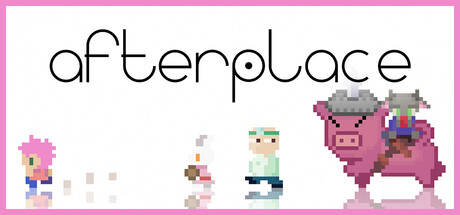
Afterplace
One person quit his job and built a world worth getting lost in. Afterplace rewards curiosity over competence, and its secrets run much deeper than its charming pixel surface suggests.
GamerScout Verdict
Best for players who read every NPC line and believe getting lost is a feature, not a flaw.
Compare Prices(8 stores)
Every store in this table quotes us in euros, so the EUR figure is the price the seller actually set, not our arithmetic — which is why EUR is also the currency we rank in. We only list an offer here when the store gives us its price in euros, so nothing in this table is a number we invented.
Pick USD, PLN, GBP, CAD or AUD in the header and we convert from EUR at the European Central Bank reference rate — converted amounts are prefixed with ~. Your bank or the store may apply a different rate at checkout. We never hide offers based on where you are: everyone sees this whole table.
We may earn a commission when you buy games through links on this page — at no extra cost to you. It never affects our rankings or verdicts.
Price History
Screenshots & Media
About Afterplace
I went looking for a small game that knew what it was, and Afterplace gave me something I didn't quite expect: a solo-developed, top-down pixel world that feels genuinely authored rather than assembled. Evan Kice spent years on this, and you can feel that patience in every corner of the island you wake up on. You play as Yu, a kid dropped into a place where all sorts of beings have slipped through the cracks of the universe with no way back out. The premise sounds vague because it is, deliberately, and the game treats that vagueness as an invitation rather than a limitation. The structure leans hard on exploration without a safety net. There are no waypoints, no quest markers, and the overworld map is, charmingly, a crayon scrawl on a napkin. What guides you instead is a dense population of NPCs who range from warmly bizarre to openly hostile, and the world itself, which quietly rewards anyone patient enough to poke at unmarked walls and follow unmarked paths. Forest routes branch organically, dungeons surface without fanfare, and hidden corridors sit behind scenery that looks completely ordinary until you bump into it. Pocket Gamer praised the game's atmospheric music and the wide range of enemy designs, and both hold up on PC: the soundtrack carries a slightly eerie, hand-crafted warmth that fits the island's unsettled mood, and the 25 distinct monster types keep combat from feeling repetitive. Combat itself stays lightweight, built around quick movements and counterattacks rather than deep mechanical systems. There is sword upgrading and armor to find, and vendors sell items with effects that are best discovered by just buying them. Death carries no penalty, and heal chests respawn generously. The game wants you to explore, not grind. Where Afterplace earns its reputation is in its writing. The dialogue is genuinely funny in a way that very few games manage, landing somewhere between the dry absurdism of early LucasArts and the playful meta-awareness of Undertale. NPCs react to what you do, not just what you say. Cut down a shrub to clear a path and a crow nearby will offer a running commentary. Walk away from a conversation mid-sentence and the world notices. There are eight distinct endings depending on how you navigate the story, and a reported ten-thousand-plus lines of dialogue means a second playthrough rarely feels like the same trip. The community on Steam is already building translation projects and achievement guides, which is a quiet signal that people are sticking around. The caveats are real though. If you have no patience for deliberate disorientation, this game will frustrate you. The lack of a functional map is a design choice that critics have flagged since the mobile release: players can and will circle the same zones for longer than they should, and the final act's objective clarity does not always match the openness of everything before it. The keyboard-and-mouse control scheme on PC also has some rough edges inherited from the mobile-first design, and the game looks genuinely tiny at default resolution on large monitors. Controller support smooths most of this out. The PC port has been maintained and polished since launch, and the developer continues to update it, which earns some good faith. For a certain kind of player, this is exactly the undiscovered thing they've been waiting for. If you grew up on the original Legend of Zelda and still believe that getting lost is part of the point, if you read every piece of NPC dialogue in any game you touch, if you like a story that makes you work a little to understand what it was actually about, Afterplace will reward that patience with a finale that consistently surprises first-time players. It is a handmade world with a handmade soul, and those are rare enough to be worth your time.

Indie & narrative
Tags
System Requirements
Minimum
- OS
- Windows 10+
- Memory
- 600 MB RAM
- Storage
- 300 MB available space
- Graphics
- Any
- Processor
- Any
Recommended
Requires a 64-bit processor and operating system OS: Processor: Graphics: Sound Card:
Keep exploring
Community Discussion
Be the first to comment on Afterplace.
Reviews & Ratings
No ratings available
Game Info
- Developer
- Evan Kice
- Publisher
- indie.io
- Release Date
- Jul 22, 2024