Aethernaut
A one-person Portal-and-Talos-Principle love letter with a philosophical twist, worth knowing what you're getting into before the technical roughness tests your patience.
GamerScout Verdict
Best for Talos Principle fans who can tolerate technical roughness in exchange for earnest, well-designed cube puzzles and a mood-heavy steampunk setting.
Compare Prices(4 stores)
Every store in this table quotes us in euros, so the EUR figure is the price the seller actually set, not our arithmetic — which is why EUR is also the currency we rank in. We only list an offer here when the store gives us its price in euros, so nothing in this table is a number we invented.
Pick USD, PLN, GBP, CAD or AUD in the header and we convert from EUR at the European Central Bank reference rate — converted amounts are prefixed with ~. Your bank or the store may apply a different rate at checkout. We never hide offers based on where you are: everyone sees this whole table.
We may earn a commission when you buy games through links on this page — at no extra cost to you. It never affects our rankings or verdicts.
Price History
Screenshots & Media
About Aethernaut
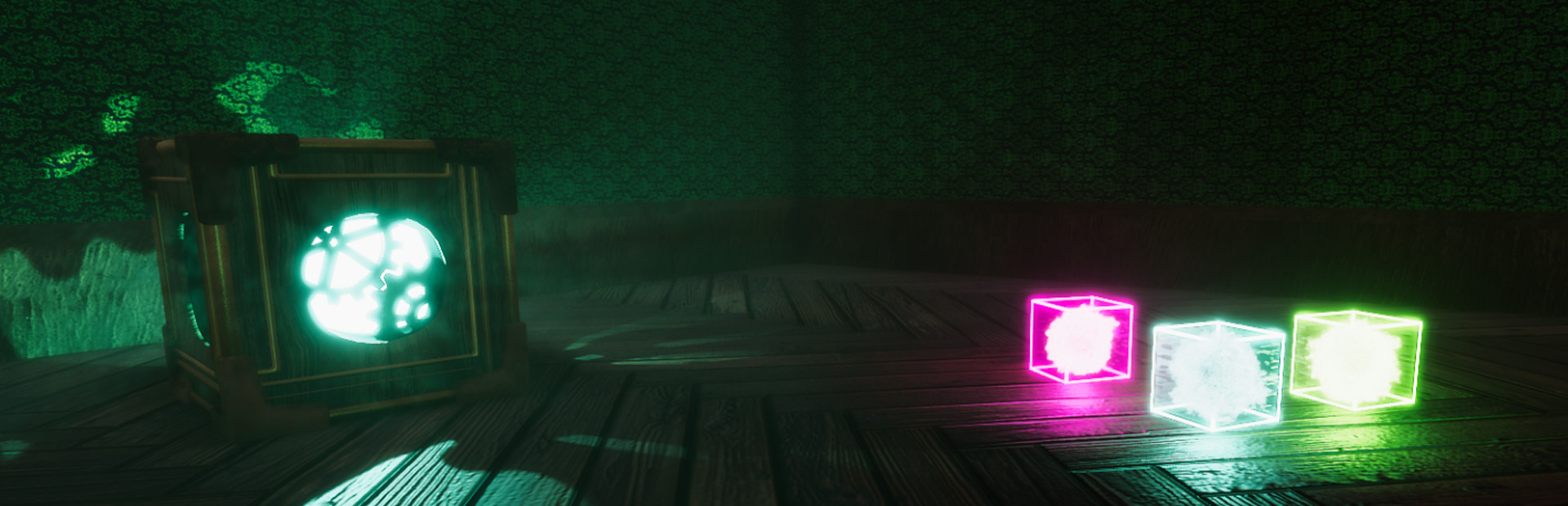
My first honest reaction to Aethernaut was a kind of quiet affection mixed with genuine frustration, and I think that tension is the most useful thing I can share with you. This is a first-person puzzle game built by a single developer out of Montreal, Kevin Giguère of Dragon Slumber, and it carries all the earnestness and all the warts that solo development tends to produce. The Construct is a worn, steampunk research facility soaked in darkness, and from the moment a voice calling itself Cornell crackles through the intercom, the atmosphere does something right: it makes you want to understand what happened here. The puzzle design is where the game earns its keep. Three types of aether cubes, light, shadow, and time, form the mechanical vocabulary, and the game is admirably disciplined about how it introduces and remixes them. Light cubes spread illumination and trigger sensors, shadow cubes create darkness that blocks beams, and time cubes freeze mechanisms in place. Portals enter the picture later, and then alternate dimensions layer on top. What's clever is that none of this requires you to learn a hundred new rules; you're asked to rethink the same small toolkit in increasingly unexpected configurations across roughly 95 puzzle rooms, of which you only need about 65 to reach the ending. The dual-hand interaction system, each hand independently grabbing, placing, and slotting cubes, sounds like a small thing but genuinely adds a spatial, almost tactile quality to manipulating the environment. Puzzles are zoned by mechanic rather than sprinkled randomly, which keeps the difficulty progression clean. When a room clicks, it clicks hard. The philosophical layer is harder to assess fairly. Cornell feeds you questions at intervals, real questions, the kind that don't have tidy answers, and your responses nudge the story toward one of six endings. It is a sincere attempt to braid identity with puzzle-solving, and there's something genuinely atmospheric about hearing those voice recordings left behind by the Construct's vanished occupants. The wrinkle is that most choices affect dialogue rather than the world, and some players will feel the moral weight is lighter than the staging implies. For me, the piano soundtrack carries more of that atmosphere than the voice acting does, the music is understated and patient in exactly the right way for a game about being alone in a dark place. Now the part that makes me wince a little: the technical state. Framerate can be erratic even on hardware that exceeds the recommended specs, loading times are longer than they should be, and there are softlock risks in later puzzle rooms that make keeping manual saves a genuine necessity rather than optional housekeeping. The hub world's textures are a weak point visually, individual puzzle rooms have more character than the connective tissue between them. The time-travel and dimensional mechanics, while inventive, are the least polished of the bunch and have frustrated more than a few players who otherwise enjoyed the rest. The developer has been actively patching since launch, and the Iceberg Interactive partnership brought additional language support and Steam Deck verification, which matters. But if technical friction pulls you out of puzzle games before the design can win you over, that is a real risk to weigh here. Aethernaut is for the player who loved The Talos Principle more for its mood than its spectacle, who doesn't mind a game that shows its seams as long as the puzzles underneath are honest and well-considered. It is the work of someone who cared about what they were making, and that care radiates through the cube mechanics and the quiet piano and the questions Cornell keeps asking. It asks for some patience in return. Whether that trade feels fair is, appropriately, a choice only you can make.

Indie & narrative
Tags
System Requirements
Minimum
- OS
- Windows 7 or greater
- Memory
- 8 GB RAM
- Storage
- 13 GB available space
- Graphics
- GeForce GTX 1070 or AMD Radeon RX Vega 56 4 GB
- Processor
- Intel Core i5 @ 2.0 GHz
- Sound Card
- Standard onboard sound card
Recommended
- OS
- Windows 7 or greater
- Memory
- 16 GB RAM
- Storage
- 15 GB available space
- Graphics
- GeForce GTX2060 or AMD Radeon RX 5600 XT
- Processor
- Intel Core i5 @ 2.0 GHz
Keep exploring
Community Discussion
Be the first to comment on Aethernaut.
Reviews & Ratings
No ratings available
Game Info
- Developer
- Dragon Slumber
- Publisher
- Iceberg Interactive
- Release Date
- Mar 15, 2022