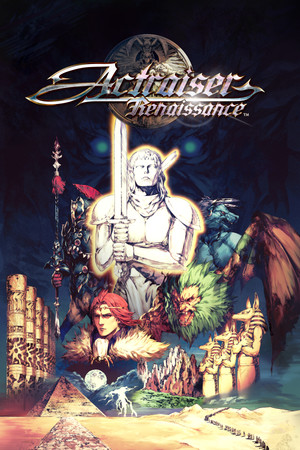
Actraiser Renaissance
Three genres bolted together into one 20-hour campaign - and somehow it mostly works, despite a tutorial system that treats you like you've never held a controller before.
GamerScout Verdict
Best for players who want an oddball genre hybrid and can push through a front-heavy tutorial to reach the satisfying siege management underneath.
Compare Prices(7 stores)
Every store in this table quotes us in euros, so the EUR figure is the price the seller actually set, not our arithmetic — which is why EUR is also the currency we rank in. We only list an offer here when the store gives us its price in euros, so nothing in this table is a number we invented.
Pick USD, PLN, GBP, CAD or AUD in the header and we convert from EUR at the European Central Bank reference rate — converted amounts are prefixed with ~. Your bank or the store may apply a different rate at checkout. We never hide offers based on where you are: everyone sees this whole table.
We may earn a commission when you buy games through links on this page — at no extra cost to you. It never affects our rankings or verdicts.
Price History
Screenshots & Media
About Actraiser Renaissance
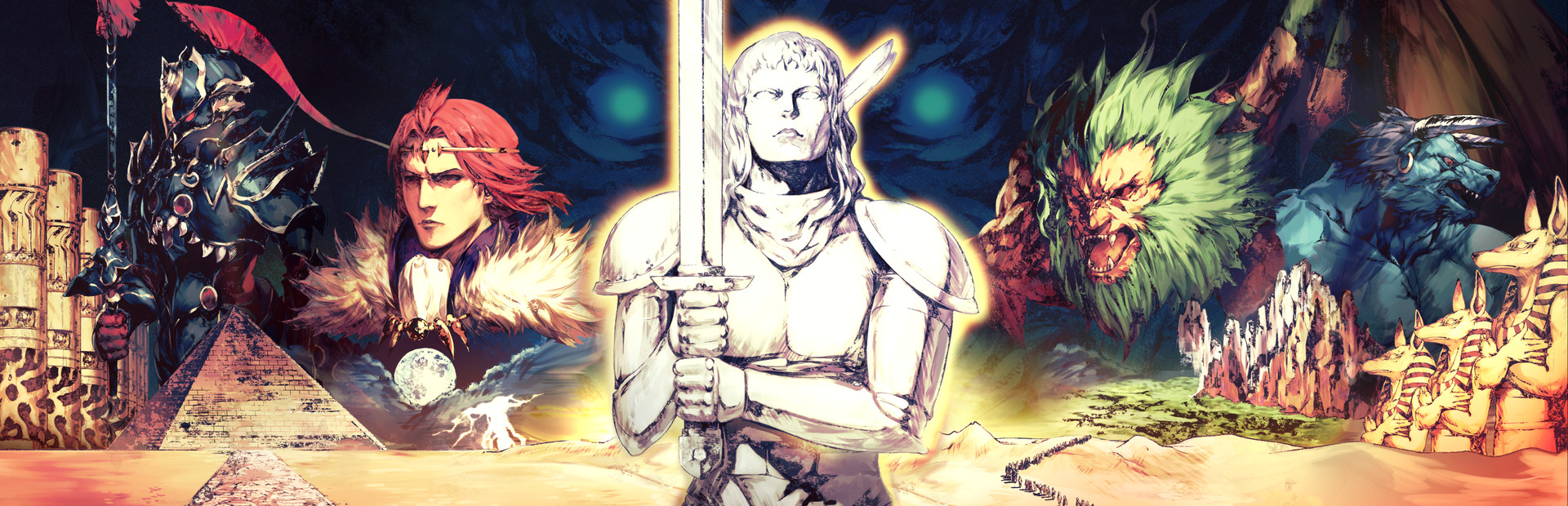
My spreadsheet instincts kicked in about twenty minutes into the settlement management sections, and that's actually a good sign. Actraiser Renaissance is a Square Enix remake of a 1990 SNES cult classic, and it stacks three distinct gameplay modes on top of each other: hack-and-slash action platforming, a top-down city-building sim, and tower-defense siege combat. The structure repeats across six regions plus post-game content, following a pattern where you clear an action stage, guide your followers in expanding a settlement, then repel monster sieges before finishing a region with a boss fight. The whole campaign runs well north of 20 hours, compared to the roughly five-hour original, and for a game that once fit on a cartridge that would be unremarkable for sim fans, that scope expansion is the single biggest reason to pay attention. The city-building layer is where the systems depth lives. You direct an angel across a top-down map, zoning roads, farms, workshops, and temples to grow population and funnel worshipper faith back up to the Lord of Light, who needs that belief to level up and gain power. Terraform the land using miracles - lightning clears forests, sunlight melts ice, wind powers stagnant windmills - and position fortifications like bow towers and magic-AoE bastilles before each siege wave hits. Each region comes with a named hero you deploy on the siege map, with different heroes covering melee or ranged roles, and by the late game you are managing multiple heroes simultaneously across a chaotic screen of demon columns. The decision-making around fort placement and hero positioning is genuinely tighter than it first looks, and the siege difficulty does escalate meaningfully. What the game does not do is give you a clean, minimal UI to make those decisions in. Tutorial pop-ups interrupt constantly through the opening hours, explaining each mechanic at the pace of someone narrating a slideshow - and some of those mechanics never quite justify the screen time they demand. The action platforming sections are the game at its loosest. The Lord of Light has expanded his moveset with a rising strike, backstep, overhead slam, and thrust attack added to the classic sword-and-magic kit, and the snappy animation makes the fighting feel satisfying even when levels are not pushing the platforming design very hard. Bosses are redesigned from the SNES originals and patterns are not the same, so veteran players cannot autopilot through them. The visual quality in these 2D stages is the most consistent complaint from critics - pre-rendered character models look grainy and awkward against the backgrounds, and that first impression genuinely costs the game some goodwill before the sim layers reveal themselves. The city and overworld art is more charming, and the Yuzo Koshiro soundtrack is the universal highlight across every review: both the rearranged Renaissance versions and the original SNES tracks are available, so you can toggle between them depending on your tolerance for nostalgia. For newcomers with no attachment to the original: this is a stranger game than its genre tags suggest. The three-mode structure means no single pillar is as deep as a dedicated game in that genre, but the combination produces something genuinely uncommon. Adjustable difficulty with three settings, including unlimited lives on Easy and a punishing single-life Hard mode, means the action sections are accessible at your chosen stress level. The sim and siege sections are the real time sink, and players who are not patient with tower-defense rhythm will find the frequency of siege events friction-heavy. The post-game adds a score mode and an additional realm for completionists. No mod ecosystem, no multiplayer, no replay variability beyond difficulty - but for a single-run, story-complete experience across a weird genre hybrid, the value proposition is solid.

Strategy & simulation
Tags
System Requirements
Minimum
- OS
- Windows® 8.1 64-bit / Windows® 10 64-bit
- Memory
- 8 GB RAM
- DirectX
- Version 11
- Storage
- 5 GB available space
- Graphics
- AMD Radeon™ R7 240,NVIDIA® GeForce® GT 730
- Processor
- AMD A8-7600, Intel® Core™ i3-3210
- Sound Card
- DirectX compatible sound card
Recommended
- OS
- Windows® 8.1 64-bit / Windows® 10 64-bit
- Memory
- 8 GB RAM
- DirectX
- Version 11
- Storage
- 5 GB available space
- Graphics
- AMD Radeon™ R7 260X,NVIDIA® GeForce® GTX 750
- Processor
- AMD Ryzen™ 3 1200、Intel® Core™ i5-3330
- Sound Card
- DirectX compatible sound card etc
Keep exploring
Community Discussion
Be the first to comment on Actraiser Renaissance.
Reviews & Ratings
No ratings available
Game Info
- Developer
- Square Enix
- Publisher
- Square Enix
- Release Date
- Sep 23, 2021