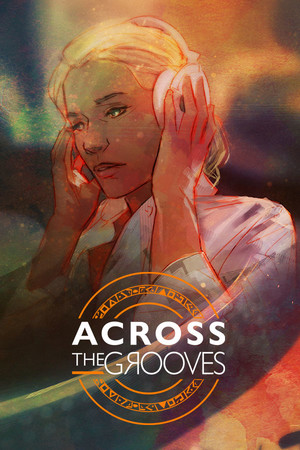
Across the Grooves
Put on headphones, drop the needle, and let Nova-box rewrite your afternoon. A compact magic-realism graphic novel that earns every one of its multiple endings.
GamerScout Verdict
Best for narrative players who love music, hand-crafted art, and don't mind reading their way through parallel realities.
Compare Prices(8 stores)
Every store in this table quotes us in euros, so the EUR figure is the price the seller actually set, not our arithmetic — which is why EUR is also the currency we rank in. We only list an offer here when the store gives us its price in euros, so nothing in this table is a number we invented.
Pick USD, PLN, GBP, CAD or AUD in the header and we convert from EUR at the European Central Bank reference rate — converted amounts are prefixed with ~. Your bank or the store may apply a different rate at checkout. We never hide offers based on where you are: everyone sees this whole table.
We may earn a commission when you buy games through links on this page — at no extra cost to you. It never affects our rankings or verdicts.
Price History
Screenshots & Media
About Across the Grooves
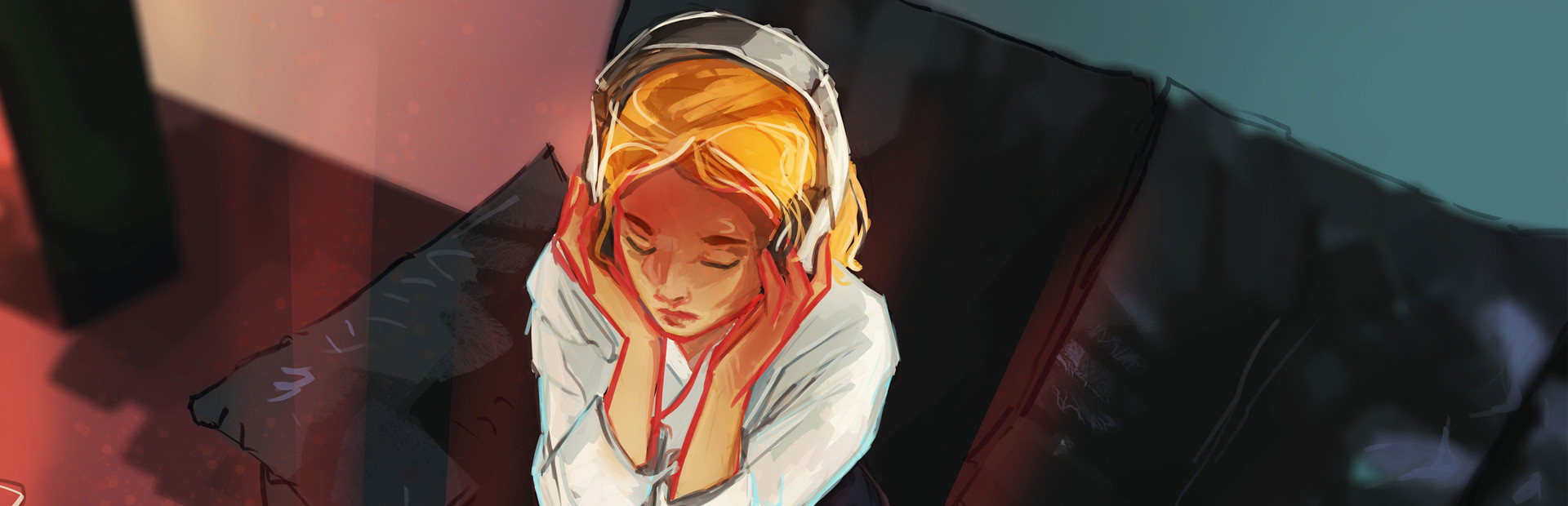
I keep a short mental list of games that know exactly what they are and refuse to apologise for it. Across the Grooves belongs on that list. Nova-box, the French studio behind Along the Edge and Seers Isle, built this one around a single image: a mysterious vinyl record arriving in the mail and unravelling the life of a woman named Alice, a quietly dissatisfied accountant living in Bordeaux. The moment she plays it, her past rewrites itself and the present lurches sideways. From that premise the game fans out into a slow-burn mystery that hops between Bordeaux, Paris, London, and Glasgow, each city rendered in a hand-drawn European comic-book style that is warm and slightly watercolour-soft one moment, drained of colour and urban-grey the next. The colour temperature shifts deliberately with Alice's emotional state, and that kind of intentional craft is what I look for in a small studio title. The interaction model is pure choice-driven reading, nothing more. Four symbols in the top of the screen, a Spiral, a Lightning Bolt, a Flower, and a Skull, track the cumulative weight of your decisions and quietly bend Alice's personality across the five chapters plus epilogue. A single playthrough lands somewhere between two and five hours depending on your reading pace, which puts it in that sweet spot where a second run feels like a genuine option rather than a chore. The branching paths are carefully constructed: some choices shift a single conversation, others redirect the ending entirely, and because the game autosaves without giving you a chapter-select rollback, you commit to each run with a finality that actually adds weight to the decisions. That missing rollback feature is a real quality-of-life gap, and players accustomed to the chapter-jump systems in something like Telltale or Oxenfree will feel its absence. Plan for two clean playthroughs if you want to see the shape of the full narrative. The soundtrack is the thing that will stay with you longest. Illustrason composed 26 original tracks and the vocal performances by Christelle Canot shift registers across blues, psychedelic rock, folk, and something close to chamber pop, each one tuned to the emotional register of the scene it scores. During the record-listening sequences, on-screen lyrics appear and the pacing is yours to control, a quiet invitation to let the song breathe. There is also a Lexicon that logs every musician, band, and record mentioned in the story, from Johnny Cash to Robert Johnson to Bell and Sebastian, with recommended tracks from each discography. For the music-obsessed, this feature alone is worth the price of admission. The references lean heavily into classic rock and occult lore, and if that world is new to you the Lexicon functions as a patient guide rather than a barrier. If there is a caveat it is this: the dialogue can tip into extended back-and-forth exchanges that feel slightly static, partly because there are no animations, only hand-drawn still images, and partly because the localization from French occasionally reads with a slight stiffness in the rhythm. Neither flaw breaks the experience, but they do remind you that this is a small-team production with a focused budget. The story itself is more unsettling than the marketing suggests. Those expecting a light romantic mystery will find something considerably more mature, touching on identity, regret, parallel realities, occultism, and the particular loneliness of a life that might have gone differently. It earns its adult rating without being gratuitous about it. For narrative game fans who care about visual craft and sound design as much as plot mechanics, this is a title that repays attention. It knows when to end, which is rarer than it should be in this genre.

Indie & narrative
Tags
System Requirements
Minimum
- OS
- Windows 7 Service Pack 1 or later (64bits only)
- Memory
- 4 GB RAM
- DirectX
- Version 10
- Storage
- 2 GB available space
- Graphics
- Integrated or dedicated graphic card with 512MB of VRAM
- Processor
- 2.0 Ghz (with SSE2 instruction set support)
Recommended
- OS
- Windows 7 Service Pack 1 or later (64bits only)
- Memory
- 4 GB RAM
- DirectX
- Version 10
- Storage
- 2 GB available space
- Graphics
- Integrated or dedicated graphic card with 512MB of VRAM
- Processor
- 2.6 Ghz (with SSE2 instruction set support)
Keep exploring
Community Discussion
Be the first to comment on Across the Grooves.
Reviews & Ratings
No ratings available
Game Info
- Developer
- Nova-box
- Publisher
- Nova-box
- Release Date
- Jun 17, 2020