
Access Denied
Thirty-six puzzle boxes, a room soaked in ambient rain, and no hand-holding whatsoever. Satisfying when it clicks; maddening when it doesn't.
GamerScout Verdict
Best for patient puzzle fans who enjoy figuring things out alone, and can forgive occasional obtuse logic and imprecise dial controls.
Compare Prices(4 stores)
Every store in this table quotes us in euros, so the EUR figure is the price the seller actually set, not our arithmetic — which is why EUR is also the currency we rank in. We only list an offer here when the store gives us its price in euros, so nothing in this table is a number we invented.
Pick USD, PLN, GBP, CAD or AUD in the header and we convert from EUR at the European Central Bank reference rate — converted amounts are prefixed with ~. Your bank or the store may apply a different rate at checkout. We never hide offers based on where you are: everyone sees this whole table.
We may earn a commission when you buy games through links on this page — at no extra cost to you. It never affects our rankings or verdicts.
Price History
Screenshots & Media
About Access Denied
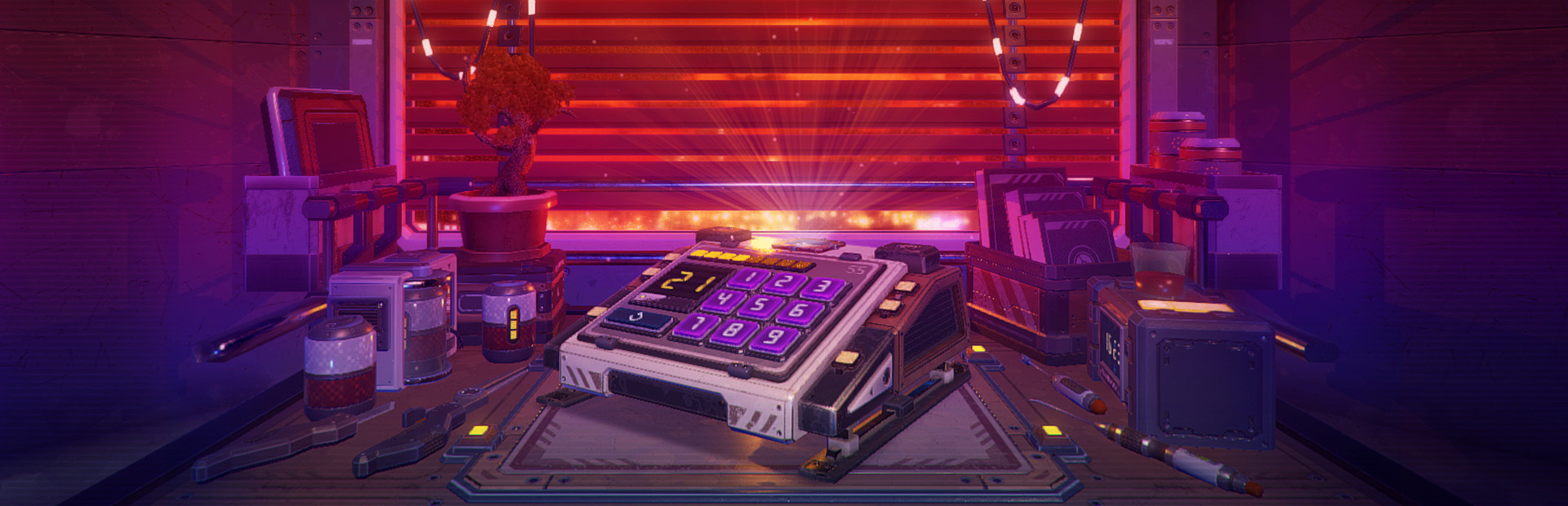
My first few minutes with Access Denied felt like sitting alone in a darkened room with a locked briefcase and absolutely no instructions. That is, intentionally, the whole point. Stately Snail is a two-person Russian studio, and this was their first title stepping away from voxel dungeon crawlers into something quieter and more tactile. What they built is a first-person puzzle game where each of 36 self-contained device boxes sits on a table in front of you, waiting to be cracked open through switches, coloured lines, rotating dials, sliding panels, and stranger mechanisms that resist easy categorisation. There is no story, no narrator, no tutorial beyond a brief control overview. Just you, the box, and the sound of rain on glass. The atmosphere is the game's quietest strength. That ambient rainfall, punctuated by the occasional rumble of thunder, gives the whole experience a meditative quality that a busier soundtrack would have ruined. Cracking open each box releases a small, crisp electronic tone that feels genuinely rewarding, the kind of micro-payoff that puzzle design lives or dies by. The visual style sits somewhere between clinical and grimy, a slightly futuristic aesthetic that one reviewer aptly compared to a bomb disposal scenario minus any actual ticking clock. There is no time limit on any puzzle, which matters more than it sounds. Pressure-free solving lets you sit with a box, rotate it, zoom in, and trust that the logic is there somewhere. The honesty I owe you is that the logic is not always cleanly communicated. Some boxes reveal their solution in the first glance. Others involve a combination of mechanisms across multiple faces where, if you misread the first step, the rest collapses into blind trial and error. A handful of puzzles seem to rely more on patience than insight, and the dial-rotation controls, which ask you to click and drag with precision, can resist your intentions in ways that feel like a control issue rather than a puzzle challenge. The difficulty curve is also uneven rather than graduated. Genuinely tough boxes appear without warning between simpler ones, which can feel less like clever sequencing and more like randomness. There is no in-game hint system in this original PC release, so when you are stuck, you are fully on your own or reaching for a walkthrough. Replayability is effectively zero once you have cleared all 36 levels. The game earns its achievements and trading cards, and completionists will find the run brief enough to tick off in a single session, with most players finishing somewhere between one and two hours depending on how long specific boxes hold them hostage. For a puzzle fan who wants a low-stakes, contemplative evening with something that genuinely respects the "figure it out yourself" philosophy, this delivers that in a compact, unpretentious package. For anyone who needs consistent difficulty signposting or robust hint infrastructure, the experience will tip from meditative into frustrating well before the final box.

Indie & narrative
Tags
System Requirements
Minimum
- OS
- Windows Vista, 7, 8, 10
- Memory
- 4 GB RAM
- DirectX
- Version 9.0c
- Storage
- 800 MB available space
- Graphics
- GPU with 1 GB Video RAM
- Processor
- 2 GHz CPU
Keep exploring
Community Discussion
Be the first to comment on Access Denied.
Reviews & Ratings
No ratings available
Game Info
- Developer
- Stately Snail
- Publisher
- Stately Snail
- Release Date
- Dec 16, 2016