
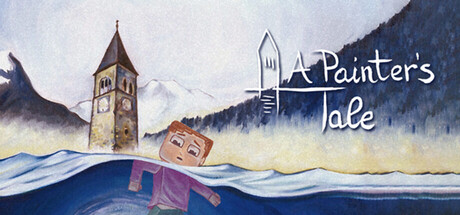
A Painter's Tale: Curon, 1950
Roughly three hours with a drowned Italian village and a bell tower that refuses to disappear - this small, handcrafted adventure earns its quiet grief.
GamerScout Verdict
Best for narrative-first players who want a short, melancholy history lesson wrapped in a handcrafted voxel adventure.
Compare Prices(2 stores)
Every store in this table quotes us in euros, so the EUR figure is the price the seller actually set, not our arithmetic — which is why EUR is also the currency we rank in. We only list an offer here when the store gives us its price in euros, so nothing in this table is a number we invented.
Pick USD, PLN, GBP, CAD or AUD in the header and we convert from EUR at the European Central Bank reference rate — converted amounts are prefixed with ~. Your bank or the store may apply a different rate at checkout. We never hide offers based on where you are: everyone sees this whole table.
We may earn a commission when you buy games through links on this page — at no extra cost to you. It never affects our rankings or verdicts.
Price History
Screenshots & Media
About A Painter's Tale: Curon, 1950
I went in expecting a curiosity and came out thinking about it for the rest of the evening. A Painter's Tale: Curon, 1950 puts you in the shoes of Tommaso, a present-day painter sketching the lone medieval steeple still jutting from the surface of Lake Resia, the only visible remnant of a village deliberately flooded by a hydroelectric dam project in spite of the residents who protested and lost. A strange glow pulls him into the water and he wakes in 1949 Curon, a year before everything disappears. What the game asks you to do from that point is gentle and deliberate: walk the streets, talk to the hotel owner, the church minister, the farmers, and slowly absorb the texture of a community on the edge of erasure. The voxel aesthetic is the thing that will either win you over or stay a friction point throughout. Characters are blocky, almost Minecraft-adjacent, with exaggerated proportions that some reviewers found charming and others found jarring next to the genuinely beautiful painted skies and Alpine vistas surrounding them. For me, there is something honest about using a rough, constructed visual language to describe people who were themselves treated as abstractions by the industrial interests that condemned their homes. The lighting does the heavy lifting, and some of the exterior shots, particularly at dusk above the lakeside, are lovely in a way that screenshots undersell. The score is the real constant companion, a piano-led composition that sits quietly underneath the melancholy without ever forcing it. Gameplay is light by design. You move through Curon in third person with a fixed camera that can feel restrictive on the slopes, where movement occasionally becomes clumsy. Dialogue happens through multiple-choice prompts, letting you shape how Tommaso responds to the villagers he meets. Scattered mini-games and translation challenges break the rhythm modestly without ever threatening to become the point. Tommaso also carries a notebook that fills with real historical facts, period artworks, and charcoal sketches of the residents, functioning as a quiet secondary layer for anyone who wants to linger on the actual history behind the fiction. That history is staggering enough on its own: around 163 homes and roughly 1,000 people displaced, German-speaking Sudtiroleans who often could not even read the Italian-language official notices telling them their village would be destroyed. The honest caveat is length. Depending on pace, this wraps in two to three hours, and the fiction of how long it takes Tommaso to understand he has travelled back in time stretches believability in a way that some players will shrug at and others will find quietly frustrating. There is no action, no fail state worth worrying about, and no substantial mechanical challenge. If you arrive expecting a game and leave having received a mood piece with educational scaffolding, that contract needs to be understood going in. The presentation is also inconsistent: the real paintings and hand-drawn artwork that appear throughout feel like a different and richer visual register than the voxel world around them, and the gap shows. What holds is the story's restraint. It does not shout. It introduces you to people whose homes have already been decided against, lets you sit with them, and then ends where history ends. For a small studio working with a real community's loss, that lightness of touch is the achievement worth recognizing.

Indie & narrative
Tags
System Requirements
Minimum
- OS
- Windows 7 SP1+ or later
- Memory
- 2 GB RAM
- DirectX
- Version 11
- Storage
- 7 GB available space
- Graphics
- 4GB video board (shader model 4.0)
- Processor
- 3 Ghz Dual Core CPU
Recommended
- OS
- Windows 7 SP1+ or later
- Memory
- 4 GB RAM
- DirectX
- Version 11
- Storage
- 7 GB available space
- Graphics
- 6GB video board (shader model 4.0)
- Processor
- 3,5 Ghz Dual Core CPU
Keep exploring
Community Discussion
Be the first to comment on A Painter's Tale: Curon, 1950.
Reviews & Ratings
No ratings available
Game Info
- Developer
- Monkeys Tales Studio
- Publisher
- Monkeys Tales Studio
- Release Date
- Jan 28, 2021