99 Spirits
A turn-based puzzle-RPG built around a genuinely strange idea: you cannot hurt anything until you figure out what it is. Worth your time if word games and Japanese folklore sit anywhere near your comfort zone.
GamerScout Verdict
Best for word-puzzle fans and Japanese folklore enthusiasts who can tolerate repetitive combat in exchange for a genuinely original battle concept.
Compare Prices(7 stores)
Every store in this table quotes us in euros, so the EUR figure is the price the seller actually set, not our arithmetic — which is why EUR is also the currency we rank in. We only list an offer here when the store gives us its price in euros, so nothing in this table is a number we invented.
Pick USD, PLN, GBP, CAD or AUD in the header and we convert from EUR at the European Central Bank reference rate — converted amounts are prefixed with ~. Your bank or the store may apply a different rate at checkout. We never hide offers based on where you are: everyone sees this whole table.
We may earn a commission when you buy games through links on this page — at no extra cost to you. It never affects our rankings or verdicts.
Price History
Screenshots & Media
About 99 Spirits
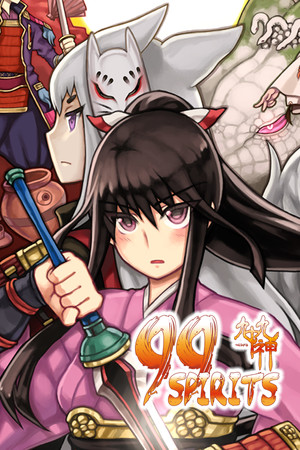
I have a soft spot for small Japanese indie games that nobody at a major outlet covers properly, and 99 Spirits is a textbook example of one that deserved more attention than it got. The core conceit is unlike anything else in the turn-based space: every enemy on the field is an invisible shroud of miasma, a possessed everyday object, a Tsukumogami, and it is totally immune to damage until you speak its true name. Before you can even think about attacking, you charge the five gems embedded in protagonist Hanabusa's Gokon Sword by attacking and defending, then read the clues those gems surface, letters from the spirit's name, words describing its purpose or material, and piece together what you are actually fighting. A broom might give you "OO," "wood," "cleaning." A naginata will give you something considerably less obvious. Only once you correctly name it does the purple smoke dissolve and the spirit take a solid form you can finish off. It is one part Hangman, one part word association, wrapped in a combat loop that is genuinely unlike anything the genre had produced at the time. The system holds up surprisingly well for the first half of the game. Battles are fully turn-based, so you can sit back, breathe, and actually think through your clues rather than react on reflex. As new gems unlock, the depth expands. The enshrine gem lets you capture spirits instead of destroying them, and captured Tsukumogami can then be deployed to solve grid-based overworld puzzles or used as combat skills, adding a light spirit-management layer that helps the late game feel more considered. Multiple endings shift depending on your choices, which gives completionists a reason to revisit. The soundtrack is a genuine highlight, mystical and Heian-period in texture, understated in battle but effective at establishing mood in a way that bigger-budget JRPGs often fumble. Dual Japanese and English voice acting was an unusual commitment for a solo indie release of this era, and the character portraits during dialogue carry real warmth even when the writing leans on familiar JRPG shorthand. Honesty requires flagging the rough edges, though. The grid-based overworld is spartan to a fault, a plain map that conveys almost no sense of the feudal Japan the rest of the game evokes so carefully. The bigger problem is repetition. Once you have correctly identified a Tsukumogami, running into the same spirit type later in the game still forces you through the entire gem-charging, clue-gathering ritual again. There is no permanent registry that lets you skip straight to the naming phase on known enemies, and that design choice grinds the pacing in the later chapters. Players who care deeply about forward momentum will feel it. The story itself is serviceable rather than compelling, a revenge-and-parentage arc that hits familiar beats even while the folklore framing gives it a texture most Western players will not have encountered before. Who is this for? Honestly, it is for the player who genuinely enjoys a word puzzle under pressure, who finds something satisfying about the moment a fog of letters resolves into an object they recognize. If you have any interest in Heian-era Japan, Tsukumogami mythology, or the quiet craftsmanship of a one-team studio reaching for something original, 99 Spirits rewards that patience. Go in knowing the repetition is real, manage your expectations on story depth, and you will find a game with a mechanic that has never quite been replicated anywhere else.

Indie & narrative
Tags
System Requirements
Minimum
- OS
- Windows 7/8/10/11
- Memory
- 1 GB RAM
- DirectX
- Version 9.0
- Storage
- 512 MB available space
- Processor
- Pentium 1.5GHz or higher
Recommended
- OS
- Windows 7/8/10
- Memory
- 2 GB RAM
- DirectX
- Version 9.0
- Storage
- 512 MB available space
- Processor
- Pentium 2GHz or higher
DLC & Add-ons for 99 Spirits3
Expansions, DLC packs and add-on content for this game. Click any item to see store offers.
Keep exploring
Community Discussion
Be the first to comment on 99 Spirits.
Reviews & Ratings
No ratings available
Game Info
- Developer
- TORaIKI
- Publisher
- Fruitbat Factory
- Release Date
- Nov 12, 2013