Compare 1849 prices across 50+ stores and find the best deal. Developed by SomaSim. Published by SomaSim. Released on 5/8/2014. Available on PC, Mac. Genres: Indie, Simulation, Strategy. Metacritic score: 60/100.

A compact Gold Rush city-builder that respects your lunch break but won't satisfy your spreadsheet addiction. Think Caesar III with cowboy boots, not Tropico with depth.

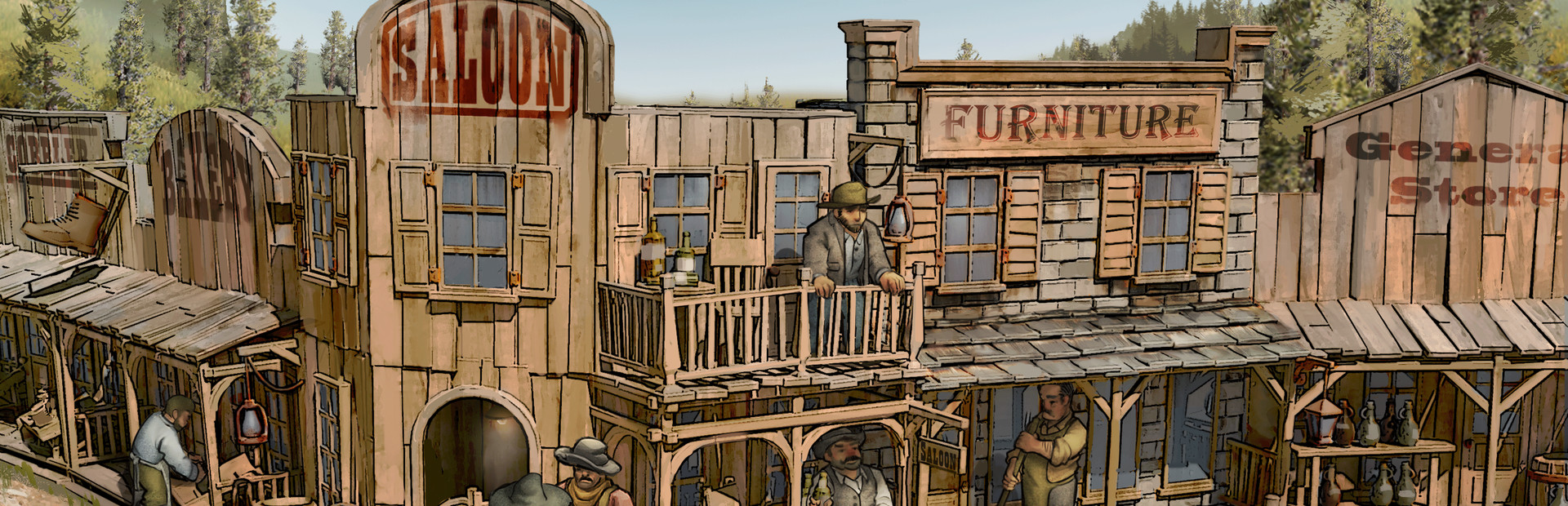
My honest reaction to 1849 after a few hours: it is a cleaner, gentler, and ultimately shallower experience than I wanted, but also a more honest one than the Metacritic 60 suggests. SomaSim built something that sits in a clearly defined lane, and the real question is whether that lane is yours. At its core this is a scenario-driven city manager spread across 20 California locations, running from dusty mining camps in the High Sierra all the way to something resembling the beginnings of San Francisco. Each scenario drops you with a depot, a road stub, and a short list of victory conditions. Those goals vary enough to keep the early campaign interesting: one map asks you to hit a population threshold, the next wants you to ship a fixed quantity of goods, another grades you on housing value. The resource chain underneath all of this is the real puzzle. You are juggling over 50 goods, including raw materials like gold ore and lumber, processed goods like planks and bread, and lifestyle items like leather shoes and alcohol, because workers who lack saloon access or adequate food will simply leave. Housing plots upgrade automatically when you satisfy their supply requirements, which creates the satisfying feedback loop of watching a shantytown gradually climb toward respectable boarding houses. That snowball mechanic, where city growth increases resource demand which forces you to either build more production or open trade routes, is the structural heart of the game. Trade is where 1849 earns its keep and also where it gets tedious fastest. You will manually import and export goods roughly every 30 seconds in the busier scenarios, and there is no trade-route automation to save you from the repetition. Veteran players of Caesar III or Anno will immediately notice that price controls are essentially absent: you cannot adjust rent or commodity prices with any precision, which strips out a meaningful decision layer. The sandbox mode softens the scenario constraints by procedurally generating maps based on geography, precipitation, and resource availability, ranging from the Pacific coast to the Sierra Nevada foothills, but the map-to-map visual variety is thin and the camera is fixed isometric with no rotation. For the strategy newcomer, though, this is actually a reasonable entry point. Each scenario runs under an hour, the tutorial is decent, complexity scales gradually, and the consequences for mistakes are recoverable rather than catastrophic. Fire stations matter because fires happen, which is a small but appreciated pressure valve. The game was built mobile-first and that heritage shows in the interface clarity: menus are uncluttered and everything is two clicks away. The downside of that mobile DNA is that the PC version feels like it is not entirely at home on a large monitor, and Mac players should be aware that macOS Catalina and above are not supported. If you live in Paradox territory or measure city-builders by their economic model complexity, 1849 will feel like a carousel ride. The depth ceiling is low, the late-game loop is mostly repetition, and there is no mod ecosystem to extend the lifespan. But if you want a historically flavored, low-stakes session game that you can pause mid-scenario without losing your place in a 200-hour campaign, it fills that gap with enough craft to justify the ask at a reduced price. Diego, Scout Team

1849
IndieSimulationStrategy

1849

May 8, 2014SomaSim
GamerScout Says

A compact Gold Rush city-builder that respects your lunch break but won't satisfy your spreadsheet addiction. Think Caesar III with cowboy boots, not Tropico with depth.

PCMac
Best Price Available
0.00
at N/A
Historical low: $1.83

Compare Prices(0 stores)

Loading prices...

We may earn a commission when you buy games through links on this page — at no extra cost to you. It never affects our rankings or verdicts.

Screenshots & Media

Screenshot

About 1849

My honest reaction to 1849 after a few hours: it is a cleaner, gentler, and ultimately shallower experience than I wanted, but also a more honest one than the Metacritic 60 suggests. SomaSim built something that sits in a clearly defined lane, and the real question is whether that lane is yours. At its core this is a scenario-driven city manager spread across 20 California locations, running from dusty mining camps in the High Sierra all the way to something resembling the beginnings of San Francisco. Each scenario drops you with a depot, a road stub, and a short list of victory conditions. Those goals vary enough to keep the early campaign interesting: one map asks you to hit a population threshold, the next wants you to ship a fixed quantity of goods, another grades you on housing value. The resource chain underneath all of this is the real puzzle. You are juggling over 50 goods, including raw materials like gold ore and lumber, processed goods like planks and bread, and lifestyle items like leather shoes and alcohol, because workers who lack saloon access or adequate food will simply leave. Housing plots upgrade automatically when you satisfy their supply requirements, which creates the satisfying feedback loop of watching a shantytown gradually climb toward respectable boarding houses. That snowball mechanic, where city growth increases resource demand which forces you to either build more production or open trade routes, is the structural heart of the game. Trade is where 1849 earns its keep and also where it gets tedious fastest. You will manually import and export goods roughly every 30 seconds in the busier scenarios, and there is no trade-route automation to save you from the repetition. Veteran players of Caesar III or Anno will immediately notice that price controls are essentially absent: you cannot adjust rent or commodity prices with any precision, which strips out a meaningful decision layer. The sandbox mode softens the scenario constraints by procedurally generating maps based on geography, precipitation, and resource availability, ranging from the Pacific coast to the Sierra Nevada foothills, but the map-to-map visual variety is thin and the camera is fixed isometric with no rotation. For the strategy newcomer, though, this is actually a reasonable entry point. Each scenario runs under an hour, the tutorial is decent, complexity scales gradually, and the consequences for mistakes are recoverable rather than catastrophic. Fire stations matter because fires happen, which is a small but appreciated pressure valve. The game was built mobile-first and that heritage shows in the interface clarity: menus are uncluttered and everything is two clicks away. The downside of that mobile DNA is that the PC version feels like it is not entirely at home on a large monitor, and Mac players should be aware that macOS Catalina and above are not supported. If you live in Paradox territory or measure city-builders by their economic model complexity, 1849 will feel like a carousel ride. The depth ceiling is low, the late-game loop is mostly repetition, and there is no mod ecosystem to extend the lifespan. But if you want a historically flavored, low-stakes session game that you can pause mid-scenario without losing your place in a 200-hour campaign, it fills that gap with enough craft to justify the ask at a reduced price. Diego, Scout Team

Tags

singleplayerachievementstrading-cardstier:sub-5Scenario-BasedTrade Route ManagementMobile PortLow-Complexity SimHistorical SettingFixed Isometric CameraResource ChainBeginner-Friendly Strategy

Steam Deck & Linux

Steam Deck Playable

Valve rates this game Steam Deck Playable.

System Requirements

Minimum

OS
Windows 8 / Windows 7 / Windows Vista
Memory
512 MB RAM
Storage
75 MB available space
Processor
Pentium 4 or better

Community Discussion

Be the first to comment on 1849.

Reviews & Ratings

Metacritic
60

Game Info

Developer
SomaSim
Publisher
SomaSim
Release Date
May 8, 2014

Price Alert

Get notified when the price drops below your target!

Create Alert

Price History

2026-06-101.83(lowest)

More from SomaSim

Buy smarter: helpful guides

Looking for more? See games like 1849

Frequently asked questions about 1849

How much does 1849 cost?

1849 pricing changes often and varies by store, edition and region. The live price table on this page compares the cheapest in-stock key and store offers across 50+ verified shops, so you always see the current lowest price before you buy.

Where can I buy 1849 cheapest?

Compare 1849 prices across every verified store in the price table on this page. We list the cheapest in-stock key and store offers, updated regularly, so you always see the best current deal before you buy.

What platforms is 1849 available on?

1849 is available on PC, Mac.

When was 1849 released?

1849 was released on 8 May 2014.

Who developed 1849?

1849 was developed by SomaSim.

Is 1849 worth buying?

1849 holds a Metacritic score of 60/100, making it one of the standout Indie titles. See the full reviews, ratings and how-long-to-beat times on this page to decide.