The Thaumaturge
Warsaw, 1905, a revolution simmering, and you can literally read the sins off a stranger's pocket watch. If that pitch doesn't hook you, nothing will.
Veredicto de GamerScout
Built for narrative-RPG fans who want a morally grey detective story with strong writing and a genuinely original setting - combat tourists may want to look elsewhere.
Comparar precios(9 tiendas)
Todas las tiendas de esta tabla nos dan el precio en euros, así que la cifra en EUR es el precio que fijó el vendedor, no un cálculo nuestro, y por eso EUR es también la moneda en la que calculamos el ranking. Solo incluimos aquí una oferta cuando la tienda nos da su precio en euros, de modo que ninguna cifra de esta tabla es inventada por nosotros.
Elige USD, PLN, GBP, CAD o AUD en la cabecera y convertimos desde EUR con el tipo de cambio de referencia del Banco Central Europeo — los importes convertidos llevan el prefijo ~. Tu banco o la tienda pueden aplicar un tipo distinto al pagar. Nunca ocultamos ofertas según dónde estés: todo el mundo ve esta tabla completa.
We may earn a commission when you buy games through links on this page — at no extra cost to you. It never affects our rankings or verdicts.
Historial de precios
Capturas y multimedia
Acerca de The Thaumaturge
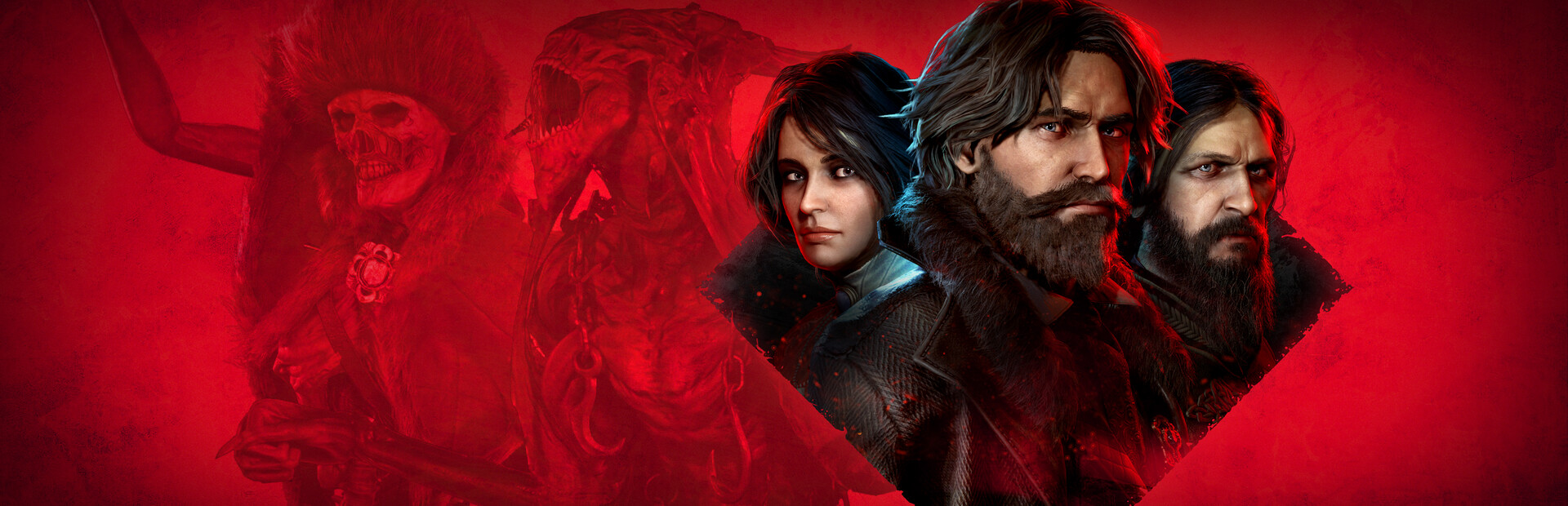
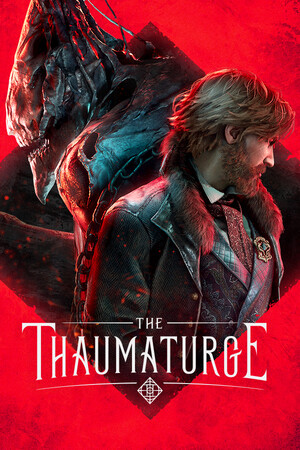
I've spent enough time with narrative RPGs to know when a setting is doing genuine heavy lifting versus just providing window dressing, and The Thaumaturge's 1905 Warsaw is the real thing. Fool's Theory built a city under Russian imperial occupation where Polish workers, Jewish merchants, and aristocrats rub against each other in ways that feel historically grounded rather than decorative. The multicultural tension of the Praga district and the high-society salons aren't backdrop filler; they're the friction your protagonist Wiktor Szulski exploits every time he opens his mouth. Wiktor is a thaumaturge, which means he can bond with and command folklore-rooted demons called salutors. The core hook is that each salutor represents a human flaw, and Wiktor's own inborn flaw is Pride. You can actively feed that Pride through dialogue choices and watch certain doors close while others open, which is the kind of character-building I genuinely care about. You start the game with Upyr, a Heart-Dimension salutor that has been Wiktor's silent shadow since childhood, and expand your roster to up to eight total by hunting down the flawed people they've latched onto across Warsaw's districts. Bukavac, Veles, Lelek, Morana, the Djinn, the Golem, Krampus - each one tied to a side quest or a moral fork in the road. Miss a side quest and you can lock yourself out of a salutor permanently, so do your homework before hitting the point of no return in Act 2. The turn-based combat uses a timeline queue system where every attack, yours and the enemy's, slots into a visible sequence that you can manipulate by choosing faster or slower actions. Each salutor brings a distinct toolkit: Bukavac stacks a Suffering damage-over-time that synergizes with upgraded attacks, while Lelek specializes in draining enemy Focus, and depleting all Focus unlocks a high-damage super attack for both Wiktor and the active salutor. Enemy Traits add a second layer - some opponents are flat-out invulnerable until you hit them with the correct Dimension's salutor to strip the Trait. It's a satisfying system on paper, and it genuinely is in the first half of the game. The criticism worth repeating is that regular encounters don't demand much creativity, with real strategic weight showing up mainly in boss fights. If you come in expecting XCOM-style tension every round, calibrate that expectation downward. The investigation loop is where the game breathes. Wiktor's perception ability, activated by snapping his fingers against his grimoire, scatters red particles across the environment to surface readable objects and emotional imprints. It works as both a clue-hunting tool and a waypoint system, though the particle trail fades quickly enough to become a minor annoyance over a long session. The writing around these investigations is sharp, the dialogue rewards attention, and historical figures like Rasputin are rendered with enough ambiguity to stay interesting well past their introduction. Rasputin in particular is written as a confounding presence whose motives stay opaque until late in the game, which is exactly how a character like that should function. The main knock against the exploration is that the chapter structure doesn't support fast travel within areas early on, turning some quest loops into repetitive back-and-forth runs through the same streets. The game clocks in at roughly 25 to 30 hours, and those traversal stretches do contribute to a mid-game pace that drags slightly compared to the propulsive opening. For narrative-RPG fans who prioritize writing over combat depth, The Thaumaturge lands closer to Disco Elysium on the spectrum than to something mechanically demanding. The choices carry real weight, multiple endings exist, and Wiktor is one of the more genuinely interesting protagonists in recent RPG memory, a man whose greatest enemy is his own reflected image. Just go into it knowing it leans hard on its story and setting, and that the combat is a supporting act rather than the main event.

RPGs
Etiquetas
Requisitos del sistema
Mínimos
- OS
- Windows 10 (64-bit)
- Memory
- 16 GB RAM
- DirectX
- Version 12
- Storage
- 25 GB available space
- Graphics
- Radeon RX580 (8GB) or Nvidia GTX 1050 Ti (4GB) or Intel Arc A750 8GB
- Processor
- AMD Ryzen 5 3600 (6 core with 3,5 Ghz) or Intel i5-10400F (6 core with 2,9 Ghz)
Recomendados
- OS
- Windows 10 (64-bit)
- Memory
- 32 GB RAM
- DirectX
- Version 12
- Storage
- 25 GB available space
- Graphics
- Radeon 6700xt (12GB) or Nvidia RTX 3060 TI (8GB) or Intel Arc A770 16GB
- Processor
- AMD Ryzen 5 3600 (6 core with 3,5 Ghz) or Intel i5-10400F (6 core with 2,9 Ghz)
Sigue explorando
Community Discussion
Be the first to comment on The Thaumaturge.
Reseñas y valoraciones
No hay valoraciones disponibles
Información del juego
- Desarrolladora
- Fool's Theory
- Distribuidora
- 11 bit studios
- Fecha de lanzamiento
- 4 mar 2024