Compara los precios de The Fridge is Red en tiendas de claves de confianza y encuentra la mejor oferta. Desarrollado por 5WORD Team. Publicado por tinyBuild. Lanzado el 27/9/2022. Disponible en PC. Géneros: Action, Adventure, Indie.

Six PSX-flavored horror vignettes built around grief, liminal dread, and a very unsettling fridge. Atmosphere does the heavy lifting; just don't expect the puzzles to hold up their end.

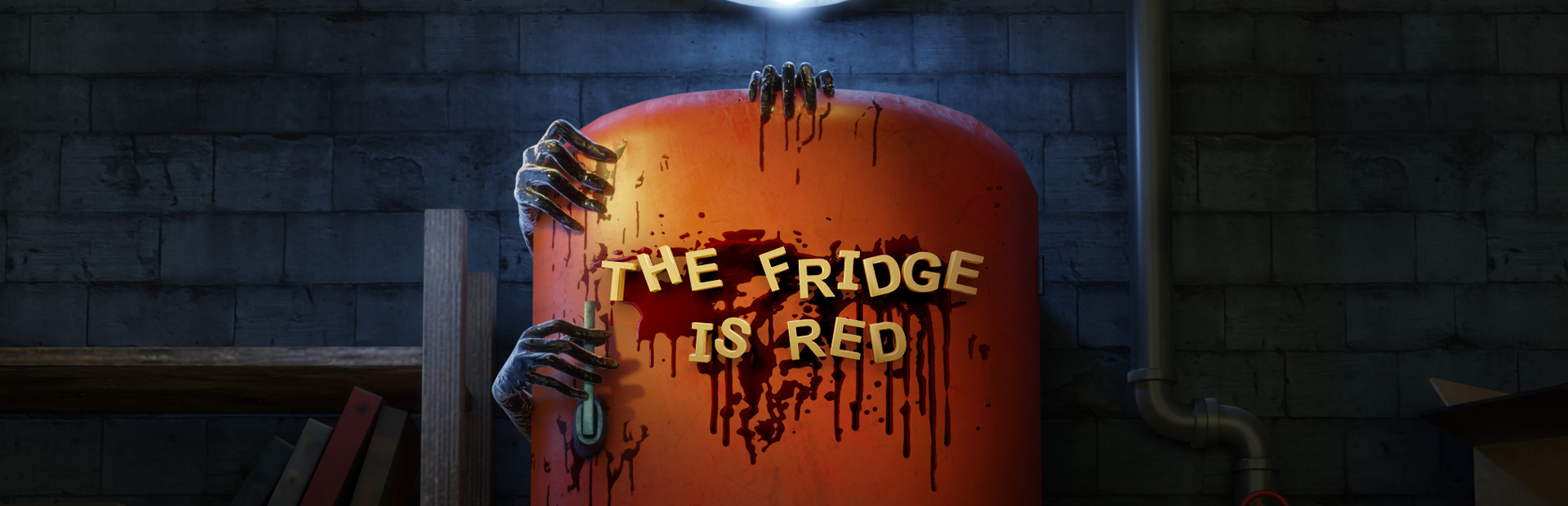
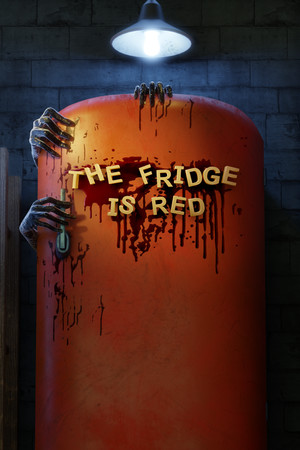
My first instinct with The Fridge is Red was quiet admiration. That opening chapter, where a violently shaking fridge creeps toward you the moment you look away, is one of the most economical horror setups I have encountered in a small indie release. The conceit is SCP-flavored, the low-poly PSX aesthetic is lovingly committed, and the sound design announces itself immediately as the game's greatest asset. Creaking ambience, synthetic voice acting modulated just enough to feel inhuman, and a soundscape that somehow makes a kitchen feel like the end of the world. For roughly thirty minutes I was completely sold. The Fridge is Red is a first-person anthology of six chapters, each set in a different liminal space and each exploring a facet of one man's grief. You move through a labyrinthine office block trying to reach an elevator that keeps descending into something terrible. You wander hospital corridors that have no intention of ending. You attend a funeral that turns hostile. You drive a snowy highway that seems geometrically opposed to letting you arrive anywhere. The connective tissue is a broken family story, and the writing understands that mundane settings, an overlit waiting room, a parking structure at night, carry their own primal unease. That understanding is real and it is the game's genuine strength. The VHS filter and purposeful obstruction of detail are used well; the low polygon work, combined with careful lighting, produces images that linger. The trouble starts when the game remembers it has to be played. The basic loop is item collection and simple object-use puzzles, which is fine on paper, but the lack of directional clarity kills momentum repeatedly. Several chapters ask you to wander without enough feedback to tell you whether you are making progress or running in circles, and for a two-hour game that is a meaningful proportion of your time lost to confusion rather than dread. The infamous elevator chapter, which starts brilliantly with wrong-floor horror imagery, becomes a frustrating exercise in brute-forcing an obscure code. A later driving sequence is long, ambiguous, and almost entirely free of tension. Each chapter also ends with the same fridge callback regardless of narrative context, a structural tic that starts as interesting repetition and curdles into something that cheapens individual episodes by the fourth time. One structural mercy worth knowing: each chapter contains a collectible item early on that unlocks the next chapter outright, so if a particular episode is grinding you down you can skip forward without penalty. That flexibility is thoughtful design, and it signals that the developers knew some sections were uneven. Player reception landed in genuinely mixed territory, with atmosphere and sound praised almost universally and puzzle design criticized just as consistently. The story's emotional core, grief rendered as warping architecture, reads as sincere rather than cynical, even if the individual chapter-end reveals explain the metaphors more bluntly than the surreal staging deserves. If you love slow-burn horror that trusts its mood over its mechanics, and you have patience for obtuse puzzle logic, there is something here that will stay with you. The highs are genuinely haunting. The fridge itself, as an image and a symbol, is the kind of thing small teams dream up once and spend years following. I only wish the gameplay had been shaped with the same deliberate care as the soundscape. Kai, Scout Team

The Fridge is Red

The Fridge is Red

27 sept 20225WORD TeamtinyBuild
GamerScout opina

Six PSX-flavored horror vignettes built around grief, liminal dread, and a very unsettling fridge. Atmosphere does the heavy lifting; just don't expect the puzzles to hold up their end.

PC
Steam Deck Playable
Mejor precio disponible
€0.00
en N/A
Mínimo histórico: €2.18

Comparar precios(0 tiendas)

Cargando precios...

We may earn a commission when you buy games through links on this page — at no extra cost to you. It never affects our rankings or verdicts.

Historial de precios

Historical low
€2.1823 Jun 2026
Keyshops
€2.03€2.15€2.27€2.396 Jun12 Jun17 Jun23 Jun28 Jun
Tracking prices since 6 Jun 2026
Create alert

Capturas y multimedia

Acerca de The Fridge is Red

My first instinct with The Fridge is Red was quiet admiration. That opening chapter, where a violently shaking fridge creeps toward you the moment you look away, is one of the most economical horror setups I have encountered in a small indie release. The conceit is SCP-flavored, the low-poly PSX aesthetic is lovingly committed, and the sound design announces itself immediately as the game's greatest asset. Creaking ambience, synthetic voice acting modulated just enough to feel inhuman, and a soundscape that somehow makes a kitchen feel like the end of the world. For roughly thirty minutes I was completely sold. The Fridge is Red is a first-person anthology of six chapters, each set in a different liminal space and each exploring a facet of one man's grief. You move through a labyrinthine office block trying to reach an elevator that keeps descending into something terrible. You wander hospital corridors that have no intention of ending. You attend a funeral that turns hostile. You drive a snowy highway that seems geometrically opposed to letting you arrive anywhere. The connective tissue is a broken family story, and the writing understands that mundane settings, an overlit waiting room, a parking structure at night, carry their own primal unease. That understanding is real and it is the game's genuine strength. The VHS filter and purposeful obstruction of detail are used well; the low polygon work, combined with careful lighting, produces images that linger. The trouble starts when the game remembers it has to be played. The basic loop is item collection and simple object-use puzzles, which is fine on paper, but the lack of directional clarity kills momentum repeatedly. Several chapters ask you to wander without enough feedback to tell you whether you are making progress or running in circles, and for a two-hour game that is a meaningful proportion of your time lost to confusion rather than dread. The infamous elevator chapter, which starts brilliantly with wrong-floor horror imagery, becomes a frustrating exercise in brute-forcing an obscure code. A later driving sequence is long, ambiguous, and almost entirely free of tension. Each chapter also ends with the same fridge callback regardless of narrative context, a structural tic that starts as interesting repetition and curdles into something that cheapens individual episodes by the fourth time. One structural mercy worth knowing: each chapter contains a collectible item early on that unlocks the next chapter outright, so if a particular episode is grinding you down you can skip forward without penalty. That flexibility is thoughtful design, and it signals that the developers knew some sections were uneven. Player reception landed in genuinely mixed territory, with atmosphere and sound praised almost universally and puzzle design criticized just as consistently. The story's emotional core, grief rendered as warping architecture, reads as sincere rather than cynical, even if the individual chapter-end reveals explain the metaphors more bluntly than the surreal staging deserves. If you love slow-burn horror that trusts its mood over its mechanics, and you have patience for obtuse puzzle logic, there is something here that will stay with you. The highs are genuinely haunting. The fridge itself, as an image and a symbol, is the kind of thing small teams dream up once and spend years following. I only wish the gameplay had been shaped with the same deliberate care as the soundscape.

Kai
Kai · Scout Team

Indie & narrative

Etiquetas

singleplayerachievementstrading-cardscloud-savestier:sub-5Analog HorrorLiminal SpacesVignette AnthologyPSX AestheticGrief NarrativeObtuse PuzzlesSlow-Burn HorrorNo Combat

Requisitos del sistema

Mínimos

OS
Windows 7/8/10
Memory
4 GB RAM
DirectX
Version 11
Storage
2 GB available space
Graphics
NVIDIA GeForce 960
Processor
Intel i5-4590

Recomendados

OS
Windows 7/8/10
Memory
8 GB RAM
DirectX
Version 11
Storage
2 GB available space
Graphics
NVIDIA GeForce GTX 1660
Processor
Intel i7-6700k

Sigue explorando

Community Discussion

Be the first to comment on The Fridge is Red.

Reseñas y valoraciones

No hay valoraciones disponibles

Información del juego

Desarrolladora
5WORD Team
Distribuidora
tinyBuild
Fecha de lanzamiento
27 sept 2022

Alerta de precio

¡Recibe un aviso cuando el precio baje de tu objetivo!

Crear alerta

Más de 5WORD Team

Compra mejor: guías útiles

¿Buscas más? Mira juegos como The Fridge is Red →

Preguntas frecuentes sobre The Fridge is Red

¿Cuánto cuesta The Fridge is Red?

El precio de The Fridge is Red cambia a menudo y varía según la tienda, la edición y la región. La tabla de precios en vivo de esta página compara las ofertas más baratas en stock de tiendas de claves de confianza como Eneba y Kinguin, para que siempre veas el precio más bajo actual antes de comprar.

¿Dónde puedo comprar The Fridge is Red más barato?

Compara los precios de The Fridge is Red en todas las tiendas verificadas en la tabla de precios de esta página. Listamos las ofertas de claves y tiendas más baratas en stock, actualizadas con frecuencia, para que siempre veas la mejor oferta actual antes de comprar.

¿En qué plataformas está disponible The Fridge is Red?

The Fridge is Red está disponible en PC.

¿Cuándo se lanzó The Fridge is Red?

The Fridge is Red se lanzó el 27 de septiembre de 2022.

¿Quién desarrolló The Fridge is Red?

The Fridge is Red fue desarrollado por 5WORD Team y publicado por tinyBuild.