Compara los precios de Sid Meier's Civilization® IV en tiendas de claves de confianza y encuentra la mejor oferta. Desarrollado por Firaxis Games. Publicado por 2K. Lanzado el 25/10/2006. Disponible en PC, Mac. Géneros: Strategy. Puntuación Metacritic: 94/100.

A 94-rated grand-strategy titan that still pulls players back from Civ V and VI two decades later. The mod ecosystem alone is worth the price of entry.

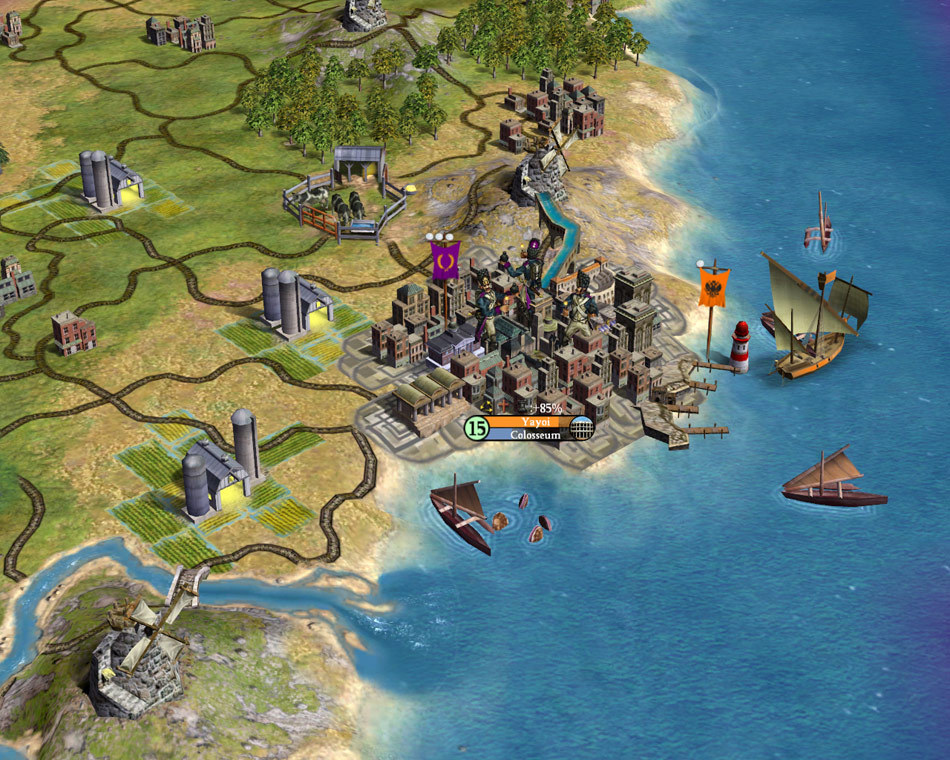
I have a colour-coded spreadsheet comparing every Civilization entry from Civ II onward, and Civ IV sits at the top of that list with a comfortable margin. What Firaxis delivered here was not just an iteration but a systematic repair of every mechanical grievance the series had accumulated. The combat model in Civ III was famously broken, with spearmen occasionally defeating tanks thanks to a percentage-roll system that ignored unit strength ratios. Civ IV replaced that with a clean "strength" comparison system that makes military decision-making feel grounded again. Border management, previously a micromanagement nightmare requiring you to manually expel foreign units, was overhauled so all borders default to closed and Open Borders treaties become an actual diplomatic currency. The Civics system gives you a matrix of government, legal, economic, labour, and religious policies to mix and match, meaning two players who both go wide-empire domination can still run completely different internal configurations. The leader selection system ties directly into your long-game strategy. Each historical leader carries two traits, things like "Organized" (reduces civic upkeep costs) or "Expansive" (bonus health in cities and faster city growth), plus a unique unit and building. Picking Mansa Musa and leaning into his Financial and Spiritual traits hits differently than running Shaka Zulu's Aggressive trait alongside early Impi rushes. Five distinct victory conditions keep you honest: Domination, Cultural, Diplomatic via the United Nations, the Space Race to Alpha Centauri, and a timed score victory. A well-rounded empire that ignores Culture until turn 200 will lose cities to a culturally dominant neighbour without a single shot fired, so the tension between specialisation and flexibility runs through every session. For newcomers, the learning curve is real but manageable. The tutorial, narrated by Sid Meier himself, covers the opening mechanics solidly, though it does not hold your hand through mid-game pivots like switching civics or managing great person generation. The late game is where the complexity peaks: dozens of worker units tiling improvements across a continent-spanning empire can become a chore, and the Civlopedia, while extensive, is not always well-organised. The AI on standard difficulty is honest competition for most players; push up to Emperor or Deity and you are playing a different, significantly more punishing game where build order and tech prioritisation become non-negotiable. The reason Civ IV still has an active community in 2025 is the mod ecosystem, and it is genuinely extraordinary. Fall from Heaven II converts the entire game into a dark fantasy setting with a magic system, mana resources, and entirely distinct civilisations. Rhye's and Fall of Civilization locks each civ to its historical geographic starting position and gives every nation a dynamic collapse mechanic. Caveman 2 Cosmos expands the tech tree to roughly five times its vanilla size. Realism Invictus overhauls the AI and extends the historical span with new units and civics. These are not small tweaks but total transformations, and the CivFanatics community still maintains and releases patches for several of them as of this year. The base game's Python and XML modding architecture, an unusual design choice for 2005, is the reason the ecosystem grew so deep. If the stock experience ever feels exhausted, there is a full menu of second lives waiting. The caveats worth flagging: "Stacks of Doom" combat, where the most efficient strategy is to pile every military unit into a single tile and move as one, is a polarising design choice that later Civ entries explicitly corrected. Players who find it gamey will be frustrated. The late-game worker micromanagement, even with automation options on, still clutters the screen. And if you are the type who expects a polished modern UI, the 2005 interface will take adjustment. None of those issues change the fundamental quality of the strategic decision tree underneath. Diego, Scout Team

Sid Meier's Civilization® IV

Sid Meier's Civilization® IV

25 oct 2006Firaxis Games2K
GamerScout opina

A 94-rated grand-strategy titan that still pulls players back from Civ V and VI two decades later. The mod ecosystem alone is worth the price of entry.

PCMac
Steam Deck PlayableProtonDB Gold
Mejor precio disponible
€0.00
en N/A
Mínimo histórico: €0.90

Comparar precios(0 tiendas)

Cargando precios...

We may earn a commission when you buy games through links on this page — at no extra cost to you. It never affects our rankings or verdicts.

Historial de precios

Historical low
€0.907 Jun 2026
Keyshops
€0.87€0.98€1.09€1.205 Jun11 Jun17 Jun22 Jun28 Jun
Tracking prices since 5 Jun 2026
Create alert

Capturas y multimedia

Captura

Acerca de Sid Meier's Civilization® IV

I have a colour-coded spreadsheet comparing every Civilization entry from Civ II onward, and Civ IV sits at the top of that list with a comfortable margin. What Firaxis delivered here was not just an iteration but a systematic repair of every mechanical grievance the series had accumulated. The combat model in Civ III was famously broken, with spearmen occasionally defeating tanks thanks to a percentage-roll system that ignored unit strength ratios. Civ IV replaced that with a clean "strength" comparison system that makes military decision-making feel grounded again. Border management, previously a micromanagement nightmare requiring you to manually expel foreign units, was overhauled so all borders default to closed and Open Borders treaties become an actual diplomatic currency. The Civics system gives you a matrix of government, legal, economic, labour, and religious policies to mix and match, meaning two players who both go wide-empire domination can still run completely different internal configurations. The leader selection system ties directly into your long-game strategy. Each historical leader carries two traits, things like "Organized" (reduces civic upkeep costs) or "Expansive" (bonus health in cities and faster city growth), plus a unique unit and building. Picking Mansa Musa and leaning into his Financial and Spiritual traits hits differently than running Shaka Zulu's Aggressive trait alongside early Impi rushes. Five distinct victory conditions keep you honest: Domination, Cultural, Diplomatic via the United Nations, the Space Race to Alpha Centauri, and a timed score victory. A well-rounded empire that ignores Culture until turn 200 will lose cities to a culturally dominant neighbour without a single shot fired, so the tension between specialisation and flexibility runs through every session. For newcomers, the learning curve is real but manageable. The tutorial, narrated by Sid Meier himself, covers the opening mechanics solidly, though it does not hold your hand through mid-game pivots like switching civics or managing great person generation. The late game is where the complexity peaks: dozens of worker units tiling improvements across a continent-spanning empire can become a chore, and the Civlopedia, while extensive, is not always well-organised. The AI on standard difficulty is honest competition for most players; push up to Emperor or Deity and you are playing a different, significantly more punishing game where build order and tech prioritisation become non-negotiable. The reason Civ IV still has an active community in 2025 is the mod ecosystem, and it is genuinely extraordinary. Fall from Heaven II converts the entire game into a dark fantasy setting with a magic system, mana resources, and entirely distinct civilisations. Rhye's and Fall of Civilization locks each civ to its historical geographic starting position and gives every nation a dynamic collapse mechanic. Caveman 2 Cosmos expands the tech tree to roughly five times its vanilla size. Realism Invictus overhauls the AI and extends the historical span with new units and civics. These are not small tweaks but total transformations, and the CivFanatics community still maintains and releases patches for several of them as of this year. The base game's Python and XML modding architecture, an unusual design choice for 2005, is the reason the ecosystem grew so deep. If the stock experience ever feels exhausted, there is a full menu of second lives waiting. The caveats worth flagging: "Stacks of Doom" combat, where the most efficient strategy is to pile every military unit into a single tile and move as one, is a polarising design choice that later Civ entries explicitly corrected. Players who find it gamey will be frustrated. The late-game worker micromanagement, even with automation options on, still clutters the screen. And if you are the type who expects a polished modern UI, the 2005 interface will take adjustment. None of those issues change the fundamental quality of the strategic decision tree underneath.

Diego
Diego · Scout Team

Strategy & simulation

Etiquetas

singleplayermultiplayer4X StrategyTurn-BasedGrand StrategyMod-FriendlyMultiple Victory ConditionsCivics SystemHistorical LeadersPBEM MultiplayerLate-Game Depth

Requisitos del sistema

Mínimos

Windows 2000/XP, 1.2GHz Intel Pentium 4 or AMD Athlon processor or equivalent, 256MB RAM, 64 MB Video Card w/ Hardware T&L (GeForce 2/Radeon 7500 or better) DirectX7 compatible sound card, 1.7GB of free hard dr…

DLC y complementos de Sid Meier's Civilization® IV2

Expansiones, packs de DLC y contenido adicional de este juego. Haz clic en cualquier elemento para ver las ofertas de las tiendas.

Sigue explorando

Community Discussion

Be the first to comment on Sid Meier's Civilization® IV.

Reseñas y valoraciones

Metacritic
94

Información del juego

Desarrolladora
Firaxis Games
Distribuidora
2K
Fecha de lanzamiento
25 oct 2006

Modos de juego

singleplayer
multiplayer

Idiomas

Subtítulos (5)
EnglishFrenchGermanItalianSpanish - Spain

Alerta de precio

¡Recibe un aviso cuando el precio baje de tu objetivo!

Crear alerta

Más de Firaxis Games

Compra mejor: guías útiles

¿Buscas más? Mira juegos como Sid Meier's Civilization® IV →

Preguntas frecuentes sobre Sid Meier's Civilization® IV

¿Cuánto cuesta Sid Meier's Civilization® IV?

El precio de Sid Meier's Civilization® IV cambia a menudo y varía según la tienda, la edición y la región. La tabla de precios en vivo de esta página compara las ofertas más baratas en stock de tiendas de claves de confianza como Eneba y Kinguin, para que siempre veas el precio más bajo actual antes de comprar.

¿Dónde puedo comprar Sid Meier's Civilization® IV más barato?

Compara los precios de Sid Meier's Civilization® IV en todas las tiendas verificadas en la tabla de precios de esta página. Listamos las ofertas de claves y tiendas más baratas en stock, actualizadas con frecuencia, para que siempre veas la mejor oferta actual antes de comprar.

¿En qué plataformas está disponible Sid Meier's Civilization® IV?

Sid Meier's Civilization® IV está disponible en PC, Mac.

¿Cuándo se lanzó Sid Meier's Civilization® IV?

Sid Meier's Civilization® IV se lanzó el 25 de octubre de 2006.

¿Quién desarrolló Sid Meier's Civilization® IV?

Sid Meier's Civilization® IV fue desarrollado por Firaxis Games y publicado por 2K.

¿Merece la pena comprar Sid Meier's Civilization® IV?

Sid Meier's Civilization® IV tiene una puntuación Metacritic de 94/100, lo que lo convierte en uno de los títulos destacados de Strategy. Mira las reseñas completas, las valoraciones y los tiempos de duración en esta página para decidir.