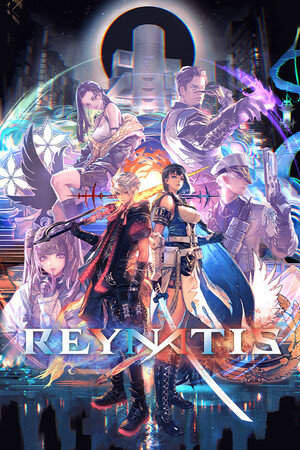
REYNATIS
Two protagonists, one city, a magic-criminalisation allegory with some real ideas - and a combat loop that runs out of steam before the credits roll. Worth knowing what you're signing up for.
Veredicto de GamerScout
Worth it for PS2-era JRPG fans who can forgive thin side quests and a story that front-loads its lore without delivering the payoff.
Comparar precios(2 tiendas)
Todas las tiendas de esta tabla nos dan el precio en euros, así que la cifra en EUR es el precio que fijó el vendedor, no un cálculo nuestro, y por eso EUR es también la moneda en la que calculamos el ranking. Solo incluimos aquí una oferta cuando la tienda nos da su precio en euros, de modo que ninguna cifra de esta tabla es inventada por nosotros.
Elige USD, PLN, GBP, CAD o AUD en la cabecera y convertimos desde EUR con el tipo de cambio de referencia del Banco Central Europeo — los importes convertidos llevan el prefijo ~. Tu banco o la tienda pueden aplicar un tipo distinto al pagar. Nunca ocultamos ofertas según dónde estés: todo el mundo ve esta tabla completa.
We may earn a commission when you buy games through links on this page — at no extra cost to you. It never affects our rankings or verdicts.
Historial de precios
Capturas y multimedia
Acerca de REYNATIS
I came into REYNATIS with genuine excitement: Kazushige Nojima on story, Yoko Shimomura on music, a Shibuya setting soaked in neon and social anxiety, and a dual-protagonist structure that promised real ideological friction. What I got was a game that flashes brilliance in short bursts before retreating into the kind of unpolished, under-cooked execution that FuRyu has, unfortunately, made something of a signature. The premise is doing heavy lifting and it mostly earns its place. Marin Kirizumi is a young wizard - a Replica, meaning his powers came through a near-death experience rather than bloodline - who wants freedom through raw strength. Sari Nishijima is an officer in the Magical Enforcement Administration who uses her own magic to uphold the very laws that oppress people like Marin. The tension between them is genuinely interesting on paper, and the smaller character moments - text message exchanges between party members, banter that cuts against the angsty tone - are where the writing actually lands. The problem is the macro story, which buries itself under an avalanche of lore terminology. Replicas versus Legacies, the Guild, the drug Rubrum, monsters called the Damned, a separate category of resisters called Fools - the worldbuilding reads like someone outlined a twelve-episode anime and then forgot to write the show. Emotional payoffs that should hit instead rush past you. Combat is the thing most people will pivot on. The Suppression and Liberation mode system is a genuinely clever hook: in Suppression, you cannot attack but can perform timed counters that slow time and rebuild your MP; in Liberation, you go all-out with standard combos and assignable special attacks called Wizart, but you cannot defend. Switching fluidly between the two, reading enemy wind-ups and banking MP for offensive bursts, has a rhythm to it that can feel satisfying - especially against larger boss-type enemies where the read-and-counter loop clicks into place. The Wizart system, where collectible graffiti pieces scattered across Shibuya grant abilities that any party member can equip, hints at real build flexibility. Malice level, which decreases as you complete quests and gates access to more ability slots, is another layer that sounds interesting in a preview document. In practice, most of these systems are too forgiving and too samey to matter much past the midpoint. The dodge in Suppression mode is nearly automatic, boss encounters rarely demand a change in approach, and the rotating cast of up to three party members includes some characters - a slow hammer user, a brawler whose special roots them in place - that feel lifted from a prototype build. The PC port runs cleanly at 4K and up to 120fps, which is the one area where the version here has a genuine leg up over the rougher console builds. Shibuya itself is the game's strongest argument for patience. The recreation of the ward is meticulous - real landmarks, real shop fronts, the kind of place you want to wander in Suppression mode just to absorb the atmosphere. The dual-mode structure even extends to exploration: go Liberated and you move faster but risk the MEA giving chase; stay Suppressed and civilians talk to you, hand you side quests, feed you lore. It is a smart systemic loop that mirrors the story's themes about hiding who you are. It is just a shame the side quests themselves tend toward thin fetch work rather than anything that earns the world's emotional weight. Shimomura's score surfaces in moments - orchestral swells in the right cutscene, a few tracks that genuinely elevate a scene - though the overall soundtrack is quieter and less consistent than her best work. REYNATIS is a game for a specific kind of player: someone who loved the scrappy mid-budget JRPGs of the PS2 era, who can tolerate lore dumps in exchange for occasional character warmth, and who finds the Suppression-Liberation rhythm satisfying enough to carry a 20-ish hour campaign. If you need narrative payoff proportional to the setup, or a combat system that keeps evolving past hour ten, this will frustrate you. There is a better game buried somewhere in here, and you can feel it trying to get out.

RPGs
Etiquetas
Requisitos del sistema
Mínimos
- OS
- Windows 10
- Memory
- 8 GB RAM
- DirectX
- Version 11
- Storage
- 12 GB available space
- Graphics
- NVIDIA GeForce GTX 760 (2GB) / AMD Radeon R7 260x (2GB) or above
- Processor
- Intel Core i5-4460 or above, AMD FX-6300 or above
Recomendados
- OS
- Windows 10/11
- Memory
- 8 GB RAM
- DirectX
- Version 11
- Storage
- 12 GB available space
- Graphics
- NVIDIA GeForce GTX 1060 (6GB) / AMD Radeon RX 480 (8GB) or above
- Processor
- Intel Core i7-3770 or above, AMD FX-9590 or above
Sigue explorando
Community Discussion
Be the first to comment on REYNATIS.
Reseñas y valoraciones
Información del juego
- Desarrolladora
- FURYU Corporation
- Distribuidora
- NIS America, Inc.
- Fecha de lanzamiento
- 27 sept 2024