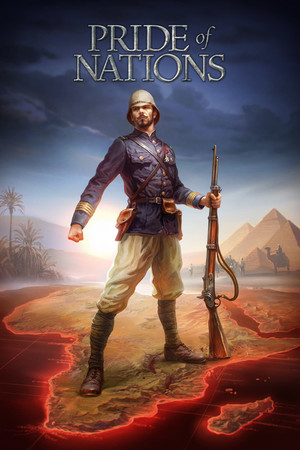
Compara los precios de Pride of Nations en tiendas de claves de confianza y encuentra la mejor oferta. Desarrollado por Ageod. Publicado por Slitherine Ltd.. Lanzado el 7/6/2011. Disponible en PC. Géneros: Simulation, Strategy. Puntuación Metacritic: 70/100.

One of the deepest Victorian-era grand strategy titles ever made, and one of the least forgiving. If the WEGO turn system and a 1,680-turn grand campaign sound appealing rather than alarming, read on.

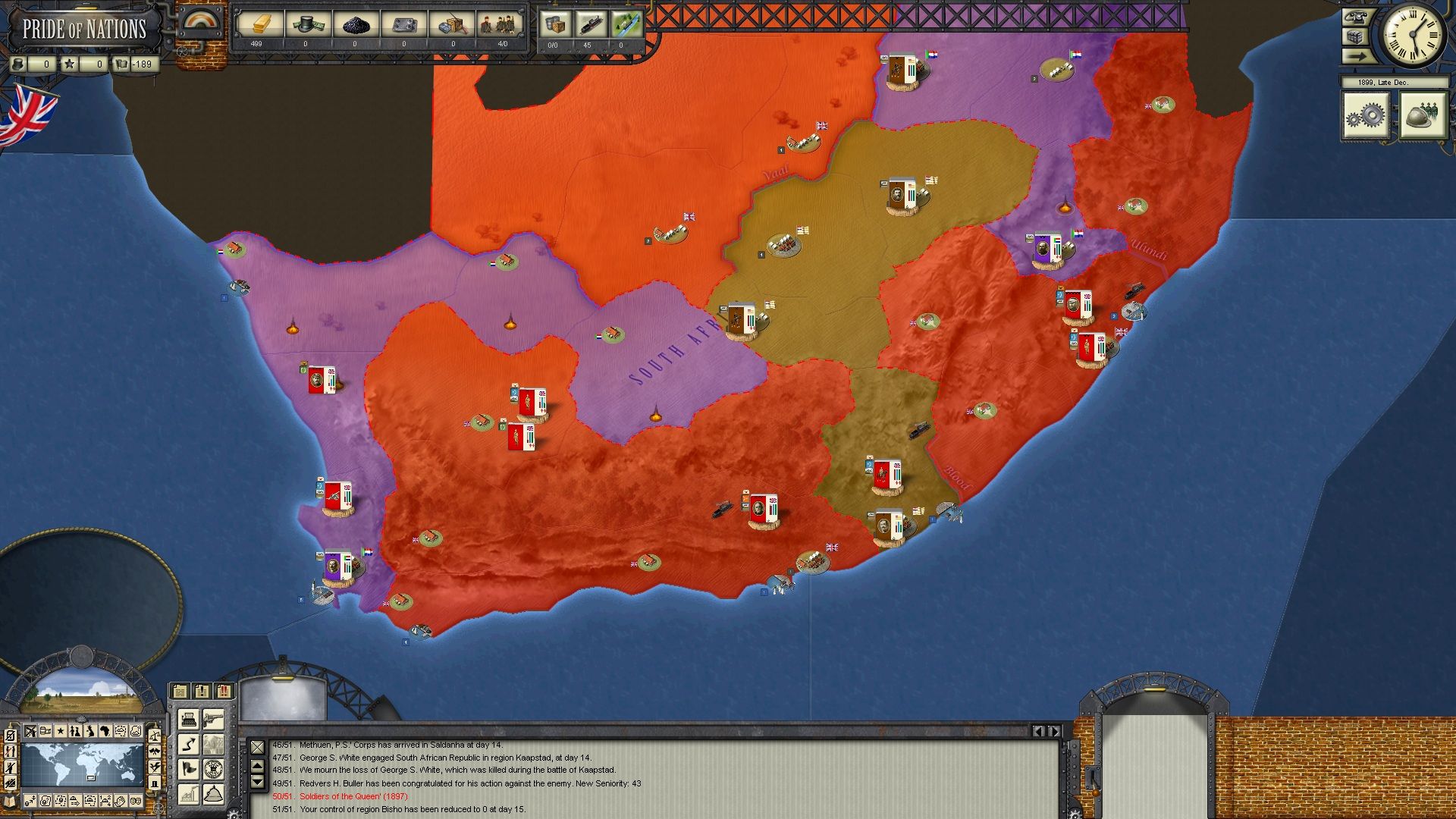
I have a soft spot for games that refuse to apologise for their complexity, and Pride of Nations refuses harder than almost anything else in the genre. AGEOD built their reputation on tightly scoped operational wargames, and with this title they swung for the entire globe across 70 simulated years, from 1850 to 1920. That ambition is both the game's greatest strength and the source of every complaint levelled at it since launch. The core loop runs on a WEGO simultaneous turn system, where each turn represents 15 days of real history. You issue orders across four distinct modes, military, economic, colonial, and decision, each surfacing a different layer of the simulation. The military mode lets you assemble armies and fleets down to the regiment level, assigning generals whose leadership ratings directly modify unit efficiency in battle. Combat resolution factors in terrain, unit cohesion, posture, and technology, so sending rifled artillery into hill terrain against a dug-in defender actually matters. The economic mode puts you in charge of railroads, factories, farms, and the dual-currency system of state funds and private capital, balanced against income tax, excise, corporate, and tariff levers. The colonial mode tracks your sphere-of-influence penetration in unclaimed territories, where rushing expansion risks revolts and diplomatic crises. Sending missionaries, dispatching gunboats, and organising expeditions are all distinct actions, not a single "colonise" button. The decision mode surfaces event cards that let you steer situations before they escalate. Layered over all of this are 26 map filters covering supply lines, revolt threat, trade territories, and spheres of influence, each one genuinely necessary rather than decorative. Now for the honest accounting. The tutorial is brief to the point of negligence, and the UI was criticised heavily at launch for being cluttered and unintuitive. Turn processing in the grand campaign can run several minutes per cycle, a consequence of the simulation's scope rather than sloppy coding, but patience is a hard requirement. Steam user reviews sit at a mixed 46 percent positive, and the Metacritic score of 70 reflects a community divided between players who bounced off the interface and those who fell completely into the rabbit hole. The diplomatic crisis system in particular drew criticism for feeling opaque, where bilateral negotiations and mediator mechanics are powerful but poorly explained. Performance on modern hardware can also be inconsistent, with map scrolling stuttering despite the relatively modest visuals. Here is what I would tell a newcomer: start as Great Britain. The nation's existing empire gives you immediate feedback loops across the colonial, economic, and military systems without requiring you to build from scratch. The shorter standalone scenarios, covering conflicts like the Franco-Prussian War and the Boer War, are the correct on-ramp if the 1,680-turn grand campaign feels like too much initial commitment. Each country also carries unique national missions that shape your strategic priorities, unifying Germany as Prussia plays nothing like maintaining imperial dominance as Britain or modernising as Meiji Japan. That variety keeps the sandbox from feeling repetitive across multiple playthroughs, even if the AI occasionally produces strange trade results or inconsistent treaty behaviour. Multiplayer via play-by-email adds a deeper version of the tension, because human opponents manage crises with actual intent rather than algorithmic patterns. Pride of Nations is not the entry point to Victorian grand strategy. If Victoria 2 or its sequel still has unfinished saves on your drive, this is the more granular companion piece, sharper on colonial mechanics and military texture but rougher on every interface surface. For the specific subset of players who want a simulation of 19th-century geopolitics that tracks prestige through sphere-of-influence percentages and tariff policy rather than flashy event notifications, nothing else models this era at this fidelity. Diego, Scout Team

Pride of Nations

Pride of Nations

7 jun 2011AgeodSlitherine Ltd.
GamerScout opina

One of the deepest Victorian-era grand strategy titles ever made, and one of the least forgiving. If the WEGO turn system and a 1,680-turn grand campaign sound appealing rather than alarming, read on.

PC
Mejor precio disponible
€0.00
en N/A
Mínimo histórico: €1.40

Comparar precios(0 tiendas)

Cargando precios...

We may earn a commission when you buy games through links on this page — at no extra cost to you. It never affects our rankings or verdicts.

Historial de precios

Historical low
€1.4023 Jun 2026
Keyshops
€1.38€1.46€1.54€1.6210 Jun15 Jun19 Jun24 Jun28 Jun
Tracking prices since 10 Jun 2026
Create alert

Capturas y multimedia

Captura

Acerca de Pride of Nations

I have a soft spot for games that refuse to apologise for their complexity, and Pride of Nations refuses harder than almost anything else in the genre. AGEOD built their reputation on tightly scoped operational wargames, and with this title they swung for the entire globe across 70 simulated years, from 1850 to 1920. That ambition is both the game's greatest strength and the source of every complaint levelled at it since launch. The core loop runs on a WEGO simultaneous turn system, where each turn represents 15 days of real history. You issue orders across four distinct modes, military, economic, colonial, and decision, each surfacing a different layer of the simulation. The military mode lets you assemble armies and fleets down to the regiment level, assigning generals whose leadership ratings directly modify unit efficiency in battle. Combat resolution factors in terrain, unit cohesion, posture, and technology, so sending rifled artillery into hill terrain against a dug-in defender actually matters. The economic mode puts you in charge of railroads, factories, farms, and the dual-currency system of state funds and private capital, balanced against income tax, excise, corporate, and tariff levers. The colonial mode tracks your sphere-of-influence penetration in unclaimed territories, where rushing expansion risks revolts and diplomatic crises. Sending missionaries, dispatching gunboats, and organising expeditions are all distinct actions, not a single "colonise" button. The decision mode surfaces event cards that let you steer situations before they escalate. Layered over all of this are 26 map filters covering supply lines, revolt threat, trade territories, and spheres of influence, each one genuinely necessary rather than decorative. Now for the honest accounting. The tutorial is brief to the point of negligence, and the UI was criticised heavily at launch for being cluttered and unintuitive. Turn processing in the grand campaign can run several minutes per cycle, a consequence of the simulation's scope rather than sloppy coding, but patience is a hard requirement. Steam user reviews sit at a mixed 46 percent positive, and the Metacritic score of 70 reflects a community divided between players who bounced off the interface and those who fell completely into the rabbit hole. The diplomatic crisis system in particular drew criticism for feeling opaque, where bilateral negotiations and mediator mechanics are powerful but poorly explained. Performance on modern hardware can also be inconsistent, with map scrolling stuttering despite the relatively modest visuals. Here is what I would tell a newcomer: start as Great Britain. The nation's existing empire gives you immediate feedback loops across the colonial, economic, and military systems without requiring you to build from scratch. The shorter standalone scenarios, covering conflicts like the Franco-Prussian War and the Boer War, are the correct on-ramp if the 1,680-turn grand campaign feels like too much initial commitment. Each country also carries unique national missions that shape your strategic priorities, unifying Germany as Prussia plays nothing like maintaining imperial dominance as Britain or modernising as Meiji Japan. That variety keeps the sandbox from feeling repetitive across multiple playthroughs, even if the AI occasionally produces strange trade results or inconsistent treaty behaviour. Multiplayer via play-by-email adds a deeper version of the tension, because human opponents manage crises with actual intent rather than algorithmic patterns. Pride of Nations is not the entry point to Victorian grand strategy. If Victoria 2 or its sequel still has unfinished saves on your drive, this is the more granular companion piece, sharper on colonial mechanics and military texture but rougher on every interface surface. For the specific subset of players who want a simulation of 19th-century geopolitics that tracks prestige through sphere-of-influence percentages and tariff policy rather than flashy event notifications, nothing else models this era at this fidelity.

Diego
Diego · Scout Team

Strategy & simulation

Etiquetas

singleplayermultiplayertier:aaaWEGO Turn SystemColonial ExpansionSphere of InfluenceRegiment-Level CombatPBEM MultiplayerPrestige VictoryEconomic MicromanagementHistorical Scenarios

Requisitos del sistema

Mínimos

OS
Windows Vista/ Windows 7 / Windows 8 / Windows 10
Sound
DirectX 9.0c compatible sound card
Memory
2 GB
DirectX®
9.0c or more
Processor
Pentium® IV 1800+ MHz
Additional
Internet Connection required for multiplayer
Video Card
512 Mb V-RAM or better
Hard Disk Space
3 GB free on hard disk

DLC y complementos de Pride of Nations3

Expansiones, packs de DLC y contenido adicional de este juego. Haz clic en cualquier elemento para ver las ofertas de las tiendas.

Sigue explorando

Community Discussion

Be the first to comment on Pride of Nations.

Reseñas y valoraciones

Metacritic
70

Información del juego

Desarrolladora
Ageod
Distribuidora
Slitherine Ltd.
Fecha de lanzamiento
7 jun 2011

Alerta de precio

¡Recibe un aviso cuando el precio baje de tu objetivo!

Crear alerta

Más de Ageod

Compra mejor: guías útiles

¿Buscas más? Mira juegos como Pride of Nations →

Preguntas frecuentes sobre Pride of Nations

¿Cuánto cuesta Pride of Nations?

El precio de Pride of Nations cambia a menudo y varía según la tienda, la edición y la región. La tabla de precios en vivo de esta página compara las ofertas más baratas en stock de tiendas de claves de confianza como Eneba y Kinguin, para que siempre veas el precio más bajo actual antes de comprar.

¿Dónde puedo comprar Pride of Nations más barato?

Compara los precios de Pride of Nations en todas las tiendas verificadas en la tabla de precios de esta página. Listamos las ofertas de claves y tiendas más baratas en stock, actualizadas con frecuencia, para que siempre veas la mejor oferta actual antes de comprar.

¿En qué plataformas está disponible Pride of Nations?

Pride of Nations está disponible en PC.

¿Cuándo se lanzó Pride of Nations?

Pride of Nations se lanzó el 7 de junio de 2011.

¿Quién desarrolló Pride of Nations?

Pride of Nations fue desarrollado por Ageod y publicado por Slitherine Ltd..

¿Merece la pena comprar Pride of Nations?

Pride of Nations tiene una puntuación Metacritic de 70/100, lo que lo convierte en uno de los títulos destacados de Simulation. Mira las reseñas completas, las valoraciones y los tiempos de duración en esta página para decidir.