
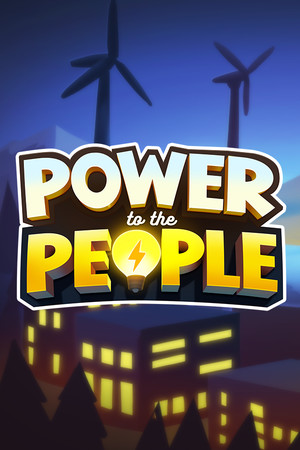
Compara los precios de Power to the People en tiendas de claves de confianza y encuentra la mejor oferta. Desarrollado por Rhombico Games. Publicado por Crytivo. Lanzado el 8/2/2022. Disponible en PC. Géneros: Indie, Simulation, Strategy.

A lean, focused grid-management sim that strips city building down to one brutally honest question: can you keep the lights on when three cities expand at once and a solar flare hits your substations?

I've played enough Paradox city-builders to know that power grids are usually the thing you forget until the brownouts start. Power to the People takes that single overlooked mechanic and builds an entire game around it, and for a good stretch of its runtime that narrow focus is genuinely refreshing. You are not placing roads or zoning residential lots. The cities are already there, growing on their own schedule, and your only job is to make sure the electricity never stops flowing. The core loop works like this: you place power plants, run transmission lines, drop substations, and juggle supply against demand as new city districts come online. There is a 30-plus-perk research tree that lets you improve substation efficiency, upgrade power lines, and invest in marketing to boost company revenue. Switching stations add a layer of automation, letting you reroute power based on live conditions such as storage levels or weather. Strategic Mode pauses the game at the end of each day so you can breathe and plan; High Energy Mode never stops, which is a very different animal. The distinction matters a lot, and strategy-leaning players will want to stick with Strategic Mode for the first several missions. One design detail I found genuinely clever: power plants that are built at the same time will enter maintenance cycles at the same time, which means staggering your construction order is an actual build discipline, not an afterthought. The campaign runs 14 missions across five continents, each theoretically offering different weather conditions and resource constraints. Geothermal plants, added in the v1.3 update, can only be placed on specific terrain tiles, which does push you toward location-aware planning on the Hawaii level. The trouble is that Destructoid identified it well: once you internalize the basic loop, the missions start to feel structurally similar. Unlocking a higher-tier power plant rarely demands a fundamentally different strategy. The climate variety and random events (solar flares, falling trees, crypto-mining spikes in demand) provide friction rather than true strategic pivots. If you come in expecting the depth of a Factorio power network or the emergent chaos of a late-game Paradox infrastructure, you will hit a ceiling faster than expected. Average completion time sits around 12 hours for the campaign, which is honest scope for a budget-tier indie. For newcomers to the resource management genre, though, this ceiling is an asset. Three graduated tutorials walk you through the essentials without condescension, and the isometric visuals read clearly at a glance. The sandbox mode lets you experiment with no timer pressure, and weekly challenges with leaderboards add a small competitive reason to return after the campaign ends. The developer, Rhombico Games (formerly Hermes Interactive, also behind Automachef), kept the game patched post-launch with usability fixes and content additions before winding down studio operations in late 2025, so the build you are buying today is stable and complete. With roughly 80 percent positive Steam reviews across several hundred players, the community response has been warm, if not loud. Bottom line: this is a good introduction to grid-management thinking, approachable enough to hand to someone who finds Cities: Skylines overwhelming, but probably too shallow to hold a seasoned management sim player past the first weekend. Diego, Scout Team

Power to the People

Power to the People

8 feb 2022Rhombico GamesCrytivo
GamerScout opina

A lean, focused grid-management sim that strips city building down to one brutally honest question: can you keep the lights on when three cities expand at once and a solar flare hits your substations?

PC
Steam Deck PlayableProtonDB Platinum
Mejor precio disponible
€0.00
en N/A
Mínimo histórico: €1.87

Comparar precios(0 tiendas)

Cargando precios...

We may earn a commission when you buy games through links on this page — at no extra cost to you. It never affects our rankings or verdicts.

Historial de precios

Historical low
€1.8728 Jun 2026
Keyshops
€1.86€1.91€1.95€2.0010 Jun15 Jun19 Jun24 Jun28 Jun
Tracking prices since 10 Jun 2026
Create alert

Capturas y multimedia

Acerca de Power to the People

I've played enough Paradox city-builders to know that power grids are usually the thing you forget until the brownouts start. Power to the People takes that single overlooked mechanic and builds an entire game around it, and for a good stretch of its runtime that narrow focus is genuinely refreshing. You are not placing roads or zoning residential lots. The cities are already there, growing on their own schedule, and your only job is to make sure the electricity never stops flowing. The core loop works like this: you place power plants, run transmission lines, drop substations, and juggle supply against demand as new city districts come online. There is a 30-plus-perk research tree that lets you improve substation efficiency, upgrade power lines, and invest in marketing to boost company revenue. Switching stations add a layer of automation, letting you reroute power based on live conditions such as storage levels or weather. Strategic Mode pauses the game at the end of each day so you can breathe and plan; High Energy Mode never stops, which is a very different animal. The distinction matters a lot, and strategy-leaning players will want to stick with Strategic Mode for the first several missions. One design detail I found genuinely clever: power plants that are built at the same time will enter maintenance cycles at the same time, which means staggering your construction order is an actual build discipline, not an afterthought. The campaign runs 14 missions across five continents, each theoretically offering different weather conditions and resource constraints. Geothermal plants, added in the v1.3 update, can only be placed on specific terrain tiles, which does push you toward location-aware planning on the Hawaii level. The trouble is that Destructoid identified it well: once you internalize the basic loop, the missions start to feel structurally similar. Unlocking a higher-tier power plant rarely demands a fundamentally different strategy. The climate variety and random events (solar flares, falling trees, crypto-mining spikes in demand) provide friction rather than true strategic pivots. If you come in expecting the depth of a Factorio power network or the emergent chaos of a late-game Paradox infrastructure, you will hit a ceiling faster than expected. Average completion time sits around 12 hours for the campaign, which is honest scope for a budget-tier indie. For newcomers to the resource management genre, though, this ceiling is an asset. Three graduated tutorials walk you through the essentials without condescension, and the isometric visuals read clearly at a glance. The sandbox mode lets you experiment with no timer pressure, and weekly challenges with leaderboards add a small competitive reason to return after the campaign ends. The developer, Rhombico Games (formerly Hermes Interactive, also behind Automachef), kept the game patched post-launch with usability fixes and content additions before winding down studio operations in late 2025, so the build you are buying today is stable and complete. With roughly 80 percent positive Steam reviews across several hundred players, the community response has been warm, if not loud. Bottom line: this is a good introduction to grid-management thinking, approachable enough to hand to someone who finds Cities: Skylines overwhelming, but probably too shallow to hold a seasoned management sim player past the first weekend.

Diego
Diego · Scout Team

Strategy & simulation

Etiquetas

singleplayerachievementstrading-cardscloud-savestier:sub-5Grid ManagementReal-Time with PauseResearch TreeDisaster EventsBeginner-FriendlyEnergy TycoonWeekly ChallengesShort Campaign

Requisitos del sistema

Mínimos

OS
Windows 7 64-bit
Memory
4 GB RAM
DirectX
Version 11
Storage
4 GB available space
Graphics
GeForce GTX 550 Ti or Radeon HD 7770
Processor
Intel Core i5-2300 or AMD A8-5600K
Sound Card
DirectX Compatible Sound Card

Recomendados

OS
Windows 10 64-bit
Memory
8 GB RAM
DirectX
Version 11
Storage
6 GB available space
Graphics
GeForce GTX 950 or Radeon R9 290
Processor
Intel Core i5-4460 or Ryzen 3 2200G
Sound Card
DirectX Compatible Sound Card

Sigue explorando

Community Discussion

Be the first to comment on Power to the People.

Reseñas y valoraciones

No hay valoraciones disponibles

Información del juego

Desarrolladora
Rhombico Games
Distribuidora
Crytivo
Fecha de lanzamiento
8 feb 2022

Alerta de precio

¡Recibe un aviso cuando el precio baje de tu objetivo!

Crear alerta

Más de Rhombico Games

Compra mejor: guías útiles

¿Buscas más? Mira juegos como Power to the People →

Preguntas frecuentes sobre Power to the People

¿Cuánto cuesta Power to the People?

El precio de Power to the People cambia a menudo y varía según la tienda, la edición y la región. La tabla de precios en vivo de esta página compara las ofertas más baratas en stock de tiendas de claves de confianza como Eneba y Kinguin, para que siempre veas el precio más bajo actual antes de comprar.

¿Dónde puedo comprar Power to the People más barato?

Compara los precios de Power to the People en todas las tiendas verificadas en la tabla de precios de esta página. Listamos las ofertas de claves y tiendas más baratas en stock, actualizadas con frecuencia, para que siempre veas la mejor oferta actual antes de comprar.

¿En qué plataformas está disponible Power to the People?

Power to the People está disponible en PC.

¿Cuándo se lanzó Power to the People?

Power to the People se lanzó el 8 de febrero de 2022.

¿Quién desarrolló Power to the People?

Power to the People fue desarrollado por Rhombico Games y publicado por Crytivo.