Compara los precios de Mortal Glory en tiendas de claves de confianza y encuentra la mejor oferta. Desarrollado por Redbeak Games. Publicado por Redbeak Games. Lanzado el 29/1/2020. Disponible en PC. Géneros: Indie, RPG, Simulation, Strategy.

Put together a squad of fantasy gladiators, make brutal roster decisions under permadeath pressure, and grind a brutal tournament bracket - all in a session-length that fits a lunch break.

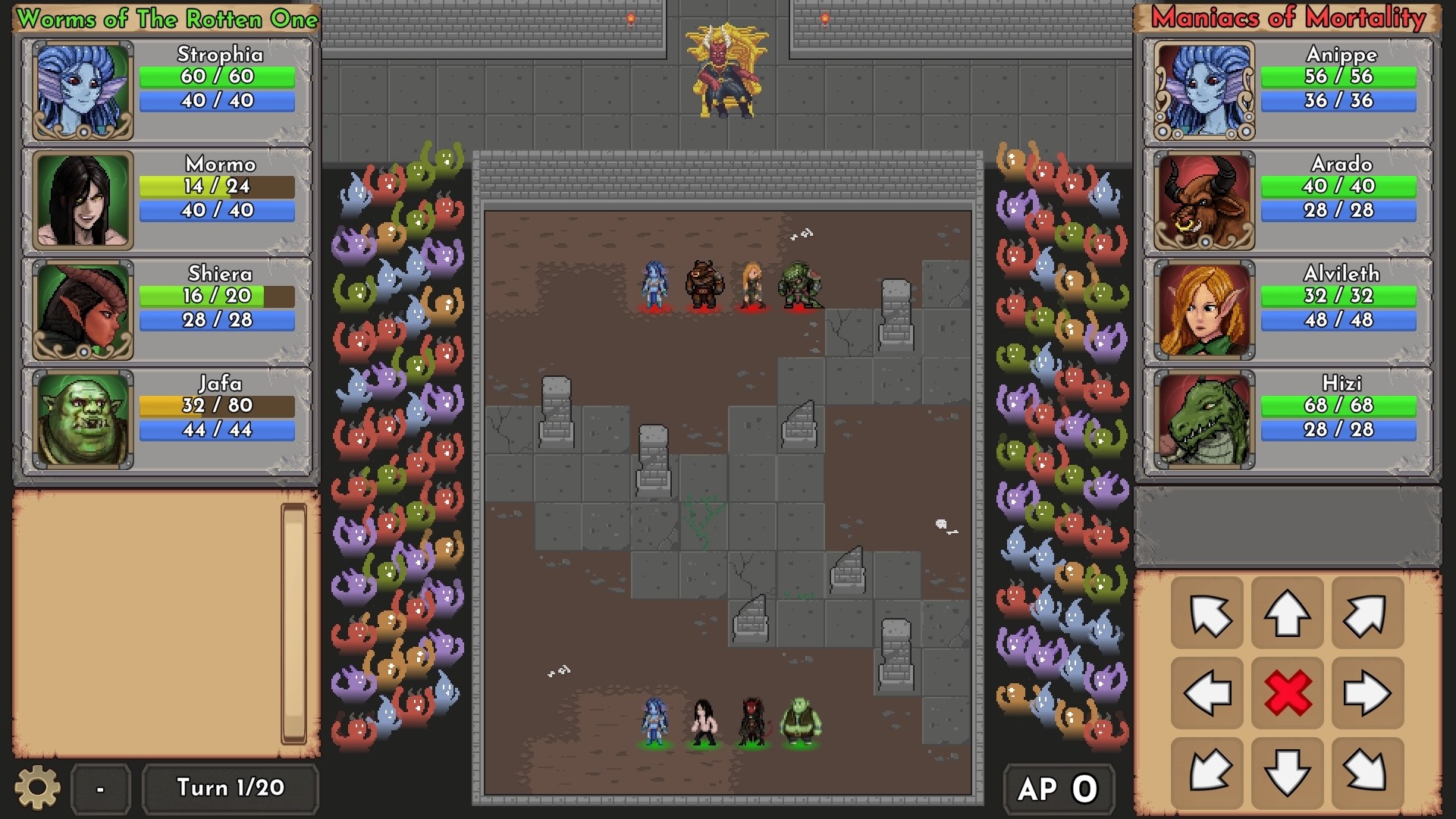
I have a soft spot for small-studio tactics games that punch above their weight class on decision density, and Mortal Glory lands squarely in that category. Built by a one-person studio out of Finland across roughly a thousand hours of weekend development, it is a grid-based turn-based roguelike that asks you to assemble a team of fantasy gladiators, fight your way through a randomised tournament bracket, and manage the creeping cost of injuries between bouts. Every run is maybe two to three hours if things go well, and substantially shorter if they do not - which makes it one of the more honest time commitments in the genre. The tactical layer is simpler than a BattleBrothers or an XCOM, but that simplicity is deliberate and it works. Combat happens on randomly generated arena layouts, your units move on a grid, and positioning genuinely matters - shoving opponents into walls triggers collision damage, and the arena geometry changes enough between fights to stop you from running the same formation on autopilot. Each gladiator carries a weapon slot, an armour slot, and two open slots for skills or spells, so your actual build decisions are constrained but meaningful. Abilities range from thrown weapons and charge attacks to buff spells and lightning bolts, and the mana economy forces you to choose when to spend and when to hold. Tooltip coverage is thorough and the UI reads cleanly, which matters for a game that lives or dies on knowing your numbers. The injury system is where the long-game tension lives: every knockdown stacks a ten-percent maximum health reduction, fighters heal one injury per clean round, and the finite number of rounds in a run means you are always doing quiet arithmetic about who to risk and who to rest. The roguelike structure around those fights is lean. Random events fire between bouts - some offer recruits, some punish you, some hand you a legendary sword if you pay a sketchy price. Shops let you gear up or swap out roster members whenever you have gold. There is no overworld map in the base game, unlike the sequel, so progression feels more linear but also tighter and faster to parse. The difficulty is honest: losing two fights in a stage ends your run immediately, and the final bracket puts a supercharged champion on the opposing team. Newcomers will lose early and often, but the feedback loop is short enough that each failure teaches something specific - usually that you overcommitted your front-liner or neglected to build any ranged threat. The multiple difficulty settings give you room to calibrate before stepping into the deeper Glory levels, where the AI starts punishing passive play noticeably harder. On the downside, the event pool gets thin on repeat playthroughs, and some community reports flag odd edge-case math in damage calculation that can occasionally make a loss feel opaque rather than instructive. The visual style is retro-minimal - functional pixel art that some players will find charming and others will find plain. There is a DLC (Fresh Blood) that adds five new races including the Dwarf and the Angel, bow weapons, over forty additional skills, a career mode with special rules like random starting positions, and additional difficulty tiers - if the base game hooks you, it is the natural next step. A sequel also exists for those who want a branching overworld map and more content, though a subset of the community actually prefers the original's tighter, shop-accessible structure. For strategy players who want something that respects their time without dumbing down the decision-making, Mortal Glory is a solid low-barrier entry. The first few runs feel almost too simple. Then you hit Glory level four or five and suddenly every bench decision and every mana-spend feels consequential. That escalation curve is exactly what the genre should do. Diego, Scout Team

Mortal Glory

Mortal Glory

29 ene 2020Redbeak Games
GamerScout opina

Put together a squad of fantasy gladiators, make brutal roster decisions under permadeath pressure, and grind a brutal tournament bracket - all in a session-length that fits a lunch break.

PC
Steam Deck PlayableProtonDB Platinum
Mejor precio disponible
€0.00
en N/A
Mínimo histórico: €1.53

Comparar precios(0 tiendas)

Cargando precios...

We may earn a commission when you buy games through links on this page — at no extra cost to you. It never affects our rankings or verdicts.

Historial de precios

Historical low
€1.5326 Jun 2026
Keyshops
€1.42€1.50€1.58€1.669 Jun14 Jun19 Jun23 Jun28 Jun
Tracking prices since 9 Jun 2026
Create alert

Capturas y multimedia

Captura

Acerca de Mortal Glory

I have a soft spot for small-studio tactics games that punch above their weight class on decision density, and Mortal Glory lands squarely in that category. Built by a one-person studio out of Finland across roughly a thousand hours of weekend development, it is a grid-based turn-based roguelike that asks you to assemble a team of fantasy gladiators, fight your way through a randomised tournament bracket, and manage the creeping cost of injuries between bouts. Every run is maybe two to three hours if things go well, and substantially shorter if they do not - which makes it one of the more honest time commitments in the genre. The tactical layer is simpler than a BattleBrothers or an XCOM, but that simplicity is deliberate and it works. Combat happens on randomly generated arena layouts, your units move on a grid, and positioning genuinely matters - shoving opponents into walls triggers collision damage, and the arena geometry changes enough between fights to stop you from running the same formation on autopilot. Each gladiator carries a weapon slot, an armour slot, and two open slots for skills or spells, so your actual build decisions are constrained but meaningful. Abilities range from thrown weapons and charge attacks to buff spells and lightning bolts, and the mana economy forces you to choose when to spend and when to hold. Tooltip coverage is thorough and the UI reads cleanly, which matters for a game that lives or dies on knowing your numbers. The injury system is where the long-game tension lives: every knockdown stacks a ten-percent maximum health reduction, fighters heal one injury per clean round, and the finite number of rounds in a run means you are always doing quiet arithmetic about who to risk and who to rest. The roguelike structure around those fights is lean. Random events fire between bouts - some offer recruits, some punish you, some hand you a legendary sword if you pay a sketchy price. Shops let you gear up or swap out roster members whenever you have gold. There is no overworld map in the base game, unlike the sequel, so progression feels more linear but also tighter and faster to parse. The difficulty is honest: losing two fights in a stage ends your run immediately, and the final bracket puts a supercharged champion on the opposing team. Newcomers will lose early and often, but the feedback loop is short enough that each failure teaches something specific - usually that you overcommitted your front-liner or neglected to build any ranged threat. The multiple difficulty settings give you room to calibrate before stepping into the deeper Glory levels, where the AI starts punishing passive play noticeably harder. On the downside, the event pool gets thin on repeat playthroughs, and some community reports flag odd edge-case math in damage calculation that can occasionally make a loss feel opaque rather than instructive. The visual style is retro-minimal - functional pixel art that some players will find charming and others will find plain. There is a DLC (Fresh Blood) that adds five new races including the Dwarf and the Angel, bow weapons, over forty additional skills, a career mode with special rules like random starting positions, and additional difficulty tiers - if the base game hooks you, it is the natural next step. A sequel also exists for those who want a branching overworld map and more content, though a subset of the community actually prefers the original's tighter, shop-accessible structure. For strategy players who want something that respects their time without dumbing down the decision-making, Mortal Glory is a solid low-barrier entry. The first few runs feel almost too simple. Then you hit Glory level four or five and suddenly every bench decision and every mana-spend feels consequential. That escalation curve is exactly what the genre should do.

Diego
Diego · Scout Team

Strategy & simulation

Etiquetas

singleplayerachievementstrading-cardscloud-savestier:sub-5Gladiator ManagementInjury SystemSession-Length RoguelikeGrid CombatPermadeath PressureSkill Synergy BuildsDifficulty ScalingSolo Dev

Requisitos del sistema

Mínimos

OS
Windows XP/Vista/7/8/8.1/10
Memory
1 GB RAM
Storage
500 MB available space
Graphics
256mb Video Memory, capable of OpenGL 2.0+ support
Processor
1 GHz

Sigue explorando

Community Discussion

Be the first to comment on Mortal Glory.

Reseñas y valoraciones

No hay valoraciones disponibles

Información del juego

Desarrolladora
Redbeak Games
Distribuidora
Redbeak Games
Fecha de lanzamiento
29 ene 2020

Alerta de precio

¡Recibe un aviso cuando el precio baje de tu objetivo!

Crear alerta

Más de Redbeak Games

Compra mejor: guías útiles

¿Buscas más? Mira juegos como Mortal Glory →

Preguntas frecuentes sobre Mortal Glory

¿Cuánto cuesta Mortal Glory?

El precio de Mortal Glory cambia a menudo y varía según la tienda, la edición y la región. La tabla de precios en vivo de esta página compara las ofertas más baratas en stock de tiendas de claves de confianza como Eneba y Kinguin, para que siempre veas el precio más bajo actual antes de comprar.

¿Dónde puedo comprar Mortal Glory más barato?

Compara los precios de Mortal Glory en todas las tiendas verificadas en la tabla de precios de esta página. Listamos las ofertas de claves y tiendas más baratas en stock, actualizadas con frecuencia, para que siempre veas la mejor oferta actual antes de comprar.

¿En qué plataformas está disponible Mortal Glory?

Mortal Glory está disponible en PC.

¿Cuándo se lanzó Mortal Glory?

Mortal Glory se lanzó el 29 de enero de 2020.

¿Quién desarrolló Mortal Glory?

Mortal Glory fue desarrollado por Redbeak Games.