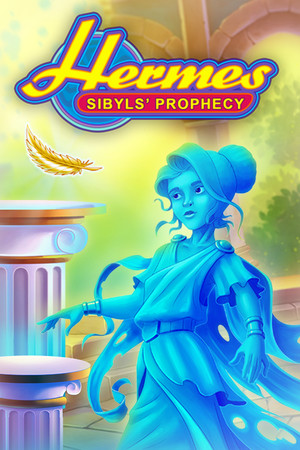
Compara los precios de Hermes: Sibyls' Prophecy en tiendas de claves de confianza y encuentra la mejor oferta. Desarrollado por GameMixer. Publicado por Alawar Casual. Lanzado el 9/9/2020. Disponible en PC. Géneros: Adventure, Casual, Strategy.

Seventy levels of Greek-mythology time management where your click efficiency and resource chain order matter more than the relaxed mode wants you to think.

I'll be straight with you: this is not a strategy game in the Paradox sense, and anyone arriving here from a grand-strategy search needs to recalibrate their expectations immediately. Hermes: Sibyls' Prophecy is a casual time-management and resource-chain game, the fifth entry in GameMixer's Hermes series, and it wears that identity without apology. You play as an unseen director guiding Hermes and a rotating cast of Olympian gods across level-by-level maps, clicking to queue up workers, trigger builds, collect resources, and clear obstacles before the clock runs out. Think Viking Brothers or Roads of Rome rather than anything with a tech tree that takes three hours to learn. The mechanical loop is tighter than the mythology-lite presentation suggests. Each of the 50 base levels (plus a 20-level bonus chapter) is essentially a small optimization puzzle: you need wood before you can repair a building, gold from a repaired bank to unlock a deity, and that deity's special ability to unblock the next resource node. The order you click matters. Idle workers cost you the gold-medal time threshold on Expert mode, and figuring out the correct priority sequence for a tricky level is genuinely satisfying when it clicks. The three difficulty modes, Novice, Expert, and Relaxed, do a reasonable job of letting players self-select their stress level. Relaxed removes the timer entirely, Novice gives you ample time, and Expert is where the puzzle sharpens into something worth replaying. The inclusion of god-specific abilities, such as Artemis contributing hunting bonuses and Ares unlocking combat-adjacent options, adds light variety to what would otherwise be a pure click-speed exercise. What the game does not offer is depth beyond the level boundary. There is no persistent progression between stages, no economy that carries forward, no meta-layer where decisions compound over time. Each map resets clean. For a genre specialist that is a limitation worth naming; for the target audience, which is players who want a contained 15-minute session they can close cleanly, it is arguably the correct design call. The seven collectible items scattered across stages and the Steam achievement list give completionists a light secondary checklist, but do not expect them to extend the runtime significantly. The review pool on Steam is small, 12 total, but sits at 100 percent positive, and community sentiment from other distribution platforms echoes that fans of the series find the formula reliably enjoyable entry to entry. The mythology art style is colorful and clear, which matters in a genre where reading the map state at a glance is core to performance. The bundled walkthrough is a smart inclusion for players who stall on a level without wanting to grind retries. My one structural complaint is that the bonus chapter content is front-loaded in difficulty rather than properly escalating, so the pacing flattens toward the end rather than building to a satisfying peak. If you are new to the time-management subgenre and want something with a clear tutorial arc, recognizable IP, and zero punishing failure states, this is a well-constructed entry point. If you already own earlier Hermes titles and liked them, the level count here justifies another pass. Strategy veterans looking for decision depth will bounce off it fast and should look elsewhere. Diego, Scout Team

Hermes: Sibyls' Prophecy

Hermes: Sibyls' Prophecy

9 sept 2020GameMixerAlawar Casual
GamerScout opina

Seventy levels of Greek-mythology time management where your click efficiency and resource chain order matter more than the relaxed mode wants you to think.

PC
Steam Deck Playable
Mejor precio disponible
€0.00
en N/A
Mínimo histórico: €0.95

Comparar precios(0 tiendas)

Cargando precios...

We may earn a commission when you buy games through links on this page — at no extra cost to you. It never affects our rankings or verdicts.

Historial de precios

Historical low
€0.9523 Jun 2026
Keyshops
€0.89€0.94€0.99€1.0410 Jun15 Jun19 Jun24 Jun28 Jun
Tracking prices since 10 Jun 2026
Create alert

Capturas y multimedia

Captura

Acerca de Hermes: Sibyls' Prophecy

I'll be straight with you: this is not a strategy game in the Paradox sense, and anyone arriving here from a grand-strategy search needs to recalibrate their expectations immediately. Hermes: Sibyls' Prophecy is a casual time-management and resource-chain game, the fifth entry in GameMixer's Hermes series, and it wears that identity without apology. You play as an unseen director guiding Hermes and a rotating cast of Olympian gods across level-by-level maps, clicking to queue up workers, trigger builds, collect resources, and clear obstacles before the clock runs out. Think Viking Brothers or Roads of Rome rather than anything with a tech tree that takes three hours to learn. The mechanical loop is tighter than the mythology-lite presentation suggests. Each of the 50 base levels (plus a 20-level bonus chapter) is essentially a small optimization puzzle: you need wood before you can repair a building, gold from a repaired bank to unlock a deity, and that deity's special ability to unblock the next resource node. The order you click matters. Idle workers cost you the gold-medal time threshold on Expert mode, and figuring out the correct priority sequence for a tricky level is genuinely satisfying when it clicks. The three difficulty modes, Novice, Expert, and Relaxed, do a reasonable job of letting players self-select their stress level. Relaxed removes the timer entirely, Novice gives you ample time, and Expert is where the puzzle sharpens into something worth replaying. The inclusion of god-specific abilities, such as Artemis contributing hunting bonuses and Ares unlocking combat-adjacent options, adds light variety to what would otherwise be a pure click-speed exercise. What the game does not offer is depth beyond the level boundary. There is no persistent progression between stages, no economy that carries forward, no meta-layer where decisions compound over time. Each map resets clean. For a genre specialist that is a limitation worth naming; for the target audience, which is players who want a contained 15-minute session they can close cleanly, it is arguably the correct design call. The seven collectible items scattered across stages and the Steam achievement list give completionists a light secondary checklist, but do not expect them to extend the runtime significantly. The review pool on Steam is small, 12 total, but sits at 100 percent positive, and community sentiment from other distribution platforms echoes that fans of the series find the formula reliably enjoyable entry to entry. The mythology art style is colorful and clear, which matters in a genre where reading the map state at a glance is core to performance. The bundled walkthrough is a smart inclusion for players who stall on a level without wanting to grind retries. My one structural complaint is that the bonus chapter content is front-loaded in difficulty rather than properly escalating, so the pacing flattens toward the end rather than building to a satisfying peak. If you are new to the time-management subgenre and want something with a clear tutorial arc, recognizable IP, and zero punishing failure states, this is a well-constructed entry point. If you already own earlier Hermes titles and liked them, the level count here justifies another pass. Strategy veterans looking for decision depth will bounce off it fast and should look elsewhere.

Diego
Diego · Scout Team

Strategy & simulation

Etiquetas

singleplayerachievementscloud-savestier:sub-5Time ManagementGreek MythologyLevel-BasedClick OptimizationBonus ChapterCollectiblesRelaxed Mode

Requisitos del sistema

Mínimos

OS
Windows 7 or later
Memory
2 GB RAM
DirectX
Version 11
Storage
600 MB available space
Graphics
GPU with at least 512MB of VRAM
Processor
2 GHz processor

Recomendados

OS
Windows 7/8/10+
Memory
4 GB RAM
DirectX
Version 11
Storage
600 MB available space
Graphics
GPU with at least 1024MB of VRAM or better
Processor
3 GHZ processor or better

Sigue explorando

Community Discussion

Be the first to comment on Hermes: Sibyls' Prophecy.

Reseñas y valoraciones

No hay valoraciones disponibles

Información del juego

Desarrolladora
GameMixer
Distribuidora
Alawar Casual
Fecha de lanzamiento
9 sept 2020

Alerta de precio

¡Recibe un aviso cuando el precio baje de tu objetivo!

Crear alerta

Más de GameMixer

Compra mejor: guías útiles

Preguntas frecuentes sobre Hermes: Sibyls' Prophecy

¿Cuánto cuesta Hermes: Sibyls' Prophecy?

El precio de Hermes: Sibyls' Prophecy cambia a menudo y varía según la tienda, la edición y la región. La tabla de precios en vivo de esta página compara las ofertas más baratas en stock de tiendas de claves de confianza como Eneba y Kinguin, para que siempre veas el precio más bajo actual antes de comprar.

¿Dónde puedo comprar Hermes: Sibyls' Prophecy más barato?

Compara los precios de Hermes: Sibyls' Prophecy en todas las tiendas verificadas en la tabla de precios de esta página. Listamos las ofertas de claves y tiendas más baratas en stock, actualizadas con frecuencia, para que siempre veas la mejor oferta actual antes de comprar.

¿En qué plataformas está disponible Hermes: Sibyls' Prophecy?

Hermes: Sibyls' Prophecy está disponible en PC.

¿Cuándo se lanzó Hermes: Sibyls' Prophecy?

Hermes: Sibyls' Prophecy se lanzó el 9 de septiembre de 2020.

¿Quién desarrolló Hermes: Sibyls' Prophecy?

Hermes: Sibyls' Prophecy fue desarrollado por GameMixer y publicado por Alawar Casual.