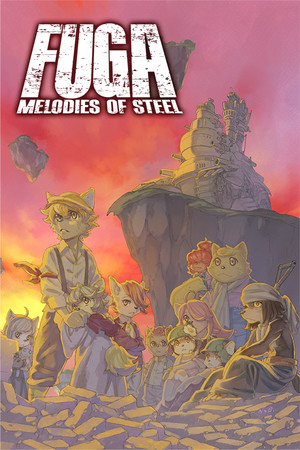

Compara los precios de Fuga: Melodies of Steel 2 en tiendas de claves de confianza y encuentra la mejor oferta. Desarrollado por CyberConnect2. Publicado por CyberConnect2. Lanzado el 10/5/2023. Disponible en PC, Xbox. Géneros: RPG, Simulation, Strategy. Puntuación Metacritic: 86/100.

Carrying an 86 on Metacritic and a 96% positive rating on Steam, this is the rare tactics-RPG hybrid where every intermission decision compounds into late-game consequences you will absolutely feel.

I put Fuga: Melodies of Steel 2 on expecting a polished but risk-averse sequel, and walked away genuinely impressed by how much decision weight CyberConnect2 managed to pack into a 25-30 hour runtime. This is a tactics-RPG that layers turn-based tank combat over a life-sim intermission system, sprinkles in short platformer-style dungeon crawls through ruins, and ties all of it together with a story about anthropomorphic children being forced back into war one year after they already won one. The genre mashup sounds chaotic. It works. The combat loop is the core and it holds up well. You field six of your twelve child crew members at a time across three weapon slots: machine gun, grenade launcher, and cannon. Each child brings a unique skill set, and the weapon-type matchups matter because aerial units crumple to machine gun fire while heavier ground armor favors cannon and grenade play. Every three turns you can rotate your bench crew in, which means the strategic question is never just "what do I fire" but "who am I spending, and what does that cost me in the next fight?" That resource-thinking runs through everything in this game. The intermission phases between missions are where the depth really compounds: you have a capped Action Point pool to allocate across cooking crew buffs, upgrading the Tarascus tank, farming crops, building crew relationships to power up link attacks, and fulfilling entries in the Wish Diary for bonus experience. Twenty AP sounds generous until you realize you are always one action short of optimal. The biggest mechanical change from the first game is how the Soul Cannon behaves. In the original, firing it was a choice you made voluntarily, sacrificing a child to win a fight and locking yourself out of the true ending. Here, drop below the health threshold in a boss fight and the game selects a crew member for you at random, starting a 20-turn countdown. Fire or finish the fight in time, or that child is gone permanently, complete with unique cutscenes and a chapter-long morale crash that silences the affected kids' link attack events. The Managarm offers a middle option: devastating damage that knocks a child out until the next intermission and forfeits all battle experience. Both choices feel awful in the best way. That pressure is what keeps every boss encounter genuinely tense even when you know the game's systems inside out. The new Judgment System adds another strategic dimension. Dialogue choices during key moments push protagonist Malt toward either Empathy or Resolution, and whichever path you weight unlocks different passive leader abilities: defensive and recovery skills on the Empathy side, offensive tools on the Resolution side. It feeds directly into Malt's character arc as he processes the psychological weight of command, and it is one of the better implementations of a morality mechanic in a tactics game because the payoff is mechanical rather than cosmetic. The airship support system also opens up the map in a meaningful way, letting NPC allies drop supplies, call in air strikes, or reroute the party, which partially addresses the linearity complaint that followed the first game. Where Fuga 2 earns its criticism is in creative ambition. The enemy roster recycles heavily from the first game, several side mechanics feel like padding rather than depth, and the writing in certain character arcs lands softer than the premise deserves. If you finished Fuga 1 recently, there is a genuine risk of system fatigue because the bones are nearly identical. That said, the quality-of-life improvements are real and meaningful: visual cues now surface crew wish status without menu-diving, shortcuts between key screens cut friction considerably, and a Turbo Mode accommodates replays for alternate endings. The true ending is gated behind keeping every child alive, which will push completionists into a second or third run. With a runtime sitting around 25-30 hours per playthrough, that is a reasonable ask. For strategy and tactics fans who have not played the first game: start there, not here. The recap on the main menu exists but emotional context built over 30 hours does not compress into a slide show. For anyone who cleared Fuga 1 and remembers caring about those kids, this sequel will hit harder than its modest production budget has any right to deliver. Diego, Scout Team

Fuga: Melodies of Steel 2

Fuga: Melodies of Steel 2

10 may 2023CyberConnect2
GamerScout opina

Carrying an 86 on Metacritic and a 96% positive rating on Steam, this is the rare tactics-RPG hybrid where every intermission decision compounds into late-game consequences you will absolutely feel.

PCXbox
Steam Deck VerifiedProtonDB Gold
Mejor precio disponible
€0.00
en N/A
Mínimo histórico: €3.48

Comparar precios(0 tiendas)

Cargando precios...

We may earn a commission when you buy games through links on this page — at no extra cost to you. It never affects our rankings or verdicts.

Historial de precios

Historical low
€3.4811 Jun 2026
Keyshops
€1.73€7.75€13.78€19.808 Jun13 Jun18 Jun23 Jun28 Jun
Tracking prices since 8 Jun 2026
Create alert

Capturas y multimedia

Acerca de Fuga: Melodies of Steel 2

I put Fuga: Melodies of Steel 2 on expecting a polished but risk-averse sequel, and walked away genuinely impressed by how much decision weight CyberConnect2 managed to pack into a 25-30 hour runtime. This is a tactics-RPG that layers turn-based tank combat over a life-sim intermission system, sprinkles in short platformer-style dungeon crawls through ruins, and ties all of it together with a story about anthropomorphic children being forced back into war one year after they already won one. The genre mashup sounds chaotic. It works. The combat loop is the core and it holds up well. You field six of your twelve child crew members at a time across three weapon slots: machine gun, grenade launcher, and cannon. Each child brings a unique skill set, and the weapon-type matchups matter because aerial units crumple to machine gun fire while heavier ground armor favors cannon and grenade play. Every three turns you can rotate your bench crew in, which means the strategic question is never just "what do I fire" but "who am I spending, and what does that cost me in the next fight?" That resource-thinking runs through everything in this game. The intermission phases between missions are where the depth really compounds: you have a capped Action Point pool to allocate across cooking crew buffs, upgrading the Tarascus tank, farming crops, building crew relationships to power up link attacks, and fulfilling entries in the Wish Diary for bonus experience. Twenty AP sounds generous until you realize you are always one action short of optimal. The biggest mechanical change from the first game is how the Soul Cannon behaves. In the original, firing it was a choice you made voluntarily, sacrificing a child to win a fight and locking yourself out of the true ending. Here, drop below the health threshold in a boss fight and the game selects a crew member for you at random, starting a 20-turn countdown. Fire or finish the fight in time, or that child is gone permanently, complete with unique cutscenes and a chapter-long morale crash that silences the affected kids' link attack events. The Managarm offers a middle option: devastating damage that knocks a child out until the next intermission and forfeits all battle experience. Both choices feel awful in the best way. That pressure is what keeps every boss encounter genuinely tense even when you know the game's systems inside out. The new Judgment System adds another strategic dimension. Dialogue choices during key moments push protagonist Malt toward either Empathy or Resolution, and whichever path you weight unlocks different passive leader abilities: defensive and recovery skills on the Empathy side, offensive tools on the Resolution side. It feeds directly into Malt's character arc as he processes the psychological weight of command, and it is one of the better implementations of a morality mechanic in a tactics game because the payoff is mechanical rather than cosmetic. The airship support system also opens up the map in a meaningful way, letting NPC allies drop supplies, call in air strikes, or reroute the party, which partially addresses the linearity complaint that followed the first game. Where Fuga 2 earns its criticism is in creative ambition. The enemy roster recycles heavily from the first game, several side mechanics feel like padding rather than depth, and the writing in certain character arcs lands softer than the premise deserves. If you finished Fuga 1 recently, there is a genuine risk of system fatigue because the bones are nearly identical. That said, the quality-of-life improvements are real and meaningful: visual cues now surface crew wish status without menu-diving, shortcuts between key screens cut friction considerably, and a Turbo Mode accommodates replays for alternate endings. The true ending is gated behind keeping every child alive, which will push completionists into a second or third run. With a runtime sitting around 25-30 hours per playthrough, that is a reasonable ask. For strategy and tactics fans who have not played the first game: start there, not here. The recap on the main menu exists but emotional context built over 30 hours does not compress into a slide show. For anyone who cleared Fuga 1 and remembers caring about those kids, this sequel will hit harder than its modest production budget has any right to deliver.

Diego
Diego · Scout Team

Strategy & simulation

Etiquetas

singleplayerachievementstrading-cardscloud-savestier:aaaJudgment SystemMorality ChoicesIntermission Resource ManagementTrue Ending GateEmotional ConsequencesCrew Relationship MechanicsAirship SupportTurbo ModeLife-Sim HybridRoguelite Retry Structure

Requisitos del sistema

Mínimos

OS
Windows 7/8/10 (64-bit OS required)
Memory
4 GB RAM
DirectX
Version 11
Storage
5 GB available space
Graphics
GeForce GTX 650 (1GB) / Radeon R7 250X (1GB)
Processor
Intel Celeron G1620 / AMD A6-7400K

Recomendados

OS
Windows 7/8/10 (64-bit OS required)
Memory
8 GB RAM
DirectX
Version 11
Storage
5 GB available space
Graphics
GeForce GTX 760 (2GB) / Radeon R7 260X (2GB)
Processor
Intel Core i3-3220 / AMD A8-7650K

DLC y complementos de Fuga: Melodies of Steel 24

Expansiones, packs de DLC y contenido adicional de este juego. Haz clic en cualquier elemento para ver las ofertas de las tiendas.

Sigue explorando

Community Discussion

Be the first to comment on Fuga: Melodies of Steel 2.

Reseñas y valoraciones

Metacritic
86

Información del juego

Desarrolladora
CyberConnect2
Distribuidora
CyberConnect2
Fecha de lanzamiento
10 may 2023

Alerta de precio

¡Recibe un aviso cuando el precio baje de tu objetivo!

Crear alerta

Más de CyberConnect2

Compra mejor: guías útiles

¿Buscas más? Mira juegos como Fuga: Melodies of Steel 2 →

Preguntas frecuentes sobre Fuga: Melodies of Steel 2

¿Cuánto cuesta Fuga: Melodies of Steel 2?

El precio de Fuga: Melodies of Steel 2 cambia a menudo y varía según la tienda, la edición y la región. La tabla de precios en vivo de esta página compara las ofertas más baratas en stock de tiendas de claves de confianza como Eneba y Kinguin, para que siempre veas el precio más bajo actual antes de comprar.

¿Dónde puedo comprar Fuga: Melodies of Steel 2 más barato?

Compara los precios de Fuga: Melodies of Steel 2 en todas las tiendas verificadas en la tabla de precios de esta página. Listamos las ofertas de claves y tiendas más baratas en stock, actualizadas con frecuencia, para que siempre veas la mejor oferta actual antes de comprar.

¿En qué plataformas está disponible Fuga: Melodies of Steel 2?

Fuga: Melodies of Steel 2 está disponible en PC, Xbox.

¿Cuándo se lanzó Fuga: Melodies of Steel 2?

Fuga: Melodies of Steel 2 se lanzó el 10 de mayo de 2023.

¿Quién desarrolló Fuga: Melodies of Steel 2?

Fuga: Melodies of Steel 2 fue desarrollado por CyberConnect2.

¿Merece la pena comprar Fuga: Melodies of Steel 2?

Fuga: Melodies of Steel 2 tiene una puntuación Metacritic de 86/100, lo que lo convierte en uno de los títulos destacados de RPG. Mira las reseñas completas, las valoraciones y los tiempos de duración en esta página para decidir.