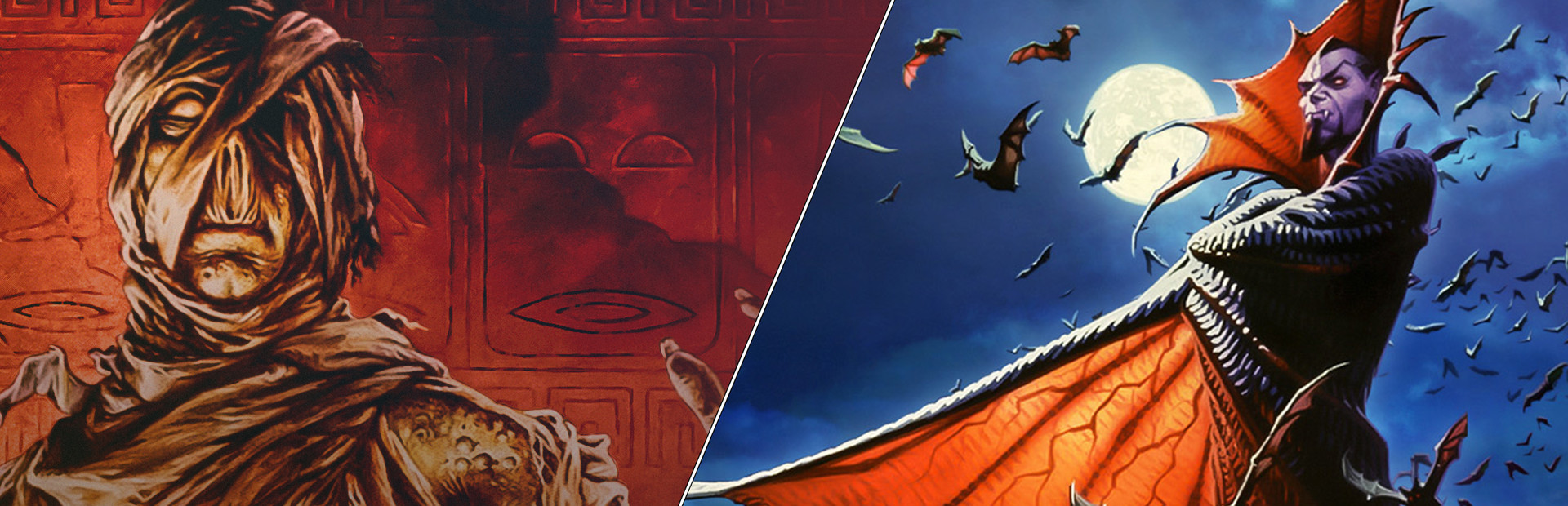
Dungeons & Dragons: Ravenloft Series
Two mid-90s AD&D horror crawlers that put Strahd's Barovia and an Egyptian darklord on your screen before Curse of Strahd made Ravenloft cool again. Nostalgia bait with real teeth, if you can tolerate the controls.
Veredicto de GamerScout
Best for retro RPG fans who want Ravenloft atmosphere and can forgive DOS-era interface friction in exchange for genuine gothic dread.
Comparar precios(2 tiendas)
Todas las tiendas de esta tabla nos dan el precio en euros, así que la cifra en EUR es el precio que fijó el vendedor, no un cálculo nuestro, y por eso EUR es también la moneda en la que calculamos el ranking. Solo incluimos aquí una oferta cuando la tienda nos da su precio en euros, de modo que ninguna cifra de esta tabla es inventada por nosotros.
Elige USD, PLN, GBP, CAD o AUD en la cabecera y convertimos desde EUR con el tipo de cambio de referencia del Banco Central Europeo — los importes convertidos llevan el prefijo ~. Tu banco o la tienda pueden aplicar un tipo distinto al pagar. Nunca ocultamos ofertas según dónde estés: todo el mundo ve esta tabla completa.
We may earn a commission when you buy games through links on this page — at no extra cost to you. It never affects our rankings or verdicts.
Historial de precios
Capturas y multimedia
Acerca de Dungeons & Dragons: Ravenloft Series
I'll be honest: I came to this series expecting museum-piece curiosity and walked away with a grudging respect for how hard DreamForge Intertainment tried to make AD&D feel genuinely threatening. Strahd's Possession drops your party into fog-smothered Barovia after a thief steals a holy relic from your lord, and from that point forward the mists close in and the dungeon crawling begins in earnest. Stone Prophet swaps the gothic castle corridors for Egyptian pyramid halls in the domain of Har'Akir, bringing a different flavor of dread without abandoning the same first-person, real-time engine underneath. Together they form a compact two-game arc that is more interested in atmosphere than in narrative depth, but that atmosphere hits harder than you might expect from DOS-era software. Both games run on a texture-mapped 3D engine with a first-person perspective, real-time combat resolved by clicking enemies, and AD&D 2nd Edition rules layered underneath in ways that are not always obvious. Your party composition matters more than the game tells you. In Strahd's Possession, thieves are essentially dead weight because backstab is not implemented for that class, while Clerics carry most of the survival load through healing and turn undead. Stone Prophet corrects several of those class-balance oversights: thieves get backstab, Rangers can speak with animals, and the combat system feels meaningfully tighter. Character import between the two games works, but selectively rebuilding your party at the start of Stone Prophet is worth considering if you want a functional thief for the second half. The dungeon design in both games focuses on finding keys, hidden wall buttons, and secret passages, with item-based McGuffins gating your path to the final confrontation. Exploration is the primary activity, and the automap that tracks item locations is your best friend. Where the series earns its reputation is atmosphere. The gothic horror of Barovia is given real weight: level-drain from vampiric enemies is permanent until cured, the village of Barovia has a claustrophobic social horror to it, and the encounter with Strahd himself demands specific items acquired through careful exploration or you simply cannot win the fight. The music in Strahd's Possession is genuinely memorable, organ-heavy and oppressive in ways that most soundtracks of the period were not. Stone Prophet trades the gothic moodiness for something drier and more austere, which works for the setting even if it lacks the same atmosphere punch. The problems are real and should not be undersold. The movement controls are cumbersome by any modern standard, the interface requires patience to internalize, and some hidden buttons in the first game are nearly invisible depending on your grid-movement settings. Stone Prophet introduces pusher squares that shove your party into traps, and a handful of explosive enemies that detonate on death in rooms where the controls give you almost no room to respond. The story in both games is functional rather than rich: you get cutscenes, scattered notes, and enough dialogue to understand what is happening, but no branching narrative, no meaningful faction choices, no replayable story path worth analyzing. For an RPG specialist like me, that is the real limitation of the series. The worlds suggest lore depth that the game mechanics cannot fully deliver. This series is worth your time if you have already worked through the Eye of the Beholder games, the Gold Box titles, or Legend of Grimrock and want more first-person party crawling in a setting that has genuine personality. It is a rougher, less forgiving experience than any of those, and the UI friction is a genuine barrier rather than a charming quirk. Come in knowing you are playing preserved DOS software via DOSBox, not a remaster, and both games reward the patience you bring to them.

RPGs
Etiquetas
Requisitos del sistema
Mínimos
- OS
- Windows 7 or later
- Memory
- 512 MB RAM
- DirectX
- Version 7.0
- Storage
- 2 GB available space
- Graphics
- 3D graphics card compatible with DirectX 7
- Processor
- 1.8 GHz
Recomendados
- OS
- Windows 10 / 11
- Memory
- 512 MB RAM
- DirectX
- Version 9.0
- Storage
- 2 GB available space
- Graphics
- 3D graphics card compatible with DirectX 9
- Processor
- 1.8 GHz
Sigue explorando
Community Discussion
Be the first to comment on Dungeons & Dragons: Ravenloft Series.
Reseñas y valoraciones
No hay valoraciones disponibles
Información del juego
- Desarrolladora
- DreamForge Intertainment
- Distribuidora
- SNEG
- Fecha de lanzamiento
- 29 mar 2022