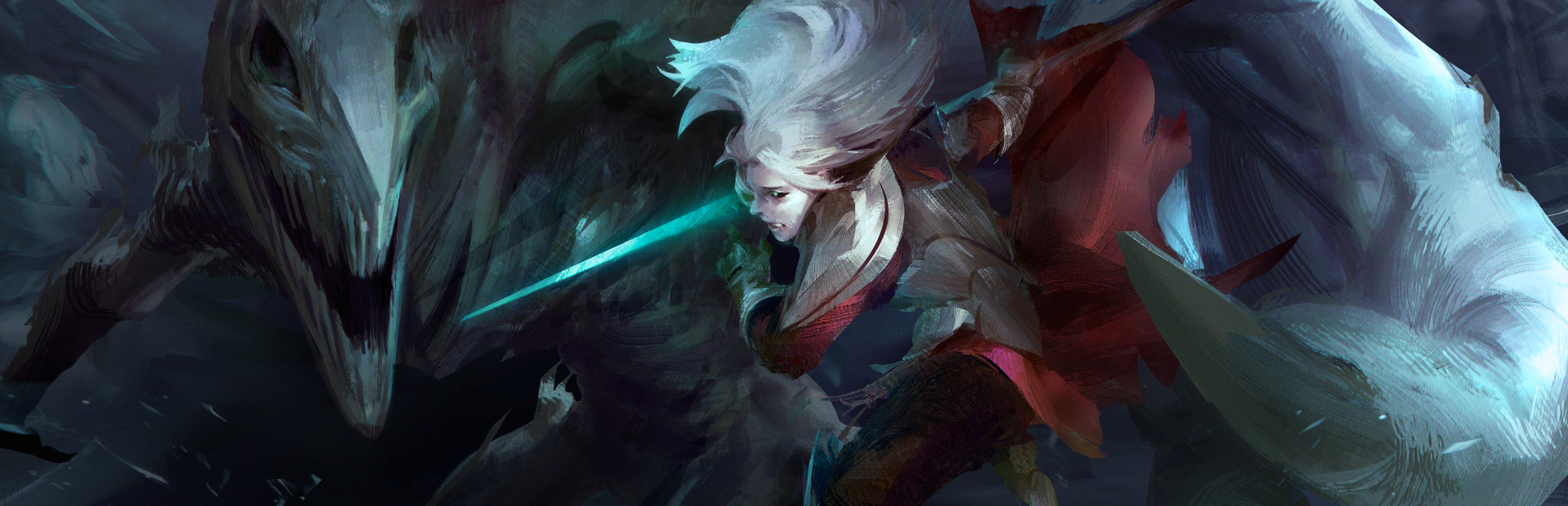
Death's Gambit: Afterlife
Dark Souls in 2D with a talent tree deep enough to lose your weekend in - if the brutal boss gauntlet does not send you back to the character select screen first.
Veredicto de GamerScout
Best for Souls-Metroidvania fans who want genuine build depth and a 20-boss gauntlet - not for players chasing narrative payoff.
Comparar precios(4 tiendas)
Todas las tiendas de esta tabla nos dan el precio en euros, así que la cifra en EUR es el precio que fijó el vendedor, no un cálculo nuestro, y por eso EUR es también la moneda en la que calculamos el ranking. Solo incluimos aquí una oferta cuando la tienda nos da su precio en euros, de modo que ninguna cifra de esta tabla es inventada por nosotros.
Elige USD, PLN, GBP, CAD o AUD en la cabecera y convertimos desde EUR con el tipo de cambio de referencia del Banco Central Europeo — los importes convertidos llevan el prefijo ~. Tu banco o la tienda pueden aplicar un tipo distinto al pagar. Nunca ocultamos ofertas según dónde estés: todo el mundo ve esta tabla completa.
We may earn a commission when you buy games through links on this page — at no extra cost to you. It never affects our rankings or verdicts.
Historial de precios
Capturas y multimedia
Acerca de Death's Gambit: Afterlife
I went into Death's Gambit: Afterlife expecting a competent Souls-lite checkbox exercise and came out the other side genuinely surprised by how much the RPG skeleton holds up under scrutiny. White Rabbit spent years rebuilding this thing from the feedback up, and the Afterlife update is essentially a second game wearing the original's skin - same grimdark world of Siradon, dramatically expanded everything else. The core loop is a Souls-Metroidvania hybrid, and unlike a lot of games that try to straddle that fence, it earns both labels. You pick one of seven classes at the start - Soldier, Assassin, Blood Knight, Wizard, Noble, Sentinel, or Acolyte of Death - each with a distinct weapon type, stat scaling, and Soul Energy generation mechanic. The Soldier blocks to fill energy, the Assassin dodges through attacks to generate it, the Blood Knight leans on health-steal aggression, the Wizard slings ranged spells from a tome that scales with Intelligence. More critically, after defeating the Dark Knight boss you unlock a second class slot, letting you hybrid into another tree entirely. The talent system sits at over 100 nodes, and the community has been stress-testing combinations - Noble/Wizard magic bomb builds, Finesse Spear Noble/Soldier hybrids for heroic boss runs - since launch. That depth is real and it does hold past hour 40, which is the bar I actually care about. Combat in Afterlife is noticeably tighter than the 2018 original. Input buffering lets you redirect mid-animation, perfect parries now open a powerful counter window, and the slide replaces the old kick to give you a reliable repositioning tool. Healing is faster but heals for less, which pushes you toward aggression rather than turtling. The twenty bosses - up from fourteen at launch - are the real showcase. Each themed area caps off with a proper encounter, and heroic rematches exist for players who want a second, harder version of every fight. That is a lot of content for a 2D indie, and most of it is optional, which means you can go wide or focused depending on your patience. Movement abilities like double jump, dash, and crash-down gate some exploration in classic Metroidvania fashion, and the map - absent from the 2018 release and a huge quality-of-life win here - makes backtracking feel purposeful rather than exhausting. Where it stumbles is partly structural and partly a writing issue. The narrative has the raw ingredients of something interesting: protagonist Sorun is not a blank slate, Matthew Mercer voices Death with real wit, and the banter between them punctuates the grimness in useful ways. But the story never quite accelerates into the kind of payoff that earns its setup. Some reviewers found the world lore less inspiring than the combat implies, and I would not argue hard against that. There are also moments early on where the game front-loads mechanics without explaining how they interact - the talent tree in particular can feel like a wall of numbers until you commit to a direction. If you are the type who wants a narrative with the thematic density of a Disco Elysium, this is not that game. If you want a mechanically honest, class-flexible action RPG with real boss design and a world that rewards exploration, it earns its Very Positive rating honestly.

RPGs
Etiquetas
Requisitos del sistema
Mínimos
- OS
- Windows 7 32bit
- Processor
- Intel Core 2 Duo E7500 2.93 GHz / AMD Athlon 64 X2 Dual Core Processor 5600+ 2.9GHz
- Memory
- 2 GB RAM
- Graphics
- NVIDIA GeForce 9600 GT/ AMD Radeon HD 6450
- DirectX
- Version 11
- Storage
- 1 GB…
Recomendados
- Processor
- Intel Core i3 or higher
- Memory
- 4 GB RAM
- Graphics
- Nvidia Geforce GT520 / AMD Radeon HD 6670 or higher
- DirectX
- Version 11
- Storage
- 1 GB available space So…
Sigue explorando
Community Discussion
Be the first to comment on Death's Gambit: Afterlife.
Reseñas y valoraciones
Información del juego
- Desarrolladora
- White Rabbit
- Distribuidora
- Serenity Forge
- Fecha de lanzamiento
- 13 ago 2018