
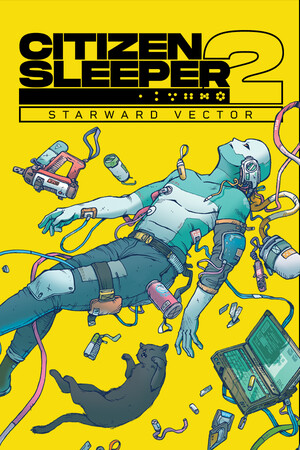
Compara los precios de Citizen Sleeper 2: Starward Vector en tiendas de claves de confianza y encuentra la mejor oferta. Desarrollado por Jump Over The Age. Publicado por Fellow Traveller. Lanzado el 31/1/2025. Disponible en PC, Mac, Xbox. Géneros: Adventure, Indie, RPG. Puntuación Metacritic: 85/100.

A malfunctioning android, a pursuing gang lord, and five dice rolled at the start of every day: Starward Vector asks whether found family can hold together when the odds keep breaking against you.

I kept thinking about Citizen Sleeper 2 between sessions, which for a text-heavy RPG that runs around twelve hours is a stronger endorsement than any score. Solo developer Gareth Damian Martin has built something genuinely difficult to categorise: the skeleton is a tabletop dice-allocation game, the flesh is a grounded cyberpunk visual novel, and the soul is closer to Becky Chambers or Firefly than to anything else in the RPG catalogue. You pick one of three classes at the start - Operator for interface and hacking work, Extractor for physical endurance, Machinist for repairs and engineering - and those choices quietly shape every risk you take for the rest of the run. Each in-game cycle hands you five six-sided dice, and you slot them into actions across the hub settlements of the Starward Belt. High rolls open clean outcomes; low rolls in dangerous actions can break dice outright, leaving you with even fewer options next cycle. It is a pressure system that feels exactly right for a story about a body falling apart. The big structural addition over the first game is Contracts. These are self-contained high-risk missions that pull you away from the comfort of hub exploration and into focused, countdown-clock scenarios: salvaging a derelict, a risky heist, asteroid surveys, confronting the criminal Laine who is constantly on your trail. You bring up to two crew members, each carrying their own two action dice and distinct skill sets. Serafin is your first companion, specialised in Engage and Endure. Later you can recruit characters like Nia, a sharp Intuit specialist found in Flotsam, or Juni, an Interface expert locked behind completing the Shipmind Wreck job. Contracts also carry a Stress meter of their own: negative outcomes fill it, and crisis points trigger escalating complications before full failure. The resource loop around contracts - fuel to travel, supplies to sustain cycles on site - means every departure requires genuine planning rather than casual exploration. That logistical tension is where the game earns its reputation for making you feel consistently close to disaster. The world itself is richer and more varied than the single-station setting of the first game. Hub locations across the Belt each have their own visual character and cast of NPCs with full story arcs, and the mostly subdued, carefully textured soundtrack by Amos Roddy keeps the atmosphere desolate without being oppressive. The writing is the centrepiece, and it mostly holds up. Where some players found the original's writing more emotionally resonant, this sequel trades some of that intimacy for scope and thematic weight around camaraderie, systemic crisis, and what solidarity actually costs under corporate collapse. The morally grey ethical framing means there is rarely a clean choice, which suits the dice system well: you are often picking the least bad option with whatever numbers you rolled. There are real criticisms worth sitting with. Some reviewers felt the ending does not pay off the crew relationships built across the journey - the climax arrives and departs without fully using the weight of those bonds. The map UI is genuinely clunky, and selecting crew dice during contracts is less smooth than the rest of the interaction design. A minority of players found the dice loop monotonous across a full run, and anyone expecting voiced dialogue or branching outcomes that meaningfully depend on crew pairings will find the interplay shallower than the premise suggests. The game is also intensely text-heavy; if you struggle with unvoiced prose for long sessions, that friction is real and will not disappear. For the reader who devoured the first Citizen Sleeper, or who loves the cadence of slow-burn tabletop fiction, Starward Vector is a considered and handcrafted twelve hours that knows exactly when to stop. The opening cycles can feel slow while the systems click into place, but the patience is worth it. This is one of those rare games where the mechanics and the themes are the same conversation. Kai, Scout Team

Citizen Sleeper 2: Starward Vector

Citizen Sleeper 2: Starward Vector

31 ene 2025Jump Over The AgeFellow Traveller
GamerScout opina

A malfunctioning android, a pursuing gang lord, and five dice rolled at the start of every day: Starward Vector asks whether found family can hold together when the odds keep breaking against you.

PCMacXbox
Steam Deck PlayableProtonDB Platinum
Mejor precio disponible
€0.00
en N/A
Mínimo histórico: €0.41

Comparar precios(0 tiendas)

Cargando precios...

We may earn a commission when you buy games through links on this page — at no extra cost to you. It never affects our rankings or verdicts.

Historial de precios

Historical low
€0.4126 Jun 2026
Keyshops
€0.37€0.50€0.64€0.776 Jun12 Jun17 Jun23 Jun28 Jun
Tracking prices since 6 Jun 2026
Create alert

Capturas y multimedia

Acerca de Citizen Sleeper 2: Starward Vector

I kept thinking about Citizen Sleeper 2 between sessions, which for a text-heavy RPG that runs around twelve hours is a stronger endorsement than any score. Solo developer Gareth Damian Martin has built something genuinely difficult to categorise: the skeleton is a tabletop dice-allocation game, the flesh is a grounded cyberpunk visual novel, and the soul is closer to Becky Chambers or Firefly than to anything else in the RPG catalogue. You pick one of three classes at the start - Operator for interface and hacking work, Extractor for physical endurance, Machinist for repairs and engineering - and those choices quietly shape every risk you take for the rest of the run. Each in-game cycle hands you five six-sided dice, and you slot them into actions across the hub settlements of the Starward Belt. High rolls open clean outcomes; low rolls in dangerous actions can break dice outright, leaving you with even fewer options next cycle. It is a pressure system that feels exactly right for a story about a body falling apart. The big structural addition over the first game is Contracts. These are self-contained high-risk missions that pull you away from the comfort of hub exploration and into focused, countdown-clock scenarios: salvaging a derelict, a risky heist, asteroid surveys, confronting the criminal Laine who is constantly on your trail. You bring up to two crew members, each carrying their own two action dice and distinct skill sets. Serafin is your first companion, specialised in Engage and Endure. Later you can recruit characters like Nia, a sharp Intuit specialist found in Flotsam, or Juni, an Interface expert locked behind completing the Shipmind Wreck job. Contracts also carry a Stress meter of their own: negative outcomes fill it, and crisis points trigger escalating complications before full failure. The resource loop around contracts - fuel to travel, supplies to sustain cycles on site - means every departure requires genuine planning rather than casual exploration. That logistical tension is where the game earns its reputation for making you feel consistently close to disaster. The world itself is richer and more varied than the single-station setting of the first game. Hub locations across the Belt each have their own visual character and cast of NPCs with full story arcs, and the mostly subdued, carefully textured soundtrack by Amos Roddy keeps the atmosphere desolate without being oppressive. The writing is the centrepiece, and it mostly holds up. Where some players found the original's writing more emotionally resonant, this sequel trades some of that intimacy for scope and thematic weight around camaraderie, systemic crisis, and what solidarity actually costs under corporate collapse. The morally grey ethical framing means there is rarely a clean choice, which suits the dice system well: you are often picking the least bad option with whatever numbers you rolled. There are real criticisms worth sitting with. Some reviewers felt the ending does not pay off the crew relationships built across the journey - the climax arrives and departs without fully using the weight of those bonds. The map UI is genuinely clunky, and selecting crew dice during contracts is less smooth than the rest of the interaction design. A minority of players found the dice loop monotonous across a full run, and anyone expecting voiced dialogue or branching outcomes that meaningfully depend on crew pairings will find the interplay shallower than the premise suggests. The game is also intensely text-heavy; if you struggle with unvoiced prose for long sessions, that friction is real and will not disappear. For the reader who devoured the first Citizen Sleeper, or who loves the cadence of slow-burn tabletop fiction, Starward Vector is a considered and handcrafted twelve hours that knows exactly when to stop. The opening cycles can feel slow while the systems click into place, but the patience is worth it. This is one of those rare games where the mechanics and the themes are the same conversation.

Kai
Kai · Scout Team

Indie & narrative

Etiquetas

singleplayerachievementscontroller-supporttrading-cardscloud-savestier:aaaDice AllocationFound FamilyContract MissionsStress MechanicsClass SelectionHub ExplorationTabletop-InspiredCrew ManagementResource Planning

Requisitos del sistema

Mínimos

OS
Windows 10
Memory
4 GB RAM
DirectX
Version 11
Storage
2 GB available space
Graphics
DirectX 11 compatible GPU
Processor
Requires a 64-bit processor and operating system

Recomendados

Requires a 64-bit processor and operating system

Sigue explorando

Community Discussion

Be the first to comment on Citizen Sleeper 2: Starward Vector.

Reseñas y valoraciones

Metacritic
85

Información del juego

Desarrolladora
Jump Over The Age
Distribuidora
Fellow Traveller
Fecha de lanzamiento
31 ene 2025

Alerta de precio

¡Recibe un aviso cuando el precio baje de tu objetivo!

Crear alerta

Más de Jump Over The Age

Compra mejor: guías útiles

¿Buscas más? Mira juegos como Citizen Sleeper 2: Starward Vector →

Preguntas frecuentes sobre Citizen Sleeper 2: Starward Vector

¿Cuánto cuesta Citizen Sleeper 2: Starward Vector?

El precio de Citizen Sleeper 2: Starward Vector cambia a menudo y varía según la tienda, la edición y la región. La tabla de precios en vivo de esta página compara las ofertas más baratas en stock de tiendas de claves de confianza como Eneba y Kinguin, para que siempre veas el precio más bajo actual antes de comprar.

¿Dónde puedo comprar Citizen Sleeper 2: Starward Vector más barato?

Compara los precios de Citizen Sleeper 2: Starward Vector en todas las tiendas verificadas en la tabla de precios de esta página. Listamos las ofertas de claves y tiendas más baratas en stock, actualizadas con frecuencia, para que siempre veas la mejor oferta actual antes de comprar.

¿En qué plataformas está disponible Citizen Sleeper 2: Starward Vector?

Citizen Sleeper 2: Starward Vector está disponible en PC, Mac, Xbox.

¿Cuándo se lanzó Citizen Sleeper 2: Starward Vector?

Citizen Sleeper 2: Starward Vector se lanzó el 31 de enero de 2025.

¿Quién desarrolló Citizen Sleeper 2: Starward Vector?

Citizen Sleeper 2: Starward Vector fue desarrollado por Jump Over The Age y publicado por Fellow Traveller.

¿Merece la pena comprar Citizen Sleeper 2: Starward Vector?

Citizen Sleeper 2: Starward Vector tiene una puntuación Metacritic de 85/100, lo que lo convierte en uno de los títulos destacados de Adventure. Mira las reseñas completas, las valoraciones y los tiempos de duración en esta página para decidir.