Compara los precios de Cities in Motion en tiendas de claves de confianza y encuentra la mejor oferta. Desarrollado por Colossal Order. Publicado por Paradox Interactive. Lanzado el 22/2/2011. Disponible en PC, Mac, Linux. Géneros: Simulation. Puntuación Metacritic: 70/100.

If you have ever stared at a real bus timetable and thought 'I could do this better', Cities in Motion will either vindicate you or humble you within the first hour.

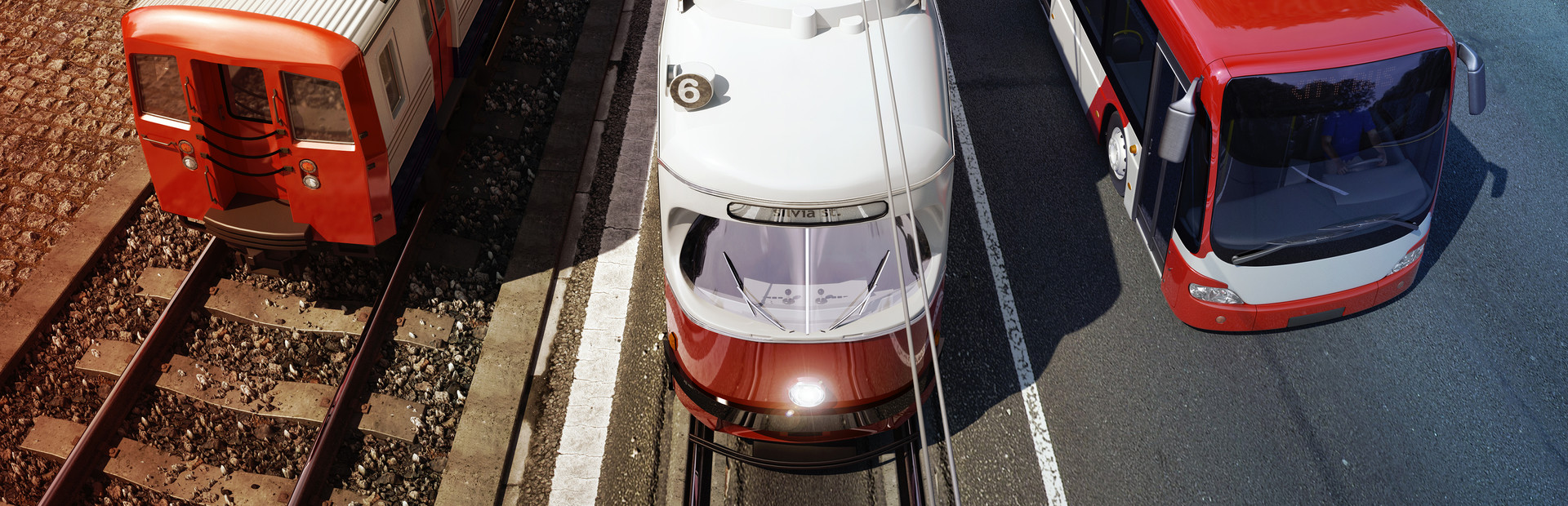
I have a soft spot for transport sims that force you to think at the route level rather than the city level, and Cities in Motion is exactly that kind of focused, unforgiving exercise. Colossal Order's debut from 2011 puts you in charge of public transit networks across four historically rendered European cities - Vienna, Helsinki, Berlin, and Amsterdam - spanning a campaign that runs from the 1920s through to the 2020s. You are not building the city. You are trying to make sense of one that already exists, laying bus stops, digging metro tunnels, floating waterbuses down Amsterdam's canals, and yes, occasionally dispatching a helicopter route when you have more ambition than budget sense. The depth is narrower than a grand strategy title but steeper than it first appears. The game models seven distinct social groups - blue-collar workers who want cheap fares, white-collar commuters who want speed, students and pensioners who need affordability, tourists who will tolerate anything, businesspeople who demand comfort, and unemployed residents who are cost-sensitive above all else. Getting a route to serve two or three of these groups simultaneously is where the interesting decision-making lives. Do you run a tram line through the factory district to catch morning shift workers, or does a bus loop connecting the university to the shopping district produce better margins? The financial model adds loans, interest rates, ticket pricing, advertising campaigns, and vehicle maintenance as levers, none of which are overwhelming but all of which matter when you hit a cash crunch at the wrong point in a scenario. The tutorial handles newcomers reasonably well for a 2011 sim, walking through stop placement, basic route logic, and financial controls in a dedicated scenario rather than drowning you in pop-ups mid-game. The interface is genuinely clean, which is not a small achievement in this genre. Where the game struggles is in feedback quality - when a stop is unhappy, the game does not always give you a clear signal about whether the problem is frequency, capacity, or route design. Vehicle capacity is also unrealistically low across most modes, including metro trains, which can make mid-game route scaling feel like fighting the engine rather than the problem. Traffic simulation has some well-documented quirks too, including the counterintuitive situation where a successful transit network can actually worsen road congestion due to weak car AI. These are real rough edges that were never fully patched out. The built-in map editor and a community that produced custom cities and vehicle mods add meaningful longevity. Thirteen DLC packs eventually expanded the base game's four cities to include Tokyo, Munich, Paris, London, St. Petersburg, and US cities among others, so the content ceiling is high if you go the full collection route. The historical progression across decades - playing Berlin in the post-World War One era and then returning to it after the Wall goes up - gives the campaign a texture that purely sandbox transport sims cannot replicate. Sandbox mode is also present if structured scenarios feel too constraining, with a selectable starting year anywhere from 1920 to 2020 and full freedom over network design. Players who bounced off Cities in Motion 2 (which stripped away much of the original's charm in exchange for added complexity) often return to this entry specifically for its atmosphere and approachability. This is a niche game that knows exactly what it is. It will not scratch the itch if you want to zone land or manage city budgets. What it does offer is a surprisingly meditative and occasionally maddening loop of transit planning that rewards patience and punishes overextension. Come in expecting a focused sim, not a city builder, and you will find more here than the Metacritic score suggests. Diego, Scout Team

Cities in Motion

Cities in Motion

22 feb 2011Colossal OrderParadox Interactive
GamerScout opina

If you have ever stared at a real bus timetable and thought 'I could do this better', Cities in Motion will either vindicate you or humble you within the first hour.

PCMacLinux
ProtonDB Silver
Mejor precio disponible
€0.00
en N/A
Mínimo histórico: €0.88

Comparar precios(0 tiendas)

Cargando precios...

We may earn a commission when you buy games through links on this page — at no extra cost to you. It never affects our rankings or verdicts.

Historial de precios

Historical low
€0.8823 Jun 2026
Keyshops
€0.83€0.99€1.15€1.318 Jun13 Jun18 Jun23 Jun28 Jun
Tracking prices since 8 Jun 2026
Create alert

Capturas y multimedia

Acerca de Cities in Motion

I have a soft spot for transport sims that force you to think at the route level rather than the city level, and Cities in Motion is exactly that kind of focused, unforgiving exercise. Colossal Order's debut from 2011 puts you in charge of public transit networks across four historically rendered European cities - Vienna, Helsinki, Berlin, and Amsterdam - spanning a campaign that runs from the 1920s through to the 2020s. You are not building the city. You are trying to make sense of one that already exists, laying bus stops, digging metro tunnels, floating waterbuses down Amsterdam's canals, and yes, occasionally dispatching a helicopter route when you have more ambition than budget sense. The depth is narrower than a grand strategy title but steeper than it first appears. The game models seven distinct social groups - blue-collar workers who want cheap fares, white-collar commuters who want speed, students and pensioners who need affordability, tourists who will tolerate anything, businesspeople who demand comfort, and unemployed residents who are cost-sensitive above all else. Getting a route to serve two or three of these groups simultaneously is where the interesting decision-making lives. Do you run a tram line through the factory district to catch morning shift workers, or does a bus loop connecting the university to the shopping district produce better margins? The financial model adds loans, interest rates, ticket pricing, advertising campaigns, and vehicle maintenance as levers, none of which are overwhelming but all of which matter when you hit a cash crunch at the wrong point in a scenario. The tutorial handles newcomers reasonably well for a 2011 sim, walking through stop placement, basic route logic, and financial controls in a dedicated scenario rather than drowning you in pop-ups mid-game. The interface is genuinely clean, which is not a small achievement in this genre. Where the game struggles is in feedback quality - when a stop is unhappy, the game does not always give you a clear signal about whether the problem is frequency, capacity, or route design. Vehicle capacity is also unrealistically low across most modes, including metro trains, which can make mid-game route scaling feel like fighting the engine rather than the problem. Traffic simulation has some well-documented quirks too, including the counterintuitive situation where a successful transit network can actually worsen road congestion due to weak car AI. These are real rough edges that were never fully patched out. The built-in map editor and a community that produced custom cities and vehicle mods add meaningful longevity. Thirteen DLC packs eventually expanded the base game's four cities to include Tokyo, Munich, Paris, London, St. Petersburg, and US cities among others, so the content ceiling is high if you go the full collection route. The historical progression across decades - playing Berlin in the post-World War One era and then returning to it after the Wall goes up - gives the campaign a texture that purely sandbox transport sims cannot replicate. Sandbox mode is also present if structured scenarios feel too constraining, with a selectable starting year anywhere from 1920 to 2020 and full freedom over network design. Players who bounced off Cities in Motion 2 (which stripped away much of the original's charm in exchange for added complexity) often return to this entry specifically for its atmosphere and approachability. This is a niche game that knows exactly what it is. It will not scratch the itch if you want to zone land or manage city budgets. What it does offer is a surprisingly meditative and occasionally maddening loop of transit planning that rewards patience and punishes overextension. Come in expecting a focused sim, not a city builder, and you will find more here than the Metacritic score suggests.

Diego
Diego · Scout Team

Strategy & simulation

Etiquetas

singleplayerachievementstier:aaaTransit ManagementHistorical ProgressionScenario ModeSocial Group SimulationMap EditorMod SupportBudget ManagementSandbox ModeTycoon-style

Requisitos del sistema

Mínimos

OS
Microsoft Windows XP/Vista/7
Memory
2 GB RAM
Processor
2 GHz Dual Core or higher
Video Card
NVIDIA GeForce 8800/ATI Radeon HD 3850 or higher (integrated video cards not supported), 512 MB RAM, OpenGL 3.0
Hard Disk Space
2 GB

Sigue explorando

Community Discussion

Be the first to comment on Cities in Motion.

Reseñas y valoraciones

Metacritic
70

Información del juego

Desarrolladora
Colossal Order
Distribuidora
Paradox Interactive
Fecha de lanzamiento
22 feb 2011

Alerta de precio

¡Recibe un aviso cuando el precio baje de tu objetivo!

Crear alerta

Más de Colossal Order

Compra mejor: guías útiles

¿Buscas más? Mira juegos como Cities in Motion →

Preguntas frecuentes sobre Cities in Motion

¿Cuánto cuesta Cities in Motion?

El precio de Cities in Motion cambia a menudo y varía según la tienda, la edición y la región. La tabla de precios en vivo de esta página compara las ofertas más baratas en stock de tiendas de claves de confianza como Eneba y Kinguin, para que siempre veas el precio más bajo actual antes de comprar.

¿Dónde puedo comprar Cities in Motion más barato?

Compara los precios de Cities in Motion en todas las tiendas verificadas en la tabla de precios de esta página. Listamos las ofertas de claves y tiendas más baratas en stock, actualizadas con frecuencia, para que siempre veas la mejor oferta actual antes de comprar.

¿En qué plataformas está disponible Cities in Motion?

Cities in Motion está disponible en PC, Mac, Linux.

¿Cuándo se lanzó Cities in Motion?

Cities in Motion se lanzó el 22 de febrero de 2011.

¿Quién desarrolló Cities in Motion?

Cities in Motion fue desarrollado por Colossal Order y publicado por Paradox Interactive.

¿Merece la pena comprar Cities in Motion?

Cities in Motion tiene una puntuación Metacritic de 70/100, lo que lo convierte en uno de los títulos destacados de Simulation. Mira las reseñas completas, las valoraciones y los tiempos de duración en esta página para decidir.