Where the Water Tastes Like Wine
A folk-horror road trip across Depression-era America where the stories you collect and share literally reshape the world. Slow, literary, and unlike anything else.
GamerScout Verdict
Best for literary RPG fans who want mood, mythology, and sharp social history over mechanics or player agency.
Compare Prices(9 stores)
Every store in this table quotes us in euros, so the EUR figure is the price the seller actually set, not our arithmetic — which is why EUR is also the currency we rank in. We only list an offer here when the store gives us its price in euros, so nothing in this table is a number we invented.
Pick USD, PLN, GBP, CAD or AUD in the header and we convert from EUR at the European Central Bank reference rate — converted amounts are prefixed with ~. Your bank or the store may apply a different rate at checkout. We never hide offers based on where you are: everyone sees this whole table.
We may earn a commission when you buy games through links on this page — at no extra cost to you. It never affects our rankings or verdicts.
Price History
Screenshots & Media
About Where the Water Tastes Like Wine
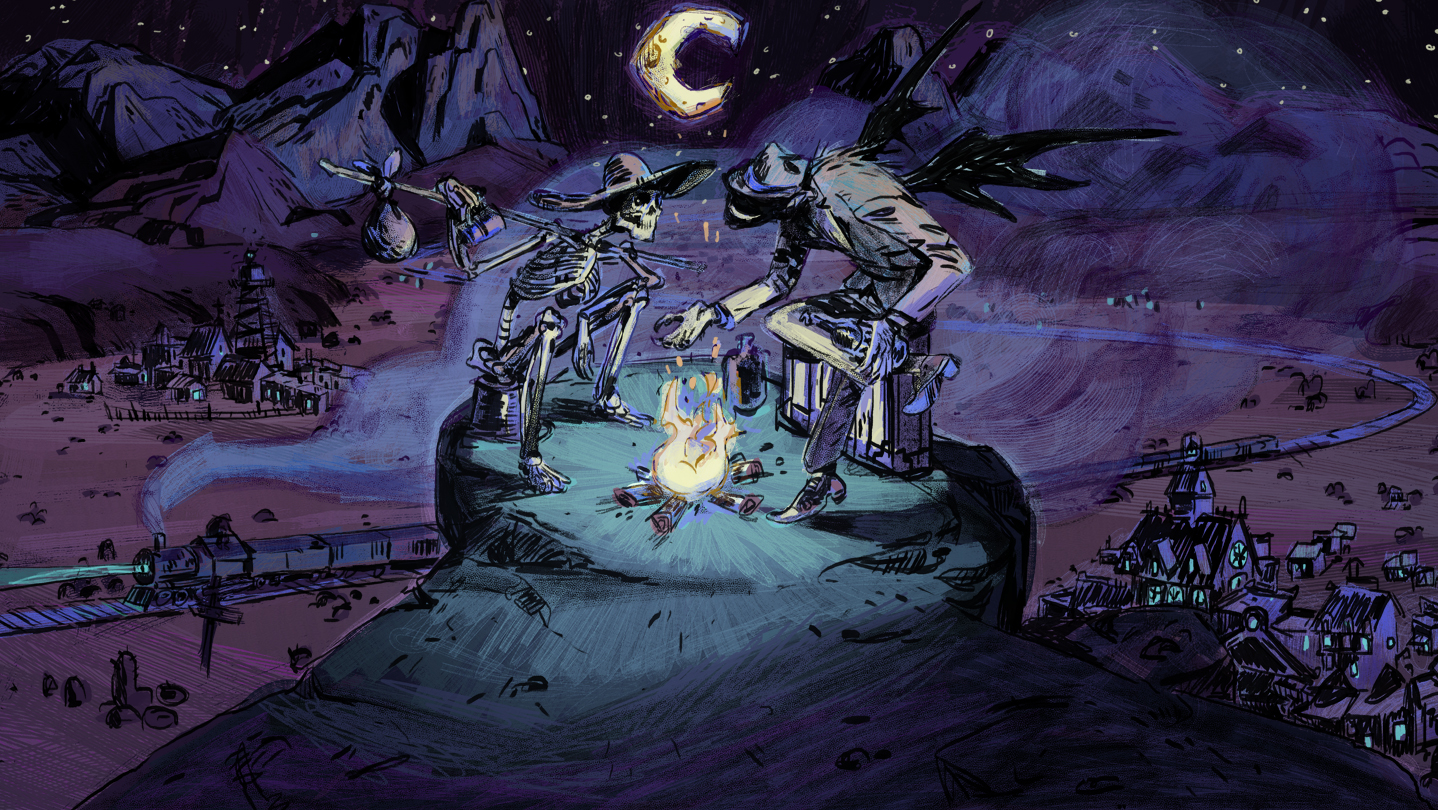
Where the Water Tastes Like Wine is a narrative adventure set in a mythologized version of 1930s America, built almost entirely around the act of collecting and retelling stories. You play as a skeleton cursed to wander the country, hitchhiking, hopping freight trains, and picking up folk tales from strangers at campfires. The core loop is simple: explore the procedurally placed vignettes scattered across a vast illustrated map of the United States, then sit down with one of eighteen fully voiced characters and trade those stories to unlock their personal histories. The conceit is quietly brilliant. Stories grow and mutate the more you tell them, a small yarn about a runaway dog becomes a legend about a beast that swallowed a whole town. That mechanic of narrative inflation is the game's best idea and its clearest argument about how folklore actually works. The cast of travelers is where the writing earns its keep. Each character is a specific archetype drawn from the era: a Black jazz musician navigating Jim Crow, a labor organizer with a price on her head, a con artist who can't stop running. Their stories engage directly with race, class, gender, and the particular American cruelty of that historical moment. The writing pulls no punches and does not condescend. For players who care about whether an RPG's world reflects something real about human experience, this is the game's strongest asset. The voice acting, featuring a roster of well-known developers and creators reading the vignettes, ranges from charming to genuinely moving. Here is where I have to be honest about the friction. The map traversal is slow. Deliberately, philosophically slow, but slow in a way that will test your patience if you came in expecting forward momentum. The vignette hunting to unlock specific story types for specific characters can feel more like inventory management than organic storytelling. You will spend real time wandering across illustrated plains looking for the one "tall tale about hardship" you need to progress a character arc, and that grind is real even if the game would argue it is thematically appropriate. The mechanical depth is shallow by RPG standards. There are no builds, no combat systems, no branching skill trees. What you get instead is a mood piece with light resource management and a lot of walking. The mixed Steam reception mostly reflects that gap between expectation and delivery. People who arrived wanting an RPG with choices that branch and consequences that cascade left disappointed. People who arrived wanting a beautifully illustrated, musically rich piece of interactive fiction about loneliness and the American myth stayed and finished it. John Singer's guitar score is exceptional, the kind of soundtrack that lives in your head for weeks. The art direction, a stark woodcut-inspired aesthetic, is consistent and atmospheric throughout. If you are the kind of player who finished 80 Days and immediately looked for something similar, or who thinks the best parts of Disco Elysium are the bits where you sit still and read, this game was assembled for you specifically. If you need mechanical weight behind your narrative, give it a hard pass. It is a slow campfire story about what gets remembered and what gets lost, and it is comfortable with exactly that.

RPGs
Tags
System Requirements
Minimum
- Processor
- Intel Core2 Duo E4500 (2 * 2200) or equivalent/AMD Athlon 64 X2 4200+ (2 * 2200) or equivalent
- Memory
- 1 GB RAM
- Graphics
- GeForce 8500 GT (512 MB)/Radeon HD 4350 (512 MB)
- DirectX
- Version 9.0…
Keep exploring
Community Discussion
Be the first to comment on Where the Water Tastes Like Wine.
Reviews & Ratings
Game Info
- Developer
- Dim Bulb Games
- Publisher
- Good Shepherd Entertainment
- Release Date
- Feb 28, 2018