
Voice of Cards: The Forsaken Maiden
Yoko Taro's melancholy nautical fable wrapped in a tabletop aesthetic lands somewhere between cozy and bittersweet, the story earns its tears, but the random encounter rate will test your patience.
GamerScout Verdict
Worth it for the melancholy maiden storylines and tabletop charm; skip if random encounter padding is a dealbreaker for you.
Compare Prices(4 stores)
Every store in this table quotes us in euros, so the EUR figure is the price the seller actually set, not our arithmetic — which is why EUR is also the currency we rank in. We only list an offer here when the store gives us its price in euros, so nothing in this table is a number we invented.
Pick USD, PLN, GBP, CAD or AUD in the header and we convert from EUR at the European Central Bank reference rate — converted amounts are prefixed with ~. Your bank or the store may apply a different rate at checkout. We never hide offers based on where you are: everyone sees this whole table.
We may earn a commission when you buy games through links on this page — at no extra cost to you. It never affects our rankings or verdicts.
Price History
Screenshots & Media
About Voice of Cards: The Forsaken Maiden
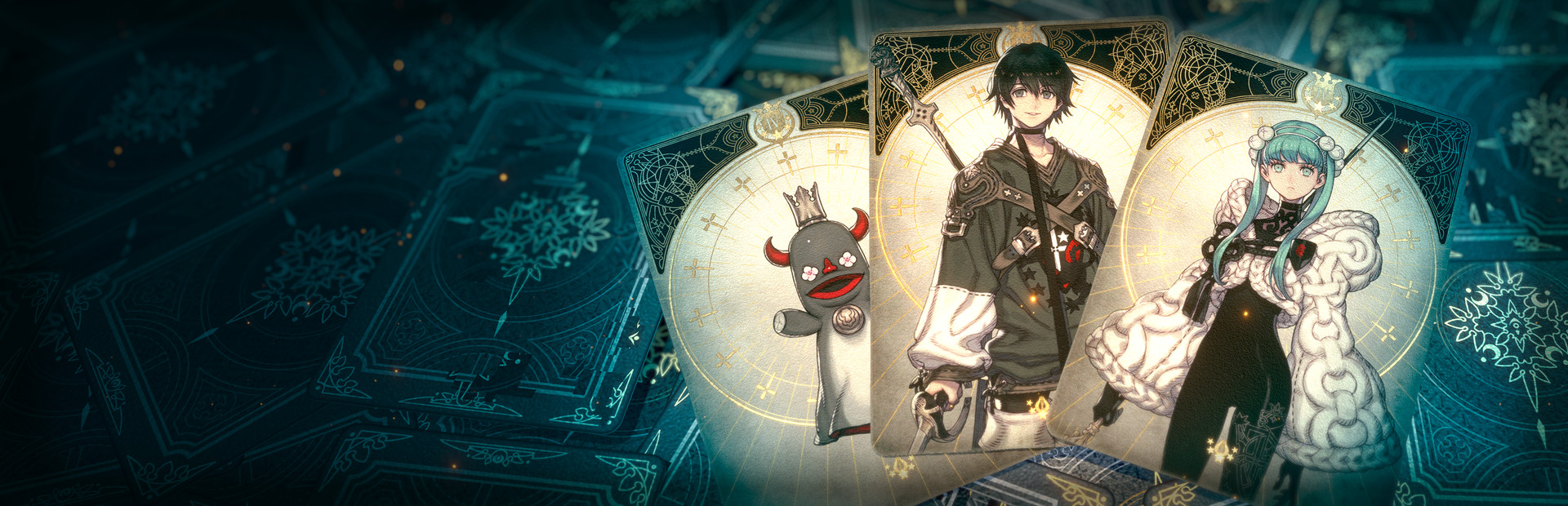
My first thought when I heard a follow-up to The Isle Dragon Roars was landing just four months after the original was honest skepticism. That's a punishing turnaround for any RPG, and the question hanging over The Forsaken Maiden from the moment it was announced was whether the team had actually built something or just reshuffled the same deck. The answer, after spending a weekend with it, is: both, and knowing which half matters more to you is basically the whole buying decision. The setup is quieter and more emotionally focused than its predecessor. You play as a navigator named Barren on a chain of islands kept from sinking by magical maidens, each of whom bears a specific duty. Your companion Laty has failed hers and lost her voice as a result, and the two of you sail between the other isles to learn from their guardians and hopefully mend what went wrong. Yoko Taro's creative fingerprints are all over this, the individual maiden storylines carry genuine weight, the central theme of bonds between maidens and their attendants directly feeds into the new Link Skills combat mechanic, and the ending forces a genuinely uncomfortable memory-sacrifice choice on Laty. Those expecting NieR-level branching chaos should know that the choices are mostly cosmetic, and the ending variations are more about emotional preference than narrative divergence. But what the writing does well, it does very well. Several reviewers singled out the individual maiden arcs as the strongest material in the game. Combat is the same gem-economy turn-based system as The Isle Dragon Roars: characters build gems each turn and spend them on more powerful attacks, with elemental weaknesses and status ailments adding a thin layer of tactics. The new addition here is Link Skills, two-character combo attacks that require a high gem investment in exchange for serious damage. It is a neat idea that shines in boss fights but sees limited use otherwise. What has not improved nearly enough is the random encounter rate. Wandering the overworld or the sea tiles will interrupt you constantly, and the enemy pool is small enough that you will recognize everything within the first few hours. The dungeon puzzles introduced in this entry are a welcome structural change, but they are not difficult enough to provide meaningful resistance. Turning on high-speed mode is essentially mandatory, default animation speeds are genuinely slow. Presentation is where the series still earns its reputation. The world is a 2D grid of beautifully illustrated cards that reveal themselves as you move, combat plays out on a velvet-spread table, and the atmosphere is consistently moody in a way that suits the maritime setting. The score adds Latin-influenced textures, tangos for melancholy moments, samba rhythms for lighter beats, which is a small creative swing that pays off. The game master narrator, voiced by Mark Atherlay in English, delivers a pleasant performance, though community opinion is divided on whether he matches the warmth of the first game's narrator. On Steam, user reception settled at a mixed 66% positive across around 225 reviews, which tracks with a game that rewards patience but frustrates people chasing mechanical depth. The honest truth is that The Forsaken Maiden is a five-to-eight-hour story experience padded to twelve or fifteen by filler encounters. If you came for Yoko Taro's bittersweet tone and the tactile charm of a world made from illustrated cards, you will find exactly what you want. If you need build variety, meaningful choice architecture, or any kind of gear complexity, you will be disappointed. It is a complete standalone entry, so you do not need the first game, but if you bounced off The Isle Dragon Roars, nothing mechanical here will change your mind.

RPGs
Tags
System Requirements
Minimum
- OS
- Windows® 8.1/10 64-bit (ver.1909 and above)
- Memory
- 4 GB RAM
- DirectX
- Version 11
- Storage
- 5 GB available space
- Graphics
- AMD Radeon™ R7 260X / NVIDIA® GeForce® GTX 650 (VRAM 2GB)
- Processor
- AMD A8-7600 / Intel® Core™ i3-2100
- Sound Card
- DirectX® 11.0 Compatible Sound Card
Recommended
- OS
- Windows® 8.1/10 64-bit (ver.1909 and above)
- Memory
- 4 GB RAM
- DirectX
- Version 11
- Storage
- 5 GB available space
- Graphics
- AMD Radeon™ R9 270X / NVIDIA® GeForce® GTX 660
- Processor
- AMD A8-7600 / Intel® Core™ i3-2100
- Sound Card
- DirectX® 11.0 Compatible Sound Card
Keep exploring
Community Discussion
Be the first to comment on Voice of Cards: The Forsaken Maiden.
Reviews & Ratings
No ratings available
Game Info
- Developer
- Square Enix
- Publisher
- Square Enix
- Release Date
- Feb 17, 2022