
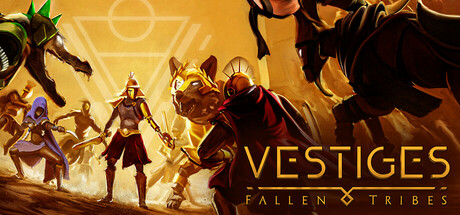
Vestiges: Fallen Tribes
A Dune-flavored card-battler where positioning matters more than reflexes, solid solo campaign, cross-platform PvP, and a thin but real player base to test your deck against.
GamerScout Verdict
Best for strategy players who want tight, positional deck combat over sprawling maps, bring a friend to get the most from PvP.
Compare Prices(4 stores)
Every store in this table quotes us in euros, so the EUR figure is the price the seller actually set, not our arithmetic — which is why EUR is also the currency we rank in. We only list an offer here when the store gives us its price in euros, so nothing in this table is a number we invented.
Pick USD, PLN, GBP, CAD or AUD in the header and we convert from EUR at the European Central Bank reference rate — converted amounts are prefixed with ~. Your bank or the store may apply a different rate at checkout. We never hide offers based on where you are: everyone sees this whole table.
We may earn a commission when you buy games through links on this page — at no extra cost to you. It never affects our rankings or verdicts.
Price History
Screenshots & Media
About Vestiges: Fallen Tribes
I came into Vestiges: Fallen Tribes expecting a gimmick dressed up in sci-fi robes. What I found instead is a tighter, more considered design than the genre mash-up suggests. It sits at the intersection of deck-building, turn-based tactics, and autobattler, you build a hand, spend energy to place unit cards on a compact desert battlefield, then watch the resolution phase play out automatically. The catch is that all the meaningful decisions happen before the fight starts. Positioning, sequencing, and reading the map layout are what win matches here, not reaction time. That suits the flatscreen audience just fine even if the game was clearly designed with VR in mind. There are three playable tribes, the Illustrans, Adrarii, and Amonsets, and they are genuinely asymmetric. The Illustrans lean into grouped defensive lines anchored by units like the Cura, a healer that buffs their cluster-heavy playstyle, and legionnaires who absorb frontal hits. The Adrarii pressure early and hard. Each tribe's deck has a distinct rhythm you have to actually learn, which gives the deckbuilding layer some real teeth. The solo campaign runs 21 missions with escalating enemy counts and no difficulty slider, so if you tune out during the positioning phase you will hit walls. Cards like Tactical Retreat add reactive depth, letting you pull ineffective units mid-engagement rather than just watching them die. Match length sits around five to ten minutes, which is about right for this format, long enough to feel like you earned the outcome, short enough to queue another one. The PvP side is where the game either earns its money or loses it depending on your situation. The cross-platform matchmaking (PC and PCVR share the pool) found a game within 30 seconds at launch weekend, which is a decent sign for a niche indie. Both players operate with partial information, you know your hand, not theirs, so bluffing and counter-decking have room to breathe. The 100 HP drain-per-turn combat loop keeps pacing tight. That said, the player population is small and the game has no visible ranked ladder. If you are the type who needs a functioning competitive ecosystem, that is a real concern. Grab a friend who can commit to regular games or manage your expectations accordingly. The weaknesses are predictable for the scope: one play environment, limited map variety across 21 missions, and environment design that leans entirely on the sci-fi desert aesthetic without much range. Community feedback also surfaced some motion comfort concerns on the VR side specifically. None of that kills the flatscreen experience, but it does mean the game punches narrower than its concept implies. The strategic loop is good enough to carry it, watching a carefully staged army resolve combat after a clever positioning phase has a satisfaction that auto-battler fans will clock immediately. If you want a no-fuss multiplayer shooter loop, keep walking. This one asks you to think before you act, and it rewards the players willing to do that.

Shooters
Tags
System Requirements
Minimum
- OS
- Windows 10 (64 bits)
- Memory
- 8 GB RAM
- Network
- Broadband Internet connection
- Graphics
- NVIDIA GTX 1060 equivalent
- Processor
- Intel Core i5-7300HQ equivalent
- VR Support
- OpenXR on Meta with Meta headsets only (SteamVR headsets soon)
Recommended
Requires a 64-bit processor and operating system
Keep exploring
Community Discussion
Be the first to comment on Vestiges: Fallen Tribes.
Reviews & Ratings
No ratings available
Game Info
- Developer
- WanadevStudio
- Publisher
- WanadevStudio
- Release Date
- Apr 24, 2025