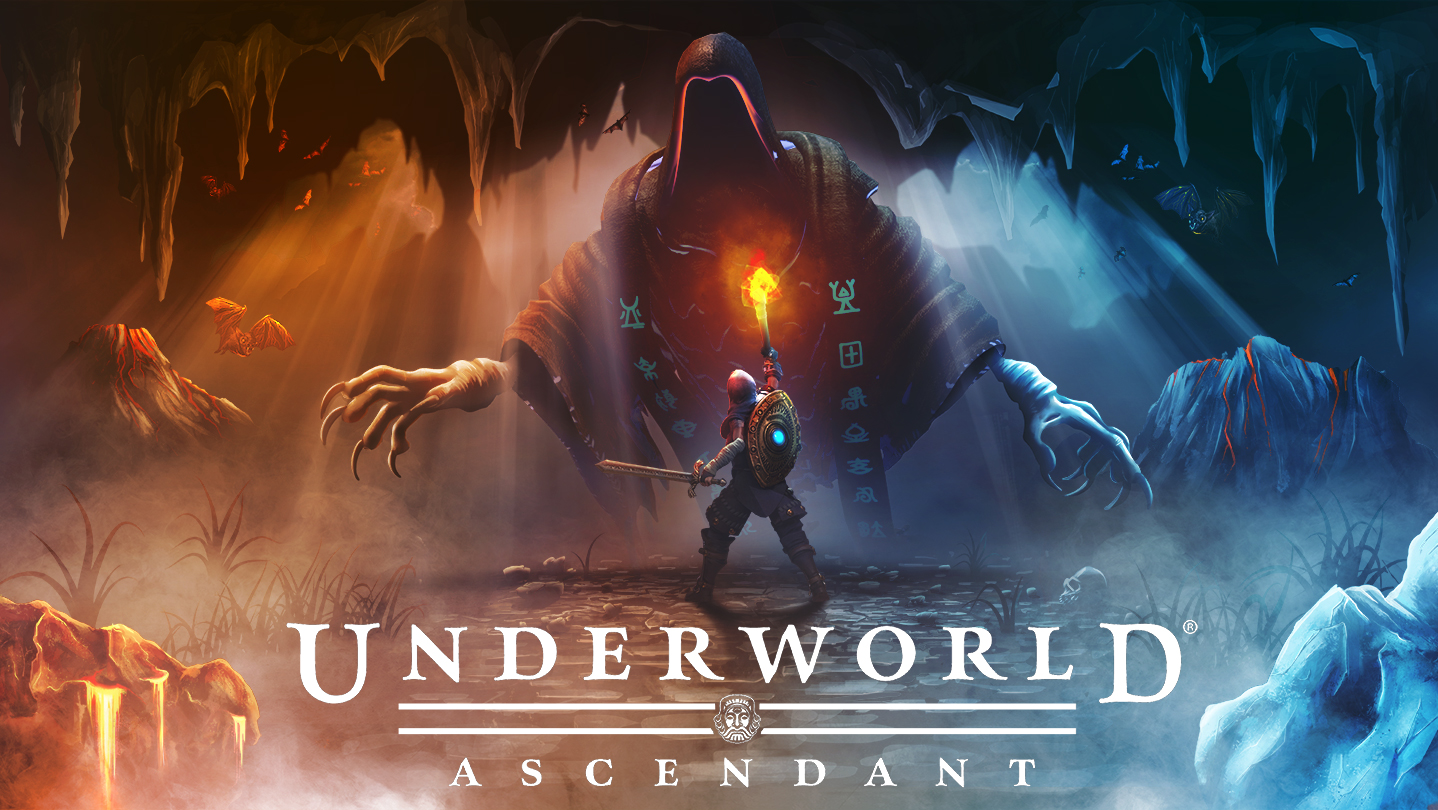
Underworld Ascendant
A deeply disappointing spiritual successor to Ultima Underworld that squanders its immersive sim DNA with broken AI, janky combat, and a sandbox that never coheres.
GamerScout Verdict
A cautionary tale for immersive-sim fans: skip unless you are researching the genre's misfires firsthand.
Compare Prices(9 stores)
Every store in this table quotes us in euros, so the EUR figure is the price the seller actually set, not our arithmetic — which is why EUR is also the currency we rank in. We only list an offer here when the store gives us its price in euros, so nothing in this table is a number we invented.
Pick USD, PLN, GBP, CAD or AUD in the header and we convert from EUR at the European Central Bank reference rate — converted amounts are prefixed with ~. Your bank or the store may apply a different rate at checkout. We never hide offers based on where you are: everyone sees this whole table.
We may earn a commission when you buy games through links on this page — at no extra cost to you. It never affects our rankings or verdicts.
Price History
Screenshots & Media
About Underworld Ascendant
Underworld Ascendant arrives carrying one of the heaviest pieces of luggage a game can own: it is the spiritual successor to Ultima Underworld, one of the most influential first-person RPGs ever made. OtherSide Entertainment, staffed by veterans of that original series, pitched a return to deep immersive-sim design, where you solve problems creatively, combine abilities in unexpected ways, and feel like the environment itself is a puzzle. The Stygian Abyss is back. The promise is enormous. The delivery is, unfortunately, rough in ways that go well beyond "needs patches." The core loop asks you to descend through dungeon levels, confronting enemies and environmental hazards with a toolkit built from three overlapping skill trees: the Trickster, the Warrior, and the Mage. In theory, you mix runes, traps, melee abilities, and environmental interactions to invent solutions the designers never anticipated. In practice, the AI is so erratic that enemies will either ignore you entirely or rubber-band into aggro states with no logic. Combat is floaty and lacks weight, which is a particular problem when your Warrior build is supposed to feel grounded in physical presence. The melee feedback never convinces you that swords connect with anything solid. The sandbox elements, which should be the game's strongest card, show genuine flashes of intent. You can manipulate fire, water, and darkness in ways that occasionally produce clever moments. Luring enemies into traps, using the Mage tree to reshape encounters with elemental effects, or sneaking past entire sections as a Trickster build can produce the occasional spark of what the game wanted to be. Those moments exist. They are real. But they are surrounded by enough bugs, framerate hitches, and half-finished quest design that you spend more time fighting the engine than the Abyss. The narrative wrapper is thin, and the writing rarely gives you a reason to care about why you are descending in the first place. For players coming specifically for the RPG depth, the build variety is narrower than advertised. By the midpoint you will have identified which skill combinations actually function and the rest start to feel cosmetic. There is no branching dialogue system, no character-driven story payoff, no faction intrigue that rewards repeated runs. The game launched in a state that reviewers widely described as unfinished, and while post-launch patches addressed some stability issues, the structural problems are baked into the design. An 35% positive rating on Steam across over a thousand reviews is not a review-bombing situation. It is a consensus. If you are a dedicated immersive-sim archaeologist who wants to see every attempt at the genre regardless of quality, or if you have an unusual fondness for watching ambitious ideas collapse under their own weight, there is something here to study. For everyone else, the Ultima Underworld legacy is better honored by playing the originals, or by looking at what games like Arx Fatalis did with the same DNA. Underworld Ascendant is a sobering reminder that nostalgia and intent do not automatically translate into execution.

RPGs
Tags
System Requirements
Minimum
- Processor
- Intel CPU Core i5-6600 @ 3.3GHz / Ryzen 3 1300X
- Memory
- 8 GB RAM
- Graphics
- Nvidia GPU GeForce GTX 960 (3GB)/ AMD R9 280 (3GB)
- DirectX
- Version 11…
Recommended
- OS
- 64-bit Windows 10
- Processor
- Intel CPU Core i7-6700/ AMD Ryzen 5 1500x
- Memory
- 12 GB RAM
- Graphics
- Nvidia GPU GeForce GTX 1060 (6GB)/ Radeon RX 480 (…
Keep exploring
Community Discussion
Be the first to comment on Underworld Ascendant.
Reviews & Ratings
Game Info
- Developer
- OtherSide Entertainment
- Publisher
- 505 Games
- Release Date
- Nov 15, 2018