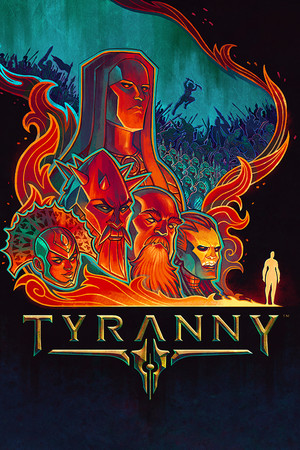
Tyranny
Playing the villain has never felt this morally exhausting, or this intellectually satisfying. Obsidian built a CRPG where evil already won and left you to manage the paperwork.
GamerScout Verdict
Best for CRPG readers who want moral weight without a hero fantasy, and can forgive a story that ends mid-sentence.
Compare Prices(7 stores)
Every store in this table quotes us in euros, so the EUR figure is the price the seller actually set, not our arithmetic — which is why EUR is also the currency we rank in. We only list an offer here when the store gives us its price in euros, so nothing in this table is a number we invented.
Pick USD, PLN, GBP, CAD or AUD in the header and we convert from EUR at the European Central Bank reference rate — converted amounts are prefixed with ~. Your bank or the store may apply a different rate at checkout. We never hide offers based on where you are: everyone sees this whole table.
We may earn a commission when you buy games through links on this page — at no extra cost to you. It never affects our rankings or verdicts.
Price History
Screenshots & Media
About Tyranny
I spent my first hour in Tyranny not fighting a single enemy. Instead, I was sitting in the Conquest prologue, a board-game-style pre-history that asks you to make decisions about how Kyros the Overlord crushed the world before the main campaign even loads. Which cities did your armies burn? Which prisoners did you spare, and why? Those choices ripple forward, reshaping faction dispositions, available companions, and even which regions of the map you can access. It is one of the most elegant onboarding tricks in the isometric RPG genre, and it immediately signals that Tyranny is not here to waste your time with scene-setting cutscenes. You play a Fatebinder, essentially a roving magistrate and enforcer for an authoritarian empire that has already conquered the known world. The central tension is not good-versus-evil in any conventional sense. You are the arm of evil, arbitrating disputes between two rival factions under Kyros's banner: the disciplined, fascist Disfavored under Graven Ashe, and the chaotic, cannibalistic Scarlet Chorus led by the genuinely terrifying Voices of Nerat. Siding firmly with either, playing them against each other, or carving out your own anarchist path each unlocks meaningfully different quest lines, dialogue branches, and endings. The Fear and Loyalty system, which tracks how your companions feel about you based on your actions, adds another layer of consequence, though it is one of the areas where the game falls short. Companion arcs lack the dedicated quests that would make the Fear and Loyalty meters matter as much as they should, and the ending arrives abruptly enough that it feels like a first act rather than a full story. The classless skill system is one of Tyranny's genuine strengths. Your Fatebinder improves in whatever you actually use: swing two-handed weapons constantly and that skill climbs, ignore subterfuge and it rots. Faction standing can also unlock abilities, so cozying up to the Disfavored might grant your character a protective combat spell that an anarchist run would never see. The spellcrafting system, where you combine discovered runes to build entirely custom spells, is the kind of mechanic that sounds gimmicky until you spend two hours theorycrafting a paralysis-plus-bleed combo and realize you have accidentally invented a playstyle. Magic-focused builds feel distinctly more expressive than pure martial ones. Combat itself runs on a real-time-with-pause engine, and opinions split hard here: some players find the tactical pause-and-manage loop satisfying, while others find it sluggish and undercooked compared to the narrative richness surrounding it. Pathing and AI hiccups are real, and the enemy roster skews heavily human, which makes the back half of the game feel repetitive on the battlefield even when the dialogue stays sharp. The writing is where Tyranny earns its reputation. The hover-over hypertext system, which lets you mouse over any lore term mid-dialogue for instant context, is a quiet masterstroke that makes the dense world feel approachable rather than overwhelming. The moral architecture is grimly sophisticated: you are not a mustache-twirling villain, you are a bureaucrat of atrocity, and the writing is honest about the banal mechanics of how tyranny actually functions. It is uncomfortable in the best way. The runtime, somewhere between 25 and 40 hours depending on how deep you go with side content, means the game never outstays its welcome on any single run. Two or three playthroughs to see the major faction paths is a realistic investment and a genuinely rewarding one. The abrupt ending remains the sorest point across the community, a narrative that feels truncated rather than concluded, and a sequel that never arrived.

RPGs
Tags
System Requirements
Minimum
- Processor
- Intel Core 2 Quad Q9505 @ 2.80 GHz / AMD Athlon II X4 840 @ 3.10 GHz
- Memory
- 6 GB RAM
- Graphics
- ATI Radeon HD 5770 or NVIDIA GeForce GTS450 with 1GB VRAM
- Storage
- 15 GB available spa…
Recommended
- Processor
- Intel Core i3-2100 @ 3.10 GHz / AMD Phenom II X4 955 @ 3.10 GHz
- Memory
- 8 GB RAM
- Graphics
- Radeon HD 6850 or NVIDIA GeForce GTX 560 with 1GB VRAM
- Storage
- 15 G…
DLC & Add-ons for Tyranny1
Expansions, DLC packs and add-on content for this game. Click any item to see store offers.
Keep exploring
Community Discussion
Be the first to comment on Tyranny.
Reviews & Ratings
Game Info
- Developer
- Obsidian Entertainment
- Publisher
- Paradox Interactive
- Release Date
- Nov 10, 2016