Tokyo 42
Stunning to look at, frustrating to master: Tokyo 42 is a one-shot-kill isometric assassin sandbox that rewards patience and punishes anyone who charges in expecting tight modern gunplay.
GamerScout Verdict
Best for atmosphere-chasers and patient stealth fans; shooter purists will bounce off the camera before they reach the good stuff.
Compare Prices(5 stores)
Every store in this table quotes us in euros, so the EUR figure is the price the seller actually set, not our arithmetic — which is why EUR is also the currency we rank in. We only list an offer here when the store gives us its price in euros, so nothing in this table is a number we invented.
Pick USD, PLN, GBP, CAD or AUD in the header and we convert from EUR at the European Central Bank reference rate — converted amounts are prefixed with ~. Your bank or the store may apply a different rate at checkout. We never hide offers based on where you are: everyone sees this whole table.
We may earn a commission when you buy games through links on this page — at no extra cost to you. It never affects our rankings or verdicts.
Price History
Screenshots & Media
About Tokyo 42
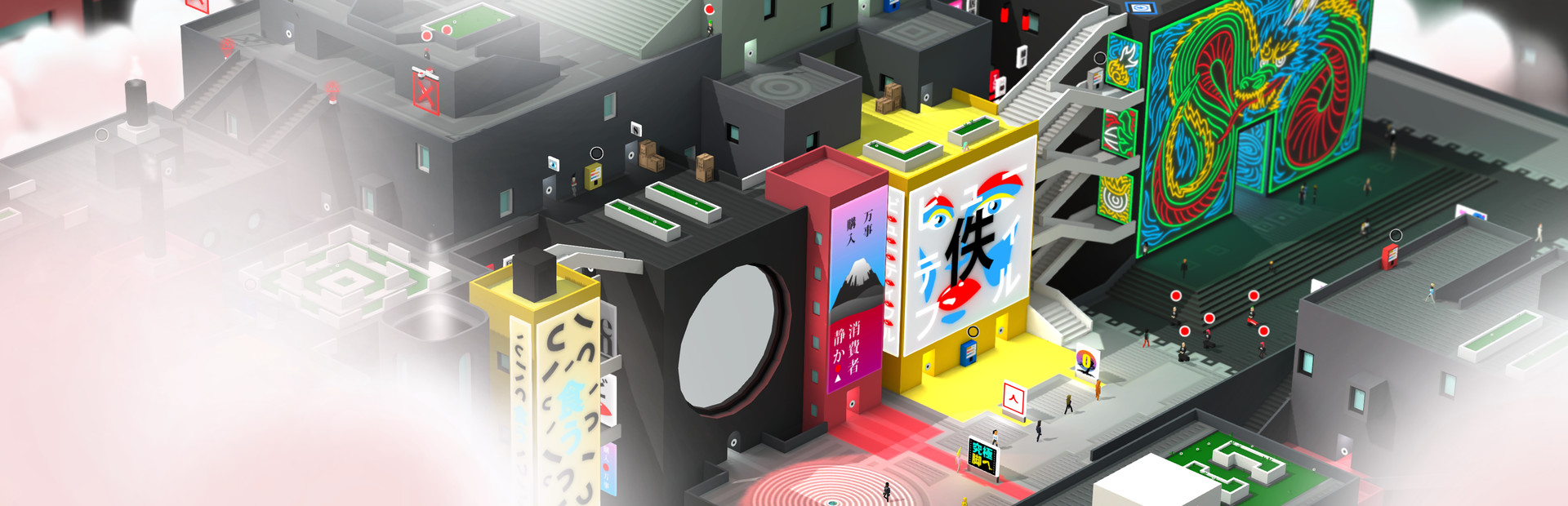
I came into Tokyo 42 expecting a compact, precision shooter dressed in neon and low-poly geometry. What I got was closer to half of that. The visual hook is real, and it lands immediately. The hand-crafted micro-city is genuinely unlike anything else on PC: bold colour palettes, cubist architecture, crowds of civilians doing their thing, flying cars threading between tower blocks. Walking out of your starting apartment and looking across the skyline, you can see why early previews lost their minds over screenshots. The problem is that you eventually have to start killing people. Combat in Tokyo 42 runs on a single brutal rule: one hit and you are dead, and so is everyone else. That sounds thrilling on paper, and sometimes it is. The arsenal covers pistols, assault rifles, sniper rifles, shotguns, rocket launchers, grenades, and the silent standout, the katana. Missions approach targets from multiple angles, and the stealth path, clearing guards silently with a blade before they notice a body, can feel genuinely satisfying when it clicks. Completing contracts earns cash you spend on weapon upgrades, and reputation unlocks harder gigs. On paper that is a clean loop. In practice, the isometric camera is where the whole thing strains. The view rotates in fixed 45-degree increments using Q and E, and gauging elevation during a firefight is close to guesswork. You will get clipped by bullets that looked like they sailed clear overhead. You will attempt a rooftop jump and land three floors down. The camera delay costs lives and patience in equal measure, and no peripheral tweak fixes that, it is a design constraint baked into the isometric format. The multiplayer mode is the concept that arguably should have been the whole game. Players spawn disguised as civilians, blend into crowds with limited ammo, and try to sniff out the other real humans before making their move. When it explodes into bullets and katana swings it is chaotic and genuinely fun. The catch in 2025 is simple: finding an active lobby is a long shot. The mode supports up to eight players across compact arenas, but the population was never massive and years of attrition have thinned it out. Treat multiplayer as a bonus, not a reason to buy. There is also a Nemesis system in the single-player that sends gang assassins disguised in the crowd after you when you aggro a faction, which scratches a similar itch and keeps the open world tense between contract jobs. The difficulty curve is where Tokyo 42 loses a chunk of its audience. The first couple of hours are charming and accessible. Then a difficulty spike arrives that does not really let up, and fiddly aiming mechanics start feeling less like a skill gap and more like a design debt the game never fully pays back. Motorcycle sections handle badly. Some later missions demand you repeat the same approach twenty times before the camera angle cooperates. The stealth AI is forgiving to the point of feeling underbaked; guards do not react to the bodies of their colleagues, which makes the whole thing feel less like Hitman and more like a puzzle where the pieces occasionally fall off the table. The story is thin connective tissue, a framed-for-murder setup that exists to string missions together rather than create any actual tension. If you go in specifically for the exploration and the vibe, Tokyo 42 delivers. The world is packed with secrets, hidden weapon unlocks, collectibles, and weird little environmental jokes tucked into apartment windows. The synth soundtrack is strong throughout. As a chill, dip-in sandbox for solo play it holds up. As a precision shooter, it is held back by camera and depth-perception problems that no amount of style fully covers. Worth a look at the right price for players who like isometric action with an emphasis on planning over reflexes, but anyone wanting snappy, readable gunfight feedback will hit a wall fast.

Shooters
Tags
System Requirements
Minimum
- OS
- Windows XP SP2
- Memory
- 2 GB RAM
- DirectX
- Version 9.0
- Storage
- 3 GB available space
- Graphics
- nVidia GTX 560 or AMD 7850
- Processor
- Intel i3-3220 or AMD FX-4100
Recommended
- Graphics
- nVidia GTX 960 or AMD R9 290
- Processor
- Intel i5-3570 or AMD FX-8120
Keep exploring
Community Discussion
Be the first to comment on Tokyo 42.
Reviews & Ratings
Game Info
- Developer
- SMAC Games
- Publisher
- Mode 7
- Release Date
- May 31, 2017