
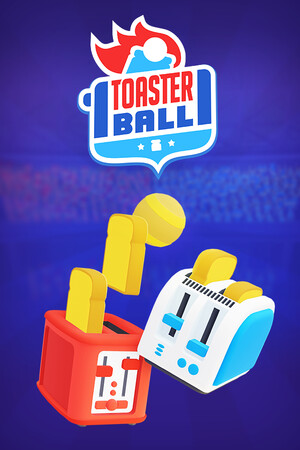
Toasterball
Grab three friends, plug in four controllers, and prepare to lose relationships over a sport where kitchen appliances fling bread at a ball. Local-only, no online, no ranked - this is pure couch chaos.
GamerScout Verdict
Best for groups with four controllers and a couch - solo buyers should wait for a deeper discount or a game night reason to pull the trigger.
Compare Prices(8 stores)
Every store in this table quotes us in euros, so the EUR figure is the price the seller actually set, not our arithmetic — which is why EUR is also the currency we rank in. We only list an offer here when the store gives us its price in euros, so nothing in this table is a number we invented.
Pick USD, PLN, GBP, CAD or AUD in the header and we convert from EUR at the European Central Bank reference rate — converted amounts are prefixed with ~. Your bank or the store may apply a different rate at checkout. We never hide offers based on where you are: everyone sees this whole table.
We may earn a commission when you buy games through links on this page — at no extra cost to you. It never affects our rankings or verdicts.
Price History
Screenshots & Media
About Toasterball
I usually cover games where netcode and time-to-kill matter. Toasterball is about as far from that as you can get, and I spent an embarrassing amount of time with it anyway. This is a local-only, 1-to-4-player physics sports game where you control toasters, shoot toast to propel both yourself and the ball, and try to score into the opposing goal. Two-button control scheme. Runs on a potato. Zero server infrastructure to complain about because there are no online servers. The core mechanic is deceptively simple but has real skill depth underneath it. Hold the button longer and your toast flies higher, which also means you jump higher - so managing toast pressure doubles as your movement tech. From there you unlock the double-jump and the TURBOFLIP, which is exactly as violent as it sounds. The physics are genuinely unpredictable in a way that feels intentional rather than sloppy, and that unpredictability is what keeps rounds from getting stale. After every single goal, a random variant gets thrown at the match - lava pits, zero-gravity, invisible ball, a Portal-style teleport mechanic, slick ice floors, an electrocution tower that locks you in place, and even a full mode-shift into a 2D pixel Pong screen. The game ships with 24 of these variants, and a custom mode lets you stack them, adjust goal door durability, toaster size, and win conditions however you want. The roster has 14 toaster athletes split across two factions - team Burners versus team Defrosters - and each one has a full bio, a locker room screen, and a production year. It is a completely unnecessary amount of worldbuilding for a game about bread sports, and it is better for it. The five arenas (a proper stadium, a jungle, a cobblestone street court, a castle, and a beach) give enough visual variety that the game does not start looking repetitive mid-session. The weaknesses are real though. This is local-only - no online multiplayer, no ranked mode, no matchmaking. If you are buying this solo with no couch partners lined up, the AI bots named Beep, Boop, and Bleep-Bloop are functional and have adjustable difficulty, but single-player against AI gets old fast. Some of the 24 variants are legitimately chaotic in a bad way - rounds that end in under ten seconds because a random environmental event decided the outcome before anyone could react. The two-button control ceiling also means that once you and your group have the TURBOFLIP down, depth starts plateauing. This is a game that peaks hard in its first few hours with the right people and then fades to a rotation slot rather than a daily driver. From a performance standpoint, the system requirements are extremely low - a GTX 750 Ti satisfies the minimum spec - and the physics engine holds up without drops even in full 4-player matches. No online infrastructure means no netcode problems to report, which is the one area where local-only is genuinely superior. If you regularly have three other humans in the same room and access to four controllers, Toasterball over-delivers for its price. If your gaming circle is mostly remote, this one sits on the shelf until the next LAN night.

Shooters
Tags
System Requirements
Minimum
- OS
- Windows 7 (64 bits)
- Memory
- 2000 MB RAM
- Storage
- 1 GB available space
- Graphics
- Nvidia GeForce GTX 750 Ti
- Processor
- Intel Core i3 (2nd gen)
Recommended
- OS
- Windows 10 (64 bits)
- Memory
- 4000 MB RAM
- Storage
- 1 GB available space
- Graphics
- Nvidia GeForce GTX 1060
- Processor
- Intel Core i5
Keep exploring
Community Discussion
Be the first to comment on Toasterball.
Reviews & Ratings
No ratings available
Game Info
- Developer
- Les Crafteurs
- Publisher
- Les Crafteurs
- Release Date
- May 3, 2023