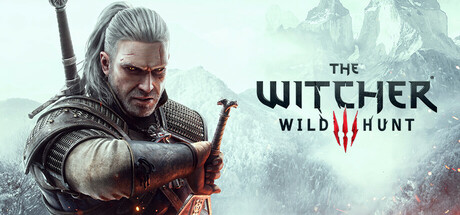
The Witcher 3: Wild Hunt – Hearts of Stone
Hearts of Stone packs a villain worth remembering and 10+ hours of tight, choice-driven storytelling into Geralt's already dense world. Skip it only if you skipped the base game.
GamerScout Verdict
A tightly written expansion with a standout villain and real mechanical teeth - essential for anyone who finished the base game.
Compare Prices(1 stores)
Every store in this table quotes us in euros, so the EUR figure is the price the seller actually set, not our arithmetic — which is why EUR is also the currency we rank in. We only list an offer here when the store gives us its price in euros, so nothing in this table is a number we invented.
Pick USD, PLN, GBP, CAD or AUD in the header and we convert from EUR at the European Central Bank reference rate — converted amounts are prefixed with ~. Your bank or the store may apply a different rate at checkout. We never hide offers based on where you are: everyone sees this whole table.
We may earn a commission when you buy games through links on this page — at no extra cost to you. It never affects our rankings or verdicts.
Price History
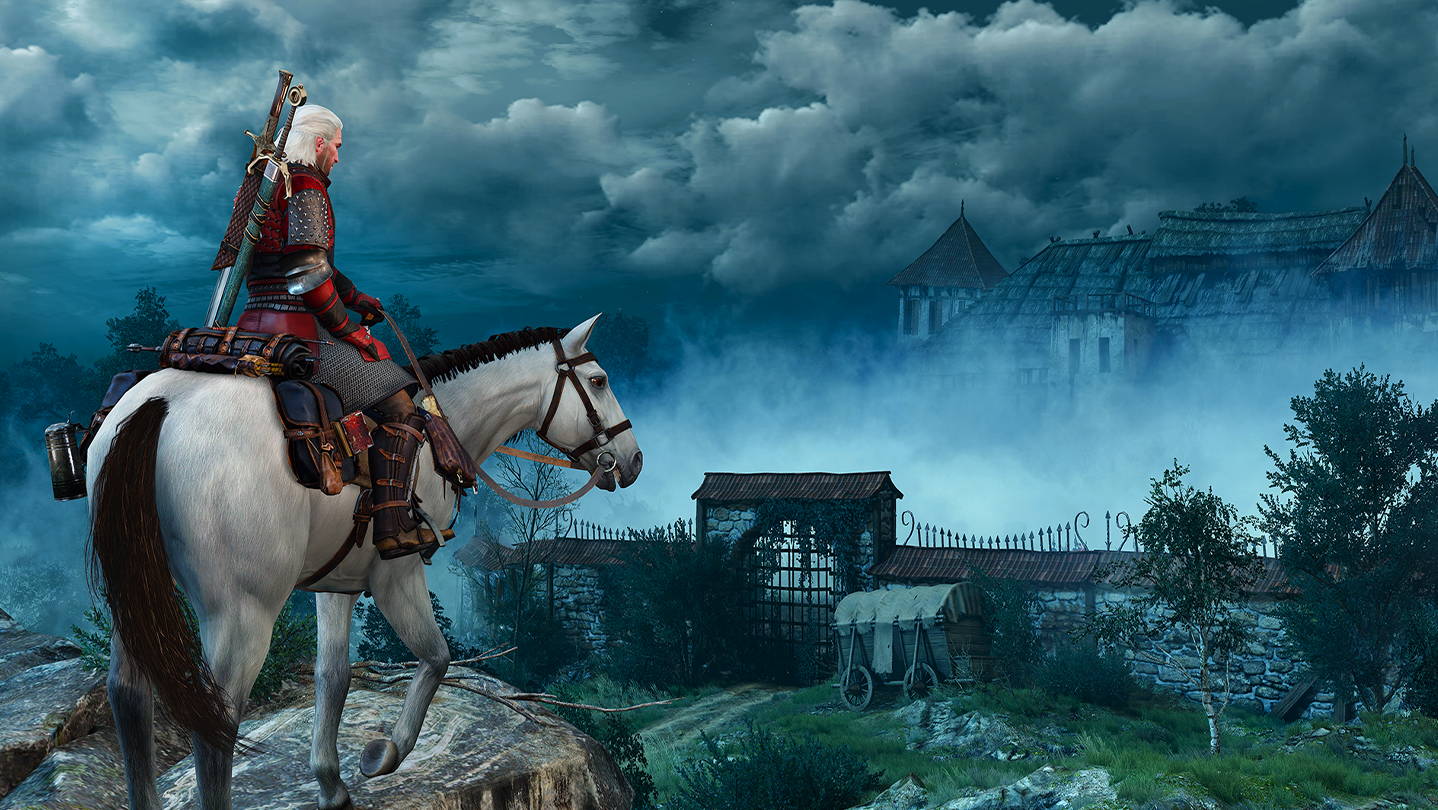
Screenshots & Media
About The Witcher 3: Wild Hunt – Hearts of Stone
Hearts of Stone is a paid expansion for The Witcher 3: Wild Hunt, and it does something most expansions don't bother attempting: it tells a complete, self-contained story with a beginning, middle, and end that actually lands. Geralt is hired to break a curse binding a man named Gaunter O'Dimm, a figure the base game uses as a blink-and-miss-it merchant. That setup sounds modest. It is not. O'Dimm is one of the best-written antagonists in the series, possibly in the genre, and the expansion uses him to explore deals with the devil, the weight of immortality, and what it costs to be clever in a world that is always cleverer than you. The main questline runs roughly ten to fifteen hours depending on how much side content you chase, and that content is denser than most games' main campaigns. You get a heist sequence that borrows the logic of a caper film, a doomed romance subplot involving a cursed nobleman named Olgierd von Everec, and a series of surreal dream-logic missions that let the writers cut loose in ways the grounded main game rarely allowed. Choices matter here in a way that feels weighted rather than cosmetic. The ending branches, and neither branch is painless. That is exactly what this kind of story should do. On the mechanical side, Hearts of Stone introduces Runewords and Glyphwords, which are new enchantment systems that add meaningful build customization for players who were already pushing past the mid-game. These are not filler systems. Some Runewords fundamentally change how you play: one converts all adrenaline into bonus damage, another triggers a heal on kill. If you have been running the same sign-spam or fast-attack build since act one of the base game, this expansion will make you rethink your inventory and your habit loops. It is the kind of late-game complexity injection that rewards players who actually read tooltips. What does not work as well is the transition into the expansion itself. You are dropped into a contract that assumes a certain power level, and if you arrive under-leveled the early fights hit with a frustrating difficulty spike that feels more like a gating mechanism than intentional design. The expansion also assumes familiarity with the base game's tone and systems, so coming in cold is not recommended even though the story is technically standalone. There is also a recurring side character from the base game, the Master Mirror himself, whose presence is best experienced if you remember who he is and why the game treated him as throwaway the first time. For RPG players specifically, the narrative payoff in Hearts of Stone is exceptionally high relative to time invested. It does not pad the runtime. The filler-to-substance ratio is almost offensively good compared to most expansions in this genre. If you care about writing that rewards attention, characters who speak in subtext, and a villain whose power comes from persuasion rather than raw force, this is the expansion you play first before Blood and Wine, even though Blood and Wine is technically the bigger package. O'Dimm alone justifies the runtime. The ending will sit with you.

RPGs
Tags
System Requirements
Minimum
- Processor
- Intel CPU Core i5-2500K 3.3GHz / AMD CPU Phenom II X4 940
- Memory
- 6 GB RAM
- Graphics
- Nvidia GPU GeForce GTX 660 / AMD GPU Radeon HD 7870 Storage…
Recommended
- Processor
- Intel CPU Core i7 3770 3.4 GHz / AMD CPU AMD FX-8350 4 GHz
- Memory
- 8 GB RAM
- Graphics
- Nvidia GPU GeForce GTX 770 / AMD GPU Radeon R9 290 Stora…
Keep exploring
Community Discussion
Be the first to comment on The Witcher 3: Wild Hunt – Hearts of Stone.
Reviews & Ratings
Game Info
- Developer
- CD PROJEKT RED
- Publisher
- CD PROJEKT RED
- Release Date
- Oct 12, 2015